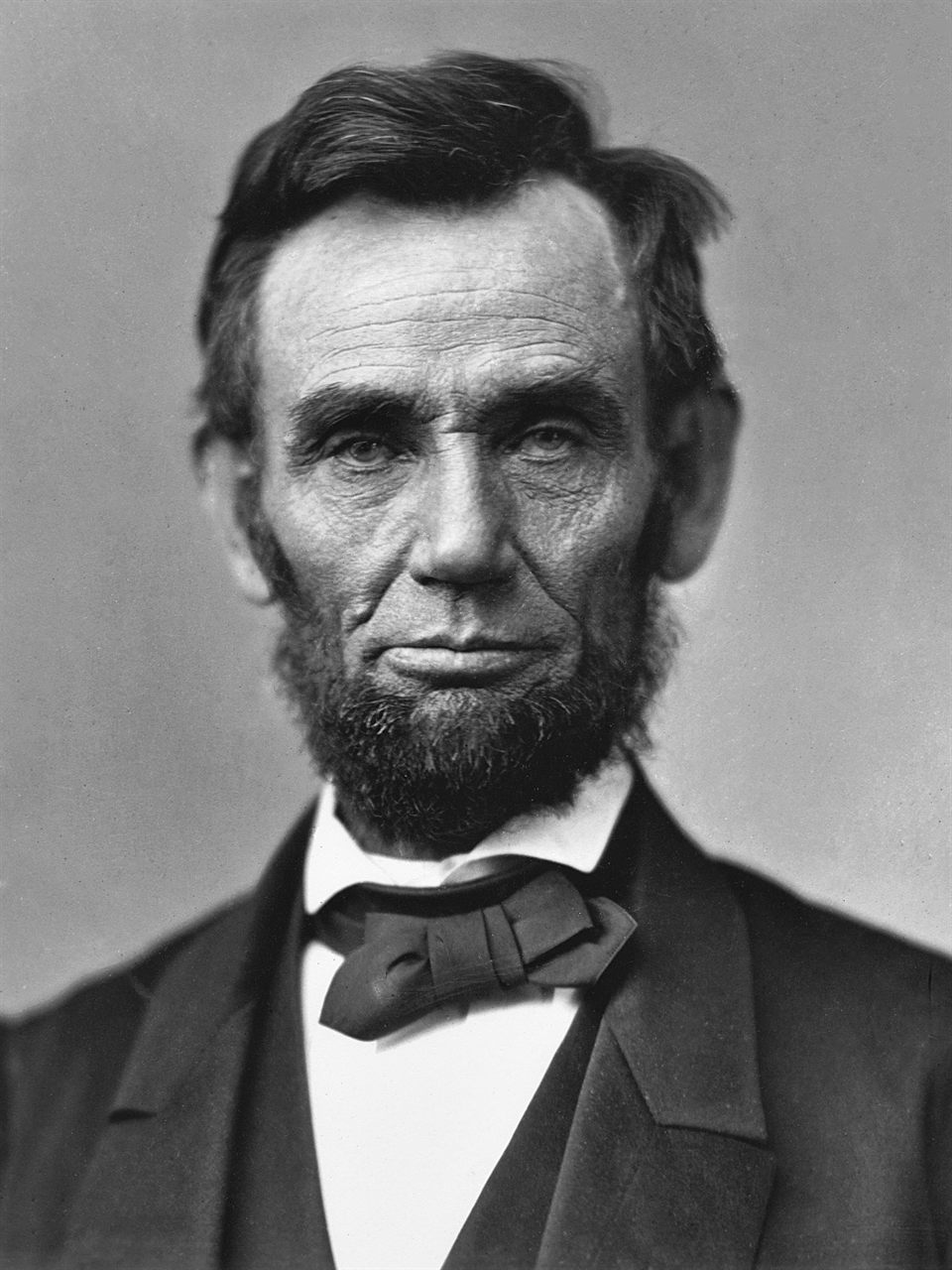
Abraham Lincoln
Preserver of the Union, Emancipator
16th U.S. president who held the Union together, issued the Emancipation Proclamation, and redefined the nation as a government of, by, and for the people.
Life at a glance
Key contributions
- Preserved the United States through the Civil War
- Issued the Emancipation Proclamation and advanced the Thirteenth Amendment
- Redefined American democracy in the Gettysburg Address
- Modeled restrained, principled executive leadership under existential crisis
- Articulated postwar charity toward former enemies as a national duty
Notable works, inventions and offices
Emancipation Proclamation & 13th Amendment path
TransformedLife and career
Abraham Lincoln (1809–1865), self-educated on the frontier, became an Illinois lawyer and politician known for moral clarity against the expansion of slavery. Elected president in 1860, he faced secession and civil war within months.
He refused to accept disunion, managed a fractious coalition, and gradually moved the war’s purpose from Union alone toward emancipation. The Emancipation Proclamation (1863) and support for the Thirteenth Amendment struck legally at slavery; the Gettysburg Address redefined the nation as a government of, by, and for the people.
Lincoln’s Second Inaugural called for malice toward none and charity for all—even as the war ground on. Assassinated days after Confederate surrender, he did not live to oversee Reconstruction.
His greatness lies in holding democratic experiment together under maximum stress and making freedom part of the Union’s meaning.
Legacy and impact
Democracy’s survival as a moral project.
- Polarization makes Union and constitutional loyalty live issues.
Principles and words
View of humanity
Ordinary people are capable of self-government if the majority does not enslave the minority.
How we should operate
Defend democratic institutions without becoming the tyranny you oppose.
- Government of, by, and for the people
- Union as vessel of democratic experiment
- Slavery as moral and political wrong
- Charity toward enemies after victory
“…that government of the people, by the people, for the people, shall not perish from the earth.”
Sources
Every statement on this page traces to Wikipedia, Wikidata, Wikiquote, or the curated Humanity’s Atlas record. Nothing is invented. Same standard for everyone: contributions first, neutral language.