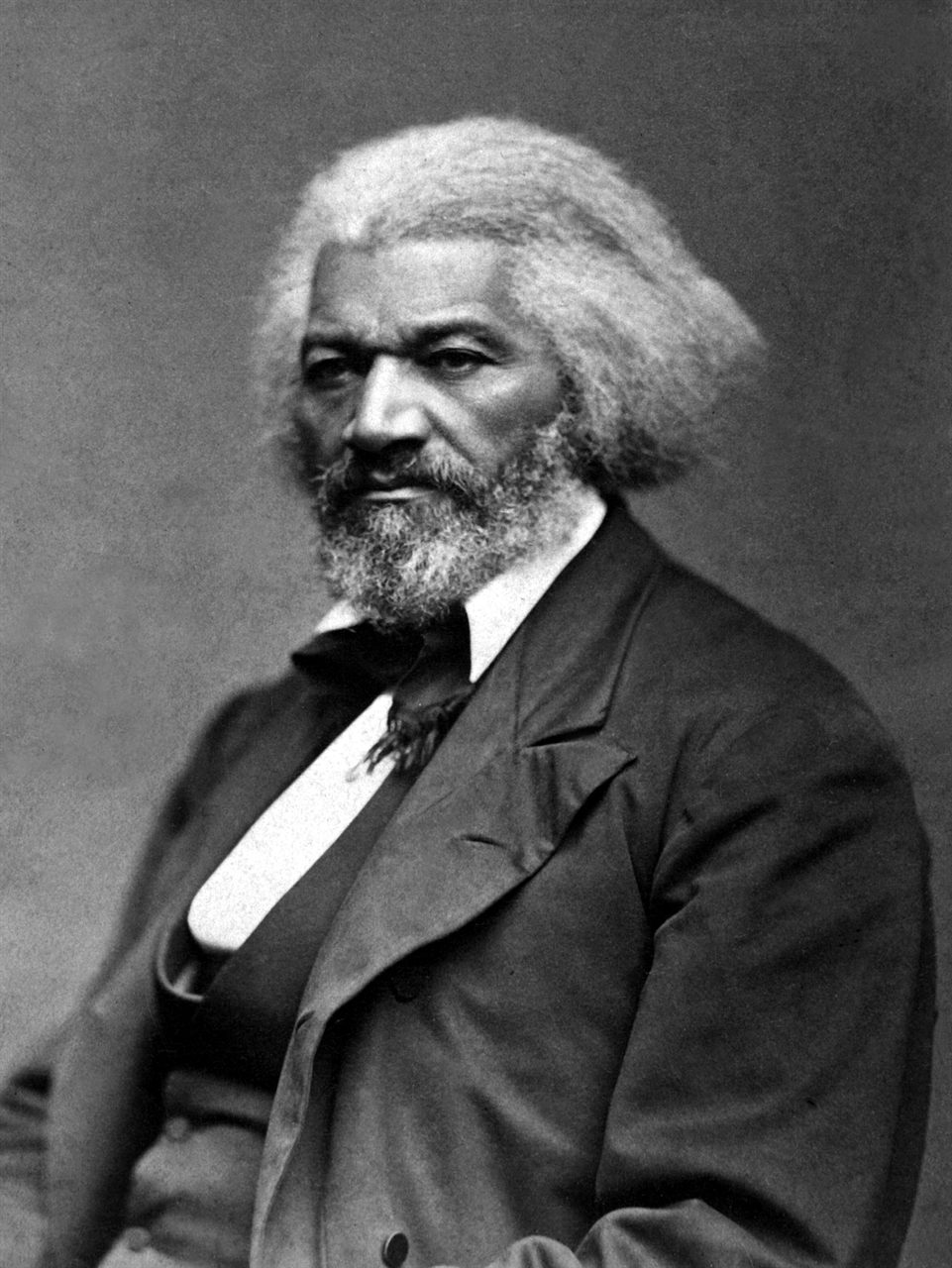
Frederick Douglass
Prophet of American Freedom
Escaped slave, orator, and statesman whose life and writing made the moral case against slavery and for full citizenship.
Life at a glance
Key contributions
- Escaped slavery and became the leading Black orator of the abolition era
- Authored autobiographies that made slavery’s reality inescapable
- Edited abolitionist newspapers and shaped public opinion
- Advised Union leadership and recruited Black troops in the Civil War
- Fought for full citizenship, Reconstruction rights, and broader human equality
Notable works, inventions and offices
Narrative of the Life of Frederick Douglass
Still standsLife and career
Frederick Douglass (c. 1818–1895) was born into slavery on Maryland’s Eastern Shore. He learned to read in secret, understood literacy as power, and escaped north in 1838. Within years he became the abolition movement’s most formidable orator and writer.
His Narrative (1845) and later autobiographies made the brutality of slavery undeniable in the first person. He edited newspapers, recruited Black soldiers for the Union, advised presidents, and after the war fought for Reconstruction rights and women’s suffrage alliances.
Douglass insisted that America’s creed—liberty and equality—be used as a measuring rod against America’s practice. Moral suasion joined political power; speech was a weapon for personhood.
He proved that the oppressed can become a nation’s moral teachers, and that freedom of mind is the beginning of every other freedom.
Legacy and impact
The oppressed can become a nation’s moral teachers.
- Voting rights and truthful history curricula are unfinished Douglass battles.
Principles and words
View of humanity
No human is rightly another’s property. Nations are saved by comparing practice to principle.
How we should operate
Tell the whole truth about injustice without abandoning reform.
- Natural rights for all persons
- Literacy as liberation
- Moral suasion joined to political power
- America’s creed as measuring rod against America
“If there is no struggle, there is no progress.”
Sources
Every statement on this page traces to Wikipedia, Wikidata, Wikiquote, or the curated Humanity’s Atlas record. Nothing is invented. Same standard for everyone: contributions first, neutral language.