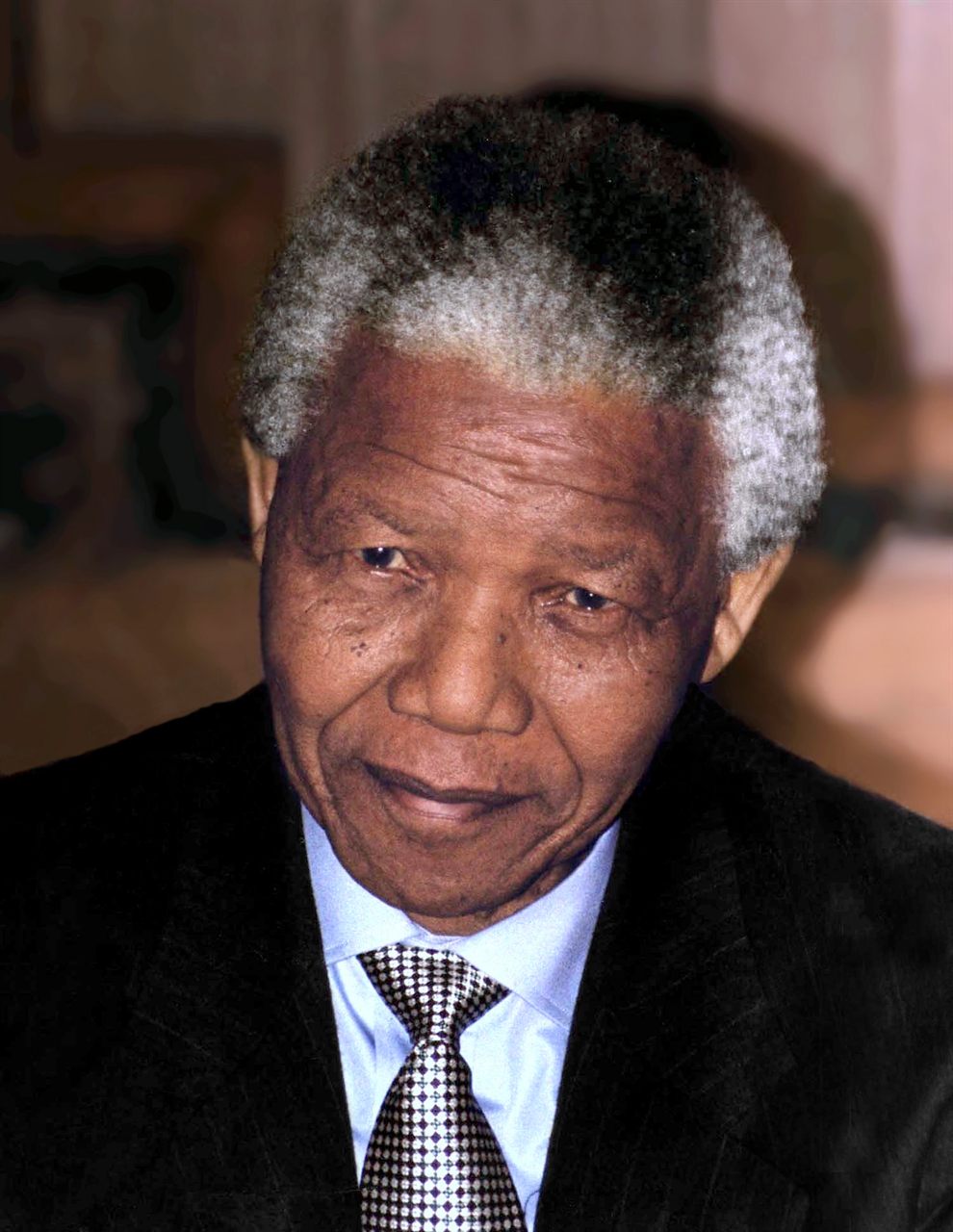
Nelson Mandela
Father of the Nation
Anti-apartheid leader and first democratically elected president of South Africa who chose reconciliation over revenge after 27 years in prison.
Life at a glance
Key contributions
- Led anti-apartheid struggle at personal cost of 27 years’ imprisonment
- Negotiated a peaceful transition to majority-rule democracy
- Became South Africa’s first democratically elected president
- Championed reconciliation over revenge in nation-building
- Helped secure a democratic constitution and left power voluntarily
Notable works, inventions and offices
Democratic Constitution of South Africa (1996)
Still standsLife and career
Nelson Mandela (1918–2013) trained as a lawyer and joined the African National Congress struggle against apartheid. After the Sharpeville massacre and bans on protest, he helped form an armed wing, was convicted in the Rivonia Trial, and spent 27 years in prison.
Released in 1990, he negotiated with the regime to dismantle apartheid without full-scale civil war. In 1994 he became South Africa’s first democratically elected president, emphasizing reconciliation, a new constitution, and the hard choice not to mirror tyranny’s revenge.
He left office after one term—modeling democratic restraint. The Truth and Reconciliation process (led in public life by figures like Tutu) complemented his politics of inclusion without total forgetting.
Mandela’s greatness is dual: the courage to resist and the rarer courage to govern without becoming what he fought.
Legacy and impact
A liberation movement can take power without becoming a mirror of the tyranny it replaced.
- Polarized societies need reconciliation technologies that still tell hard truths.
Principles and words
View of humanity
Oppressors and oppressed are both trapped in dehumanizing systems; liberation must free both.
How we should operate
Design institutions that tell truth and limit revenge. Leave office—the rarest revolutionary act.
- Freedom incomplete if others remain unfree
- Reconciliation without erasing truth
- Courage is not absence of fear
- Democratic restraint—leaving power
“For to be free is not merely to cast off one’s chains, but to live in a way that respects and enhances the freedom of others.”
Sources
Every statement on this page traces to Wikipedia, Wikidata, Wikiquote, or the curated Humanity’s Atlas record. Nothing is invented. Same standard for everyone: contributions first, neutral language.