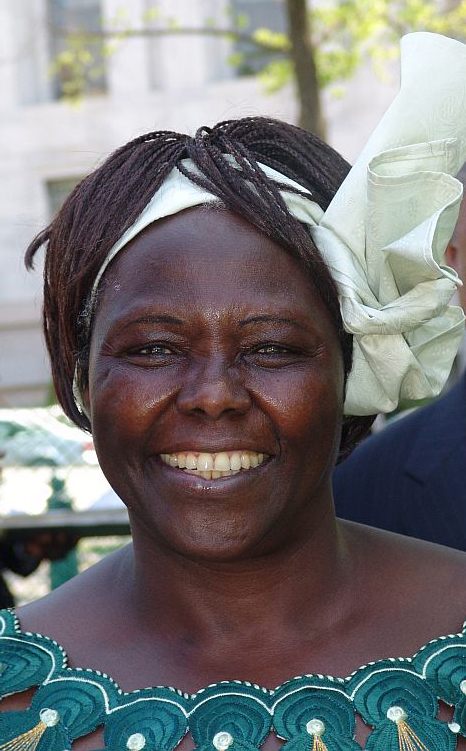
Wangari Maathai
Mother of the Trees
Biologist and activist who founded the Green Belt Movement, linking tree planting, women’s empowerment, and democracy—first African woman to win the Nobel Peace Prize.
Life at a glance
Key contributions
- Founded the Green Belt Movement, planting tens of millions of trees
- Linked environmental restoration to women’s empowerment and democracy
- Became the first African woman to receive the Nobel Peace Prize
- Advanced scientific and civic leadership as Kenya’s pioneering woman PhD
- Showed that ecological care is national security and human rights work
Notable works, inventions and offices
Green Belt Movement
Still standsLife and career
Wangari Maathai (1940–2011) was a Kenyan biologist, the first woman in East and Central Africa to earn a PhD, and founder of the Green Belt Movement. She linked deforestation, soil loss, and poverty to political disempowerment—especially of rural women.
By organizing women to plant trees, she restored landscapes and livelihoods while building civic capacity. She faced harassment and violence from authoritarian politics, yet persisted in environmental and pro-democracy activism.
In 2004 she became the first African woman to win the Nobel Peace Prize, recognized for connecting ecology, peace, and human rights. Planting a tree became a political act.
Her model—ecological restoration as democratic practice—remains urgently relevant under climate stress.
Legacy and impact
The peace prize can belong to those who plant and protect life.
- Climate and biodiversity crises need her fusion of ecology and rights.
Principles and words
View of humanity
Humans are stewards, not owners, of living systems.
How we should operate
Put seedlings and civic courage in the same program.
- Ecology and democracy are inseparable
- Women as agents of environmental repair
- Think globally, plant locally
- Courage against land and power abuse
“It’s the little things citizens do. That’s what will make the difference. My little thing is planting trees.”
Sources
Every statement on this page traces to Wikipedia, Wikidata, Wikiquote, or the curated Humanity’s Atlas record. Nothing is invented. Same standard for everyone: contributions first, neutral language.