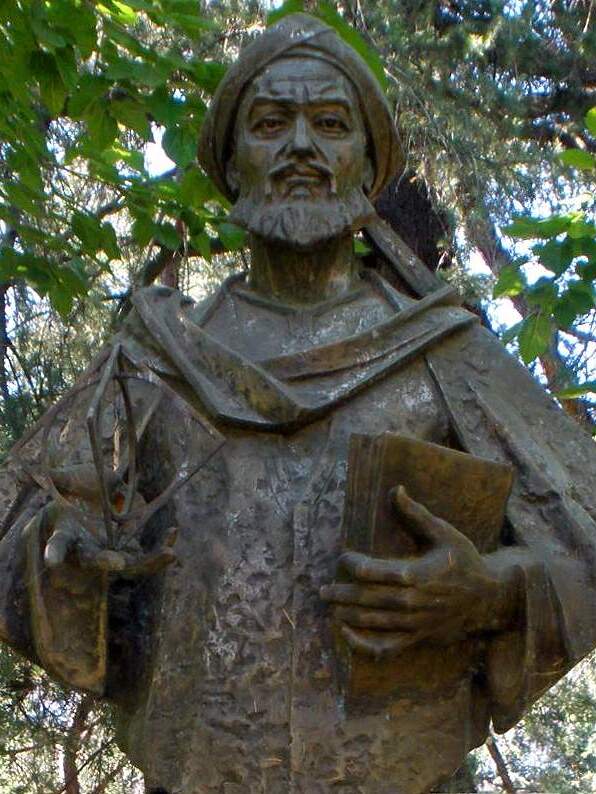
Muḥammad ibn Mūsā al-Khwārizmī
Father of Algebra
Mathematician of the House of Wisdom whose works gave the West algebra and algorithms—foundations of modern computation and quantitative science.
Life at a glance
Key contributions
- Founded algebra as a systematic mathematical discipline
- Transmitted and formalized Hindu-Arabic numerals and calculation methods
- Gave his name to the concept of the algorithm
- Advanced astronomy and geographic measurement in the Abbasid age
- Built mathematical tools that became global scientific infrastructure
Notable works, inventions and offices
Kitāb al-Jabr (Algebra)
Still standsFoundational algebraic text. Today: Every equation and algorithm inherits this lineage.
Life and career
Muḥammad ibn Mūsā al-Khwārizmī (c. 780–850) worked in Baghdad’s House of Wisdom. His treatises on algebra (al-jabr) and Hindu-Arabic numerals transmitted computational methods that remade mathematics in the Islamic world and later in Europe.
The word algorithm derives from his Latinized name; algebra from his book’s title. He also contributed to astronomy and geography, including a revision of Ptolemaic maps.
By treating equations as a teachable public craft, he helped move calculation from specialist mystery toward systematic method—infrastructure for science, commerce, and later computing.
Every modern algorithm quietly carries his name and the Baghdad project of translating and extending knowledge.
Legacy and impact
The hidden grammar of the digital age.
- AI and finance run on algebraic procedures he helped make thinkable.
Principles and words
View of humanity
Humans can master complexity when they invent shared symbolic tools.
How we should operate
Teach quantitative literacy. Honor translators and method-makers.
- Clear procedures for solving unknowns
- Number systems as civilizational infrastructure
- Translation as scientific power
- Mathematics serving astronomy and trade
“That fondness for science… has encouraged me to compose a short work on calculating by completion and reduction.”
Sources
Every statement on this page traces to Wikipedia, Wikidata, Wikiquote, or the curated Humanity’s Atlas record. Nothing is invented. Same standard for everyone: contributions first, neutral language.