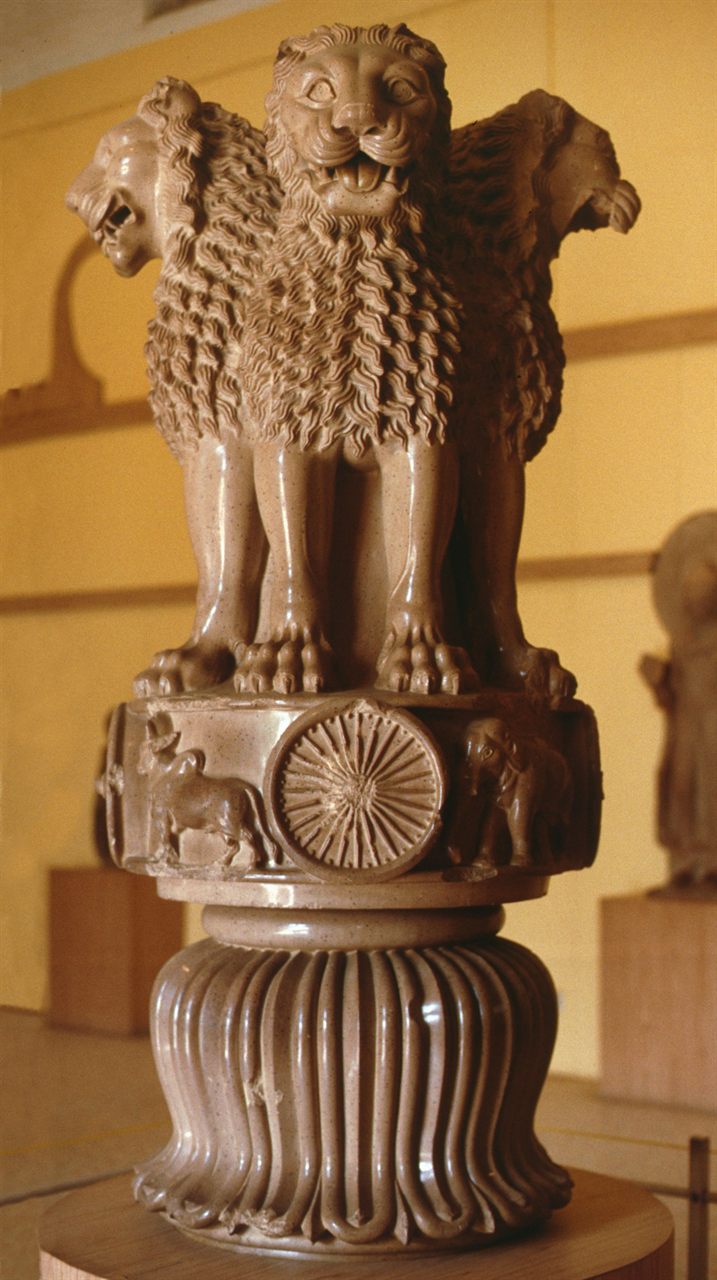
Ashoka Maurya
Emperor of Dharma
Mauryan emperor who, after the bloody conquest of Kalinga, publicly turned toward dhamma—ethical governance, religious tolerance, and welfare.
Life at a glance
Key contributions
- Ruled and administered a vast multi-regional Mauryan empire
- Publicly repented the violence of the Kalinga war in his own edicts
- Promoted dhamma: ethical governance, welfare, and religious tolerance
- Raised pillars and rock inscriptions that still stand as public moral law
- Sponsored Buddhist missions that helped the tradition travel internationally
Notable works, inventions and offices
Ashokan pillars and rock edicts
Partially remainsLife and career
Ashoka Maurya ruled one of antiquity’s largest empires, stretching across much of the Indian subcontinent. Early in his reign he was a conqueror; the war against Kalinga produced mass death and deportation that his own rock edicts later described with unusual public remorse.
After Kalinga he turned toward dhamma: ethical policy, religious tolerance, welfare measures, and a kind of imperial moral advertising carved on pillars and rocks across the realm. He sponsored Buddhism without making belief compulsory, and sent missions abroad.
His inscriptions speak of medical care for humans and animals, road-side wells, and officials charged with the welfare of subjects. Power is measured by what it heals. The conqueror becomes a moral legislator—an almost unique self-presentation among ancient emperors.
Ashoka’s example still matters for post-conflict politics: can a state admit wrong, protect plural communities, and rebrand legitimacy around care rather than pure domination? Few rulers have tried so publicly.
Legacy and impact
The conqueror who becomes a moral legislator.
- Post-conflict justice and national remorse remain hard political arts.
Principles and words
View of humanity
Humans of every sect share capacity for moral improvement.
How we should operate
Measure power by what it heals. After national trauma, public repentance matters.
- Dhamma as ethical public policy
- Remorse and reform after violence
- Religious tolerance
- Welfare infrastructure
“All men are my children… so do I desire for all men the welfare and happiness of this world and of the next.”
Sources
Every statement on this page traces to Wikipedia, Wikidata, Wikiquote, or the curated Humanity’s Atlas record. Nothing is invented. Same standard for everyone: contributions first, neutral language.