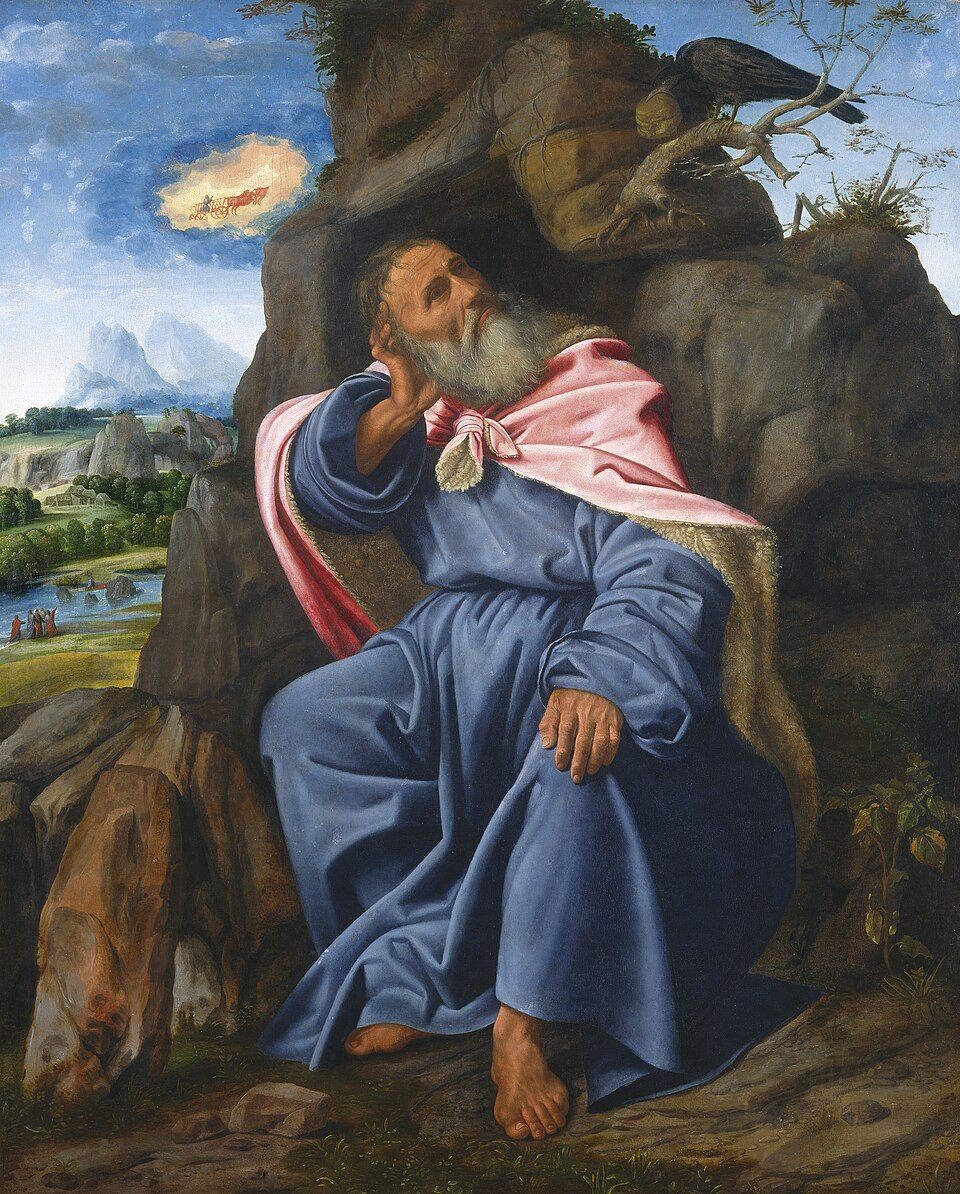
Elijah
Prophet of fire and drought
The prophet who stood against royal idolatry, defended the powerless, and became the forerunner figure later generations expected before the end.
Life at a glance
Key contributions
- Confronted royal idolatry in Israel
- Defended Naboth against state murder for property
- Became the expected forerunner in later faith
- Modeled prophetic solitude and public fire
- Entered Jewish and Christian liturgy as a living name
Notable works, inventions and offices
Elijah cycle in Kings
Still standsNarratives of prophetic resistance. Today: Living figure in Jewish ritual and Christian expectation.
Life and career
Elijah confronts Ahab and Jezebel, announces drought, and stages the contest on Carmel: the Lord, not Baal, answers with fire. He flees, hears God in a still small voice, and condemns the theft of Naboth’s vineyard.
He is taken up in a whirlwind. Jewish tradition sets a chair for him at circumcision and a cup at Passover. The Gospels hear John and Jesus in his register.
He is the prophet as opposition: no king is too high to steal a poor man’s field.
Legacy and impact
The prophet who will not let the palace devour the village.
- Land theft and captured religion still meet Elijah.
Principles and words
View of humanity
Power that murders for real estate has already chosen its god.
How we should operate
Speak when silence would baptize theft. Then go to the mountain and listen.
- No other gods
- The still small voice
- A poor man’s vineyard is sacred
- Courage before palaces
“How long will you go limping between two opinions?”
Sources
Every statement on this page traces to Wikipedia, Wikidata, Wikiquote, or the curated Humanity’s Atlas record. Nothing is invented. Same standard for everyone: contributions first, neutral language.