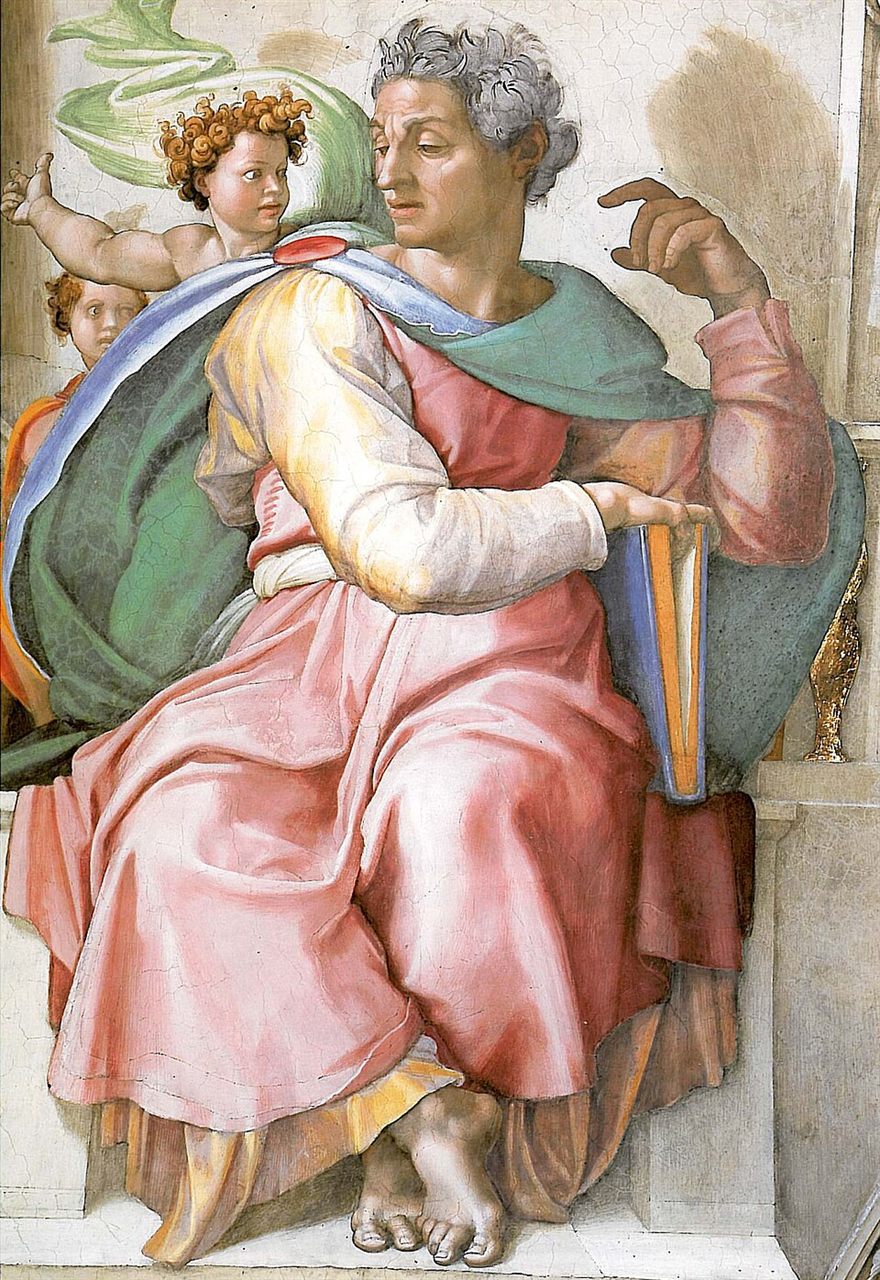
Isaiah
Prophet of holy justice
The great writing prophet of Israel—holiness, justice for the poor, and a vision of swords beaten into plowshares that still judges nations.
Life at a glance
Key contributions
- Wrote (and inspired) the towering prophetic book of Israel
- Tied worship to defense of the poor
- Cast the vision of nations at peace
- Counseled kings under imperial threat
- Shaped messianic hope in Judaism and Christianity
Notable works, inventions and offices
Book of Isaiah
Still standsProphetic poetry of judgment and hope. Today: Core of Jewish and Christian scripture.
Life and career
Isaiah prophesied in Jerusalem as Assyria swallowed the region. He confronted kings, denounced empty ritual, and demanded that worship match care for the widow and the oppressed.
The book that bears his name (in one or several voices) gave the world images that outlived the empire: a child named Wonderful Counselor, a servant who suffers, nations streaming to a mountain of peace.
He taught that God’s people are measured by justice, not by the volume of their festivals.
Legacy and impact
Peace and justice as the true liturgy of a nation.
- Every arms race still collides with Isaiah’s plowshare.
Principles and words
View of humanity
A people can be religious and still rotten if they crush the weak.
How we should operate
Tell the powerful the truth. Dream peace in public.
- Holiness without justice is noise
- Learn to do good; seek justice
- Swords into plowshares
- The poor are the test of a nation
“They shall beat their swords into plowshares.”
Sources
Every statement on this page traces to Wikipedia, Wikidata, Wikiquote, or the curated Humanity’s Atlas record. Nothing is invented. Same standard for everyone: contributions first, neutral language.