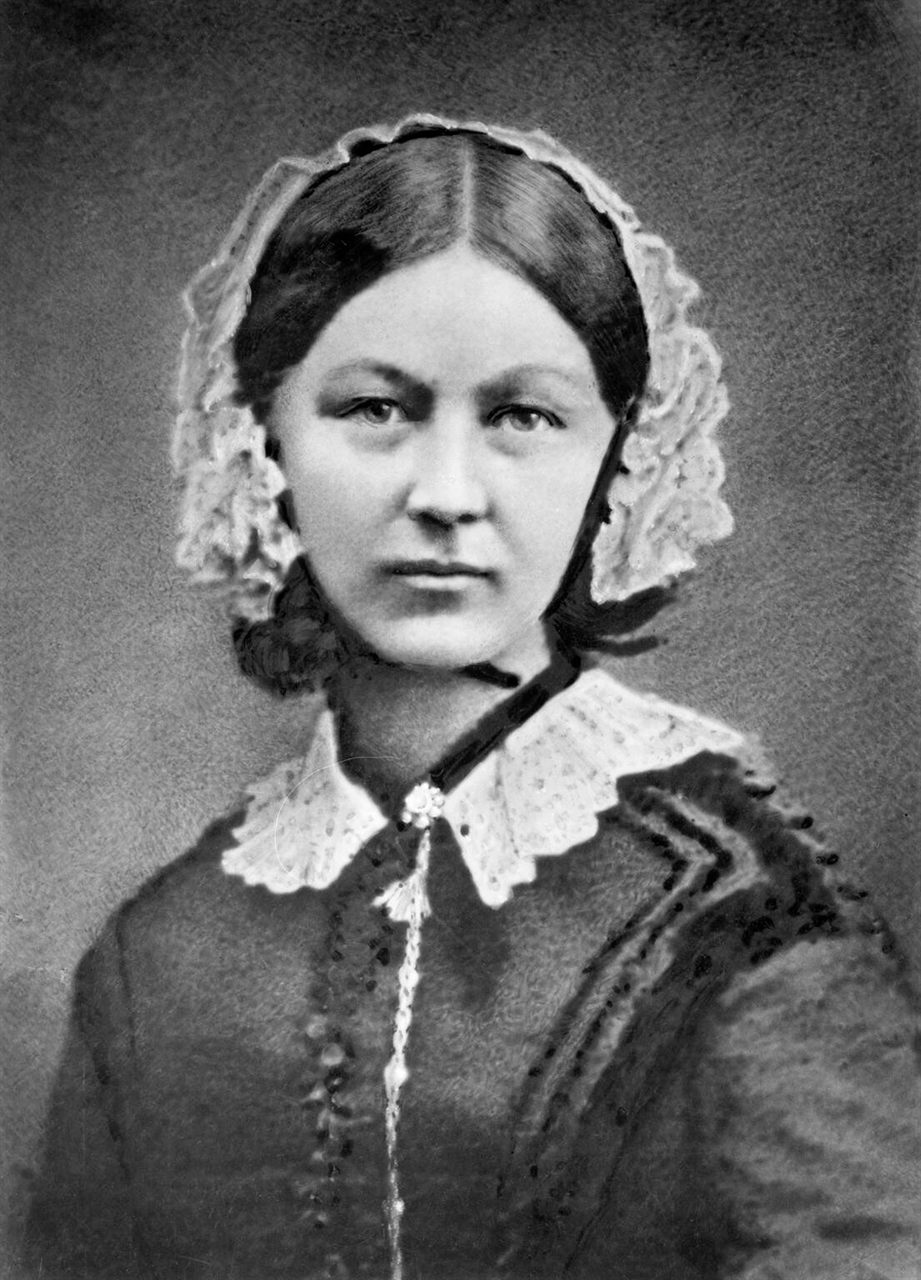
Florence Nightingale
Founder of Modern Nursing
Statistician and nursing reformer who professionalized care of the sick and used data visualization to force sanitary reform.
Life at a glance
Key contributions
- Transformed Crimean War hospitals through sanitation and organization
- Professionalized nursing via training schools and standards
- Pioneered statistical visualization to drive public-health reform
- Reformed military and civilian hospital design and management
- Made care of the sick a respected, evidence-based profession
Notable works, inventions and offices
Nightingale Training School
Still standsLife and career
Florence Nightingale (1820–1910) was born to privilege in Britain but insisted on nursing as a calling when it was low-status work. During the Crimean War she led nurses to Scutari and confronted lethal hospital conditions: filth, overcrowding, and administrative chaos.
Through sanitation, organization, and relentless documentation she helped cut death rates and made care a system. After the war she used statistics—including innovative polar-area diagrams—to force sanitary reform on the British army and public health policy.
She founded a training school that professionalized nursing worldwide and wrote extensively on hospital design and management. Mercy, for her, was not only kindness; it was evidence and logistics.
Modern nursing and data-driven public health still stand on her insistence that dignity of every patient requires disciplined infrastructure.
Legacy and impact
Mercy turned into a system.
- Pandemic readiness is her agenda with new pathogens.
Principles and words
View of humanity
Suffering is often produced by systems. Compassion without competence is incomplete.
How we should operate
Build institutions that make good care the default. Use data to confront denial.
- Care as disciplined profession
- Sanitation as moral duty
- Evidence over anecdote
- Dignity of every patient
“The very first requirement in a hospital is that it should do the sick no harm.”
Sources
Every statement on this page traces to Wikipedia, Wikidata, Wikiquote, or the curated Humanity’s Atlas record. Nothing is invented. Same standard for everyone: contributions first, neutral language.