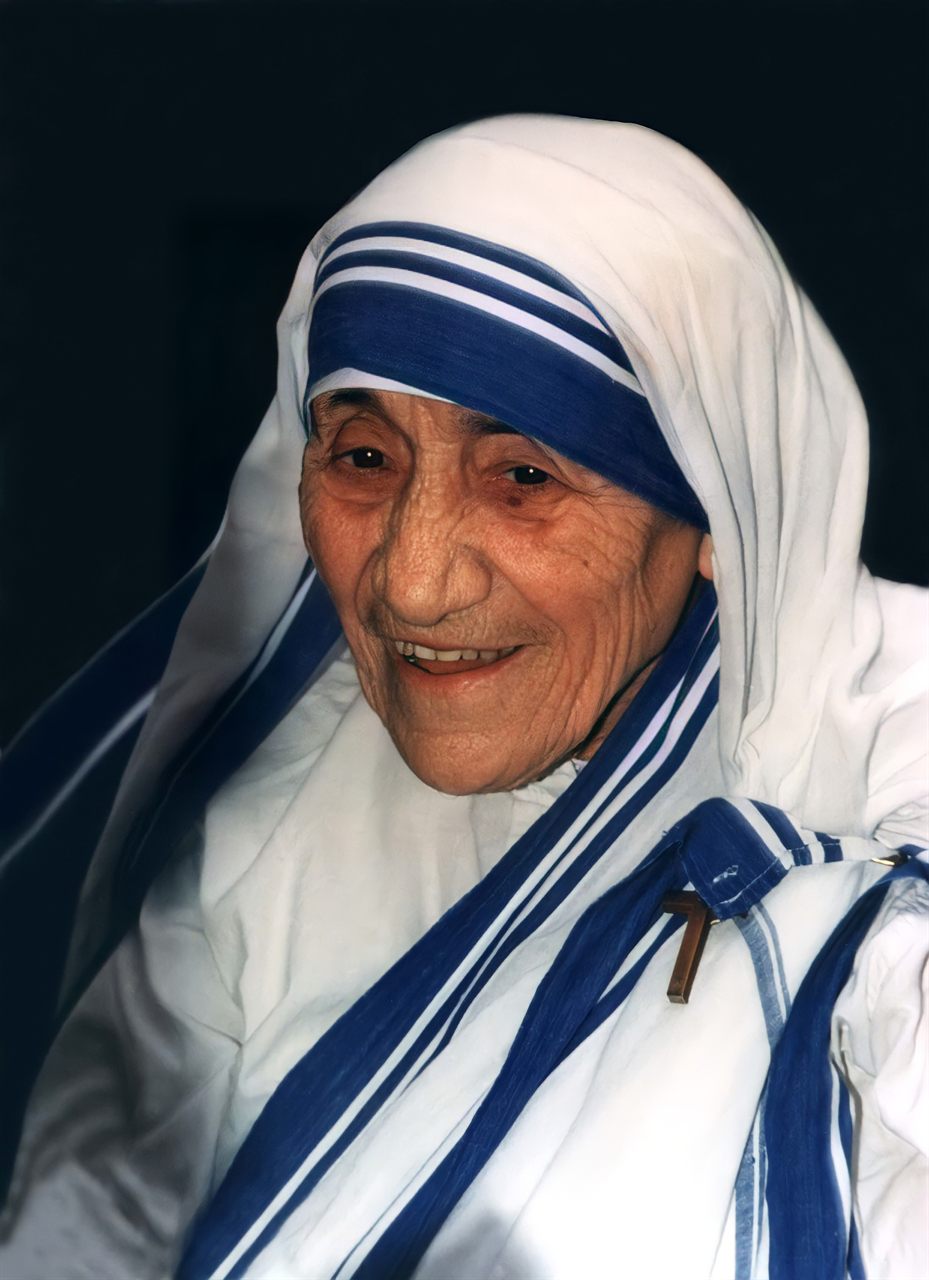
Mother Teresa
Saint of the Streets
Catholic nun who founded the Missionaries of Charity to serve the poorest of the poor—making visible the dying and abandoned.
Life at a glance
Key contributions
- Founded the Missionaries of Charity to serve the destitute and dying
- Built homes, clinics, and orphanages across Kolkata and then the world
- Made the abandoned visible to global conscience
- Received the Nobel Peace Prize for work among the poorest
- Created a durable religious order dedicated to radical proximity to suffering
Notable works, inventions and offices
Missionaries of Charity
Still standsLife and career
Agnes Gonxha Bojaxhiu, known as Mother Teresa (1910–1997), was born in Skopje and joined a teaching order in India. In 1946 she experienced a call to leave the convent school for the streets of Kolkata, founding the Missionaries of Charity to serve the poorest of the poor.
Her homes for the dying, orphanages, and leprosy work made visible those modern cities discard. The order expanded globally. She received the Nobel Peace Prize in 1979 and became a controversial saint-figure: admired for presence among the abandoned, debated over medical standards and theology of suffering.
Whatever the debates, she forced prosperity to look at what it throws away and insisted that love is measured by proximity to the unwanted.
Her accomplishment is institutional mercy: an order that still operates where dignity is scarcest.
Legacy and impact
Forced modern prosperity to look at what it discards.
- Homelessness and elder abandonment are her agenda in new forms.
Principles and words
View of humanity
A society’s test is how it treats those who cannot repay.
How we should operate
Build institutions that refuse to abandon the unprofitable person.
- Dignity of every human life
- Love as concrete service
- Voluntary poverty as solidarity
- Small acts with great love
“Not all of us can do great things. But we can do small things with great love.”
Sources
Every statement on this page traces to Wikipedia, Wikidata, Wikiquote, or the curated Humanity’s Atlas record. Nothing is invented. Same standard for everyone: contributions first, neutral language.