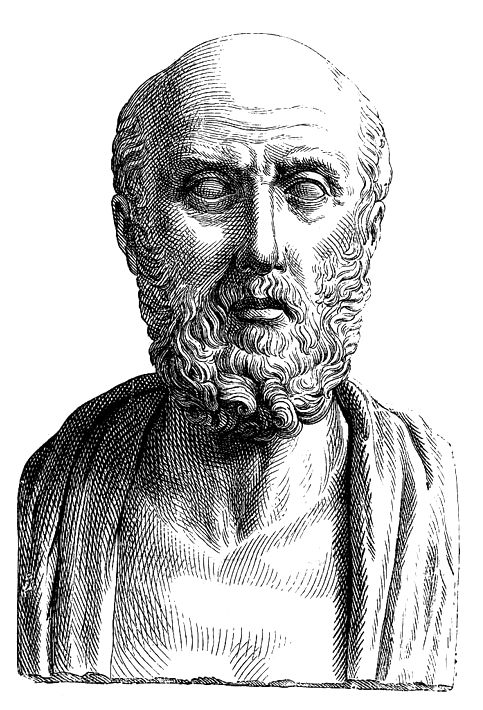
Hippocrates of Kos
Father of Western medicine
Physician of the Hippocratic school who pulled medicine toward observation, prognosis, and an ethic of doing no harm—care as a craft with a conscience.
Life at a glance
Key contributions
- Shifted medicine toward natural causes and case observation
- Left a corpus that trained physicians for centuries
- Established a professional ethic of non-maleficence
- Tied diet, environment, and prognosis into one craft
- Made the physician publicly answerable to the patient
Notable works, inventions and offices
Hippocratic Corpus & Oath tradition
Still standsFoundational medical texts and professional ethic. Today: Oath still recited in adapted form worldwide.
Life and career
The Hippocratic Corpus is a library, not one man’s notebook, but it carries a revolution: disease as a natural process to be watched, not only a curse to be bargained with. Case histories, diet, environment, and the course of fever become data.
The Oath—whatever its exact authorship—binds the healer to confidentiality, to the patient’s good, and to refusing what would poison. It made medicine a moral profession, not a marketplace trick.
Every modern clinic still lives in that turn: look, record, refrain from harm, tell the truth about the body.
Legacy and impact
Medicine as science plus vow.
- AI diagnostics and pharma incentives still need the Oath’s brake.
Principles and words
View of humanity
The body is intelligible. The healer’s power is dangerous unless yoked to the patient’s good.
How we should operate
Take a history. Watch the course. Refuse lucrative harm.
- Observe before you mythologize
- Do no harm
- The patient is not a means
- Prognosis as honesty
“As to diseases, make a habit of two things—to help, or at least to do no harm.”
Sources
Every statement on this page traces to Wikipedia, Wikidata, Wikiquote, or the curated Humanity’s Atlas record. Nothing is invented. Same standard for everyone: contributions first, neutral language.