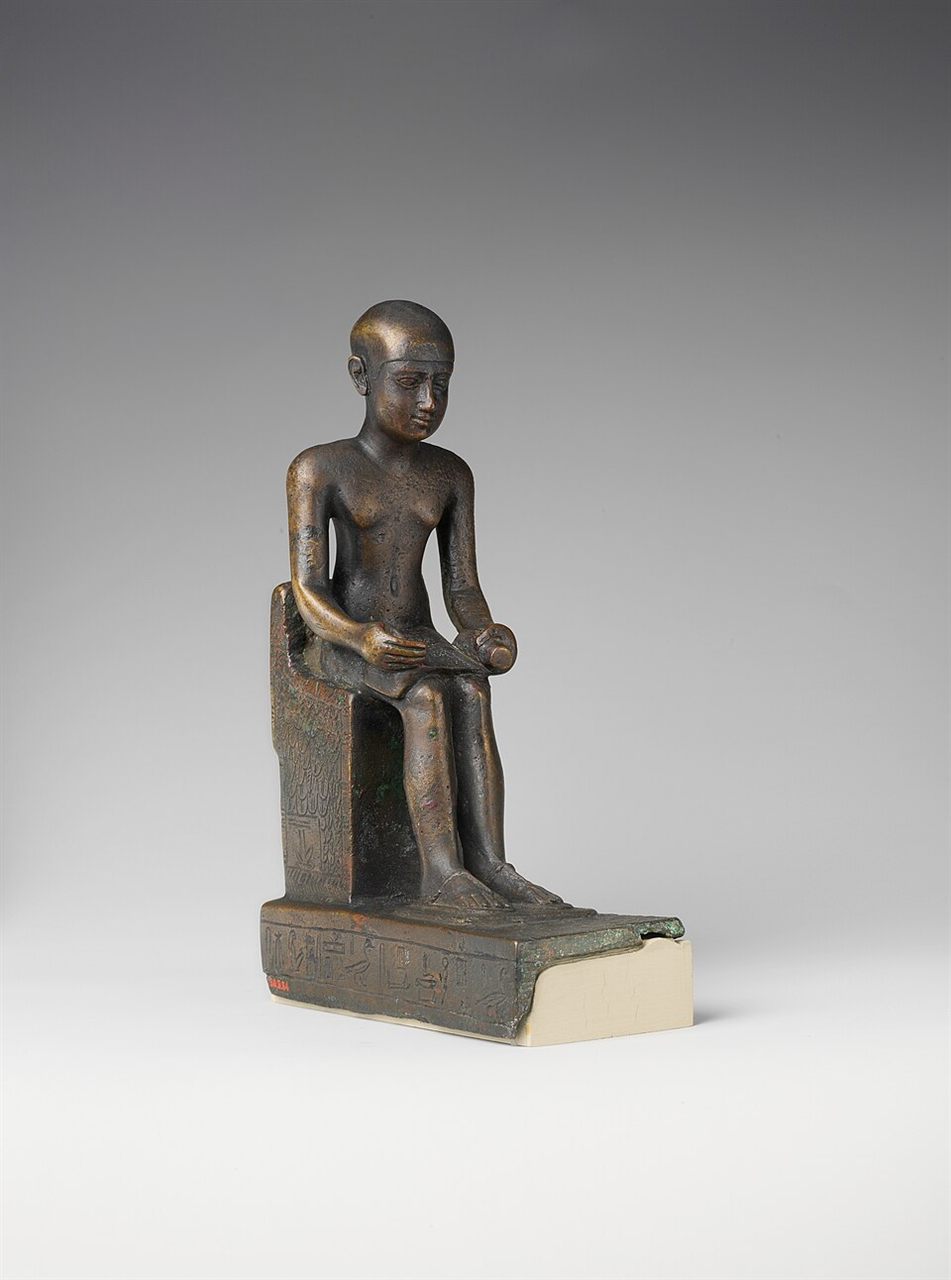
Imhotep
First named architect and physician
Chancellor to Djoser who designed the Step Pyramid and was later deified as a god of healing
Life at a glance
Key contributions
- Designed the Step Pyramid, first monumental stone architecture
- Elevated a commoner to the highest technical office of the state
- Became Egypt’s enduring symbol of healing wisdom
- Linked building, administration, and care in one vocation
- Set the pattern of named scientific-technical memory
Notable works, inventions and offices
Step Pyramid of Djoser
Still standsFirst large-scale dressed-stone pyramid complex. Today: Saqqara; UNESCO World Heritage.
Life and career
Imhotep served Pharaoh Djoser in the Third Dynasty. As overseer of works he conceived the Step Pyramid at Saqqara: stone stacked as a lasting mountain for the king, and the first monumental architecture in dressed stone.
Later Egyptian and Greek tradition remembered him as a physician and sage. Temples of Imhotep became healing sites; Greeks identified him with Asclepius. Whether every later medical tale is historical, the civilizational fact is clear: a commoner rose by skill, not only blood, and knowledge of body and stone was treated as sacred service.
He stands at the beginning of named expertise. Humanity’s growth has always needed people who can make shelter, order, and care—and who leave methods others can inherit.
Legacy and impact
The named expert: architecture and medicine as gifts to the human city.
- Infrastructure and public health still rest on unnamed Imhoteps—and on remembering them.
Principles and words
View of humanity
Human skill—stone, medicine, administration—can serve the living and the dead when it is taught and remembered.
How we should operate
Honor competent service. Preserve methods. Let talent rise.
- Knowledge as public service
- Building that outlasts the builder
- Healing as a vocation
- Merit beside birth
“I am Imhotep… chief of sculptors, chief of carpenters.”
Sources
Every statement on this page traces to Wikipedia, Wikidata, Wikiquote, or the curated Humanity’s Atlas record. Nothing is invented. Same standard for everyone: contributions first, neutral language.