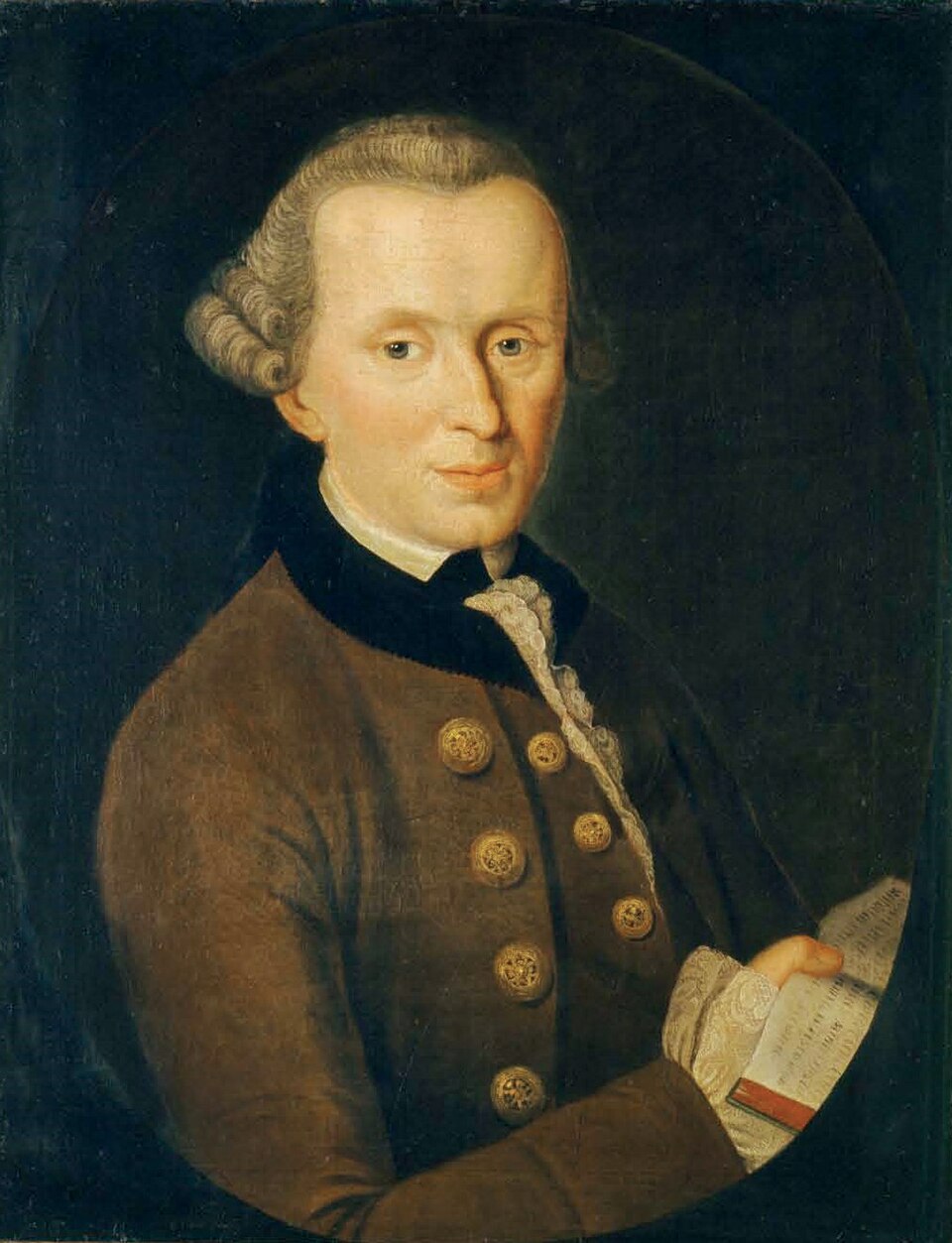
Immanuel Kant
Philosopher of the moral law within
Thinker who located dignity in the capacity to legislate the moral law—treat humanity, in yourself and others, always as an end.
Life at a glance
Key contributions
- Wrote the three Critiques that define modern philosophy
- Formulated the categorical imperative
- Located dignity in rational moral agency
- Sketched perpetual peace as legal order among republics
- Gave human-rights talk its deepest secular grammar
Notable works, inventions and offices
Critiques & Perpetual Peace
Still standsCritical philosophy and a sketch of lawful international order. Today: Foundation of modern ethics and much human-rights theory.
Life and career
Kant barely left Königsberg and remade ethics, knowledge, and peace theory. Critique of Pure Reason limited what we can know; the Groundwork and second Critique told us what we must do anyway.
The categorical imperative and perpetual peace are demanding. He failed them in places (race comments that later readers rightly reject). The standard he set is still used to judge him—and us.
UN-shaped talk of persons as ends has a Königsberg accent.
Legacy and impact
Dignity as a universal form, not a tribal gift.
- AI, markets, and war still fail the means-end test daily.
Principles and words
View of humanity
Every person is a legislator in the kingdom of ends.
How we should operate
Ask if your rule could be everyone’s. Build peace as architecture, not mood.
- Act only on maxims you could will as universal law
- Humanity is an end, never a mere means
- Sapere aude — dare to know
- Peace is a republican project
“Two things fill the mind with ever new admiration: the starry sky above me and the moral law within me.”
Sources
Every statement on this page traces to Wikipedia, Wikidata, Wikiquote, or the curated Humanity’s Atlas record. Nothing is invented. Same standard for everyone: contributions first, neutral language.