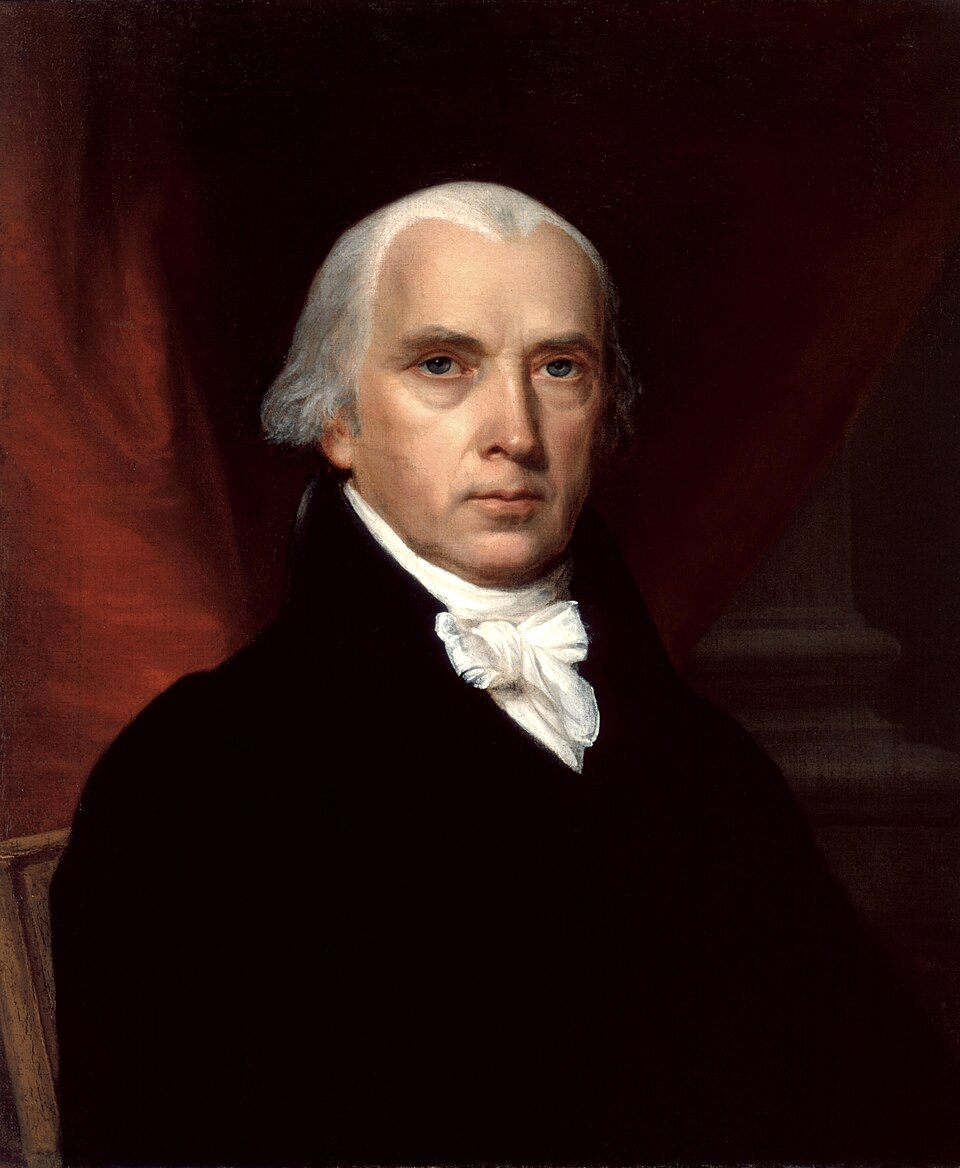
James Madison
Father of the Constitution
Architect of the Constitution and Bill of Rights—the small man who designed a large machine to keep ambition from eating liberty.
Life at a glance
Key contributions
- Principal architect of the U.S. Constitution
- Co-wrote the Federalist defense of the extended republic
- Pushed through the Bill of Rights
- Designed checks to restrain both tyrant and mob
- Left a frame still in force after two centuries
Notable works, inventions and offices
U.S. Constitution & Bill of Rights
Still standsFrame of federal government and first ten amendments. Today: Oldest working written constitution of a large republic.
Life and career
Madison arrived at Philadelphia with a plan, wrote much of the Federalist case for extended republics, and then, under pressure from the country, shepherded the Bill of Rights.
He feared both kings and unchecked majorities. Separation of powers, federalism, and rights against the government are his engineering.
The document is compromised (slavery’s shadow). The machine still runs, and still needs the amendments he began.
Legacy and impact
Liberty as architecture.
- Polarization is the faction problem he diagnosed.
Principles and words
View of humanity
Humans are not angels; government must be designed accordingly.
How we should operate
Write the structure. Then add the fences.
- Ambition must counteract ambition
- Enumerate rights
- An extended republic can dilute faction
- No sacred cow of unamended power
“If men were angels, no government would be necessary.”
Sources
Every statement on this page traces to Wikipedia, Wikidata, Wikiquote, or the curated Humanity’s Atlas record. Nothing is invented. Same standard for everyone: contributions first, neutral language.