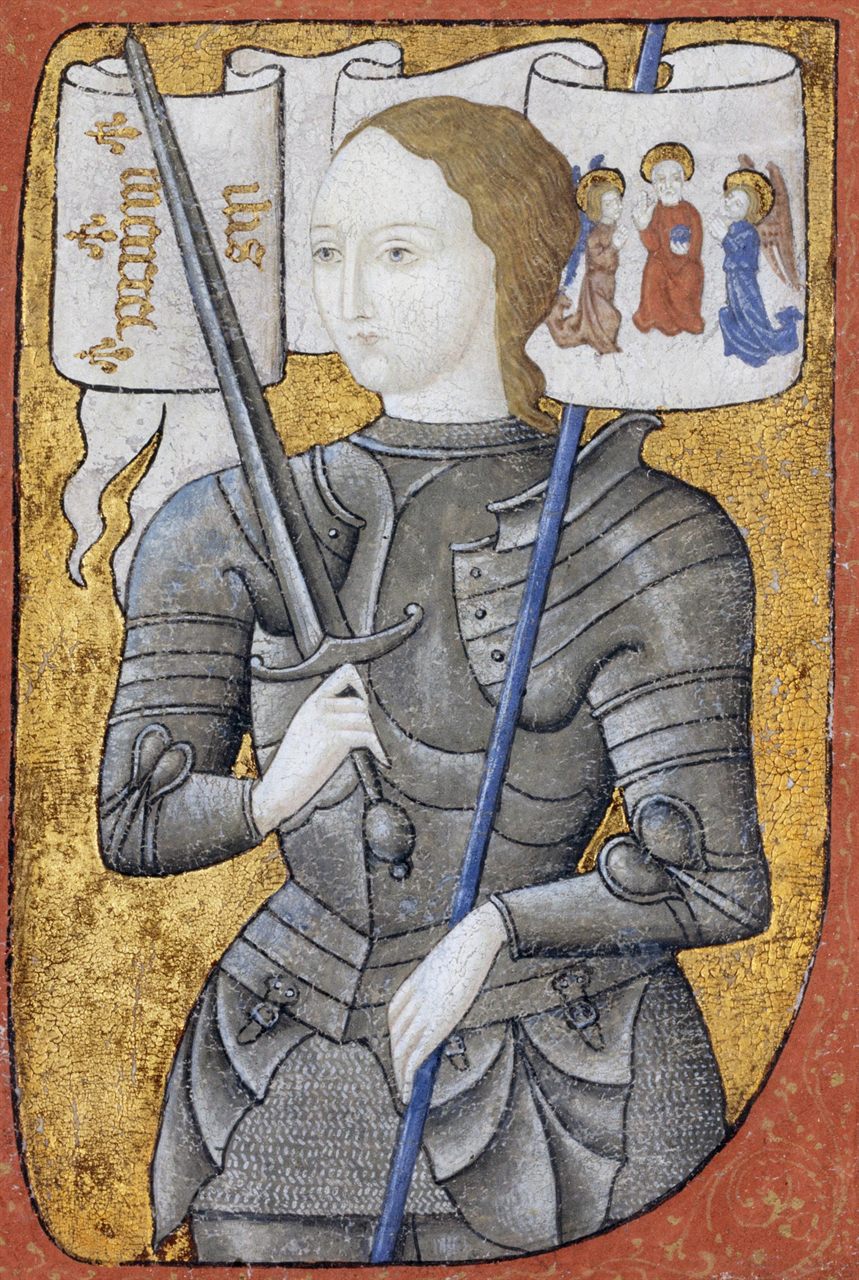
Joan of Arc
Maid of Orléans
Peasant who led French forces at a turning point of the Hundred Years’ War, was captured, tried for heresy, and burned
Life at a glance
Key contributions
- Helped lift the siege of Orléans at a decisive moment of the Hundred Years’ War
- Enabled Charles VII’s coronation and a turning of French political legitimacy
- Led troops as a teenage woman in a male military hierarchy
- Endured a politicized heresy trial with unwavering claims of conscience
- Became, after rehabilitation and canonization, a lasting symbol of vocation under fire
Notable works, inventions and offices
Orléans campaign & French turning point
TransformedLife and career
Joan of Arc (c. 1412–1431) was a peasant girl from Domrémy who claimed guidance by saints to save France during the Hundred Years’ War. Against every expectation of rank and gender, she reached the Dauphin, gained troops, and helped lift the siege of Orléans in 1429.
Her campaigns contributed to Charles VII’s coronation at Reims, a turning point in French legitimacy. Captured by Burgundian allies of England, she was sold, tried for heresy and cross-dressing in a politicized ecclesiastical court, and burned at Rouen at about nineteen.
A postwar nullification trial rehabilitated her name; centuries later she was canonized. Her story became national myth and feminist touchstone: conscience and vocation under institutional disbelief.
Joan’s accomplishment was not only military; it was to prove that moral clarity and courage can arrive from outside the official hierarchy—and that judicial murder can later become a nation’s conscience.
Legacy and impact
Vocation under fire—and the long arc by which judicial murder can become national conscience.
- Young leaders and women in crisis roles still face institutional disbelief.
Principles and words
View of humanity
Ordinary people can carry extraordinary vocation.
How we should operate
Listen for vocation that serves more than ego. Test inspiration by fruits.
- Conscience above fear
- Courage available beyond rank and gender
- National renewal through moral clarity
- Fidelity to inner vocation under trial
“I am not afraid… I was born to do this.”
Sources
Every statement on this page traces to Wikipedia, Wikidata, Wikiquote, or the curated Humanity’s Atlas record. Nothing is invented. Same standard for everyone: contributions first, neutral language.