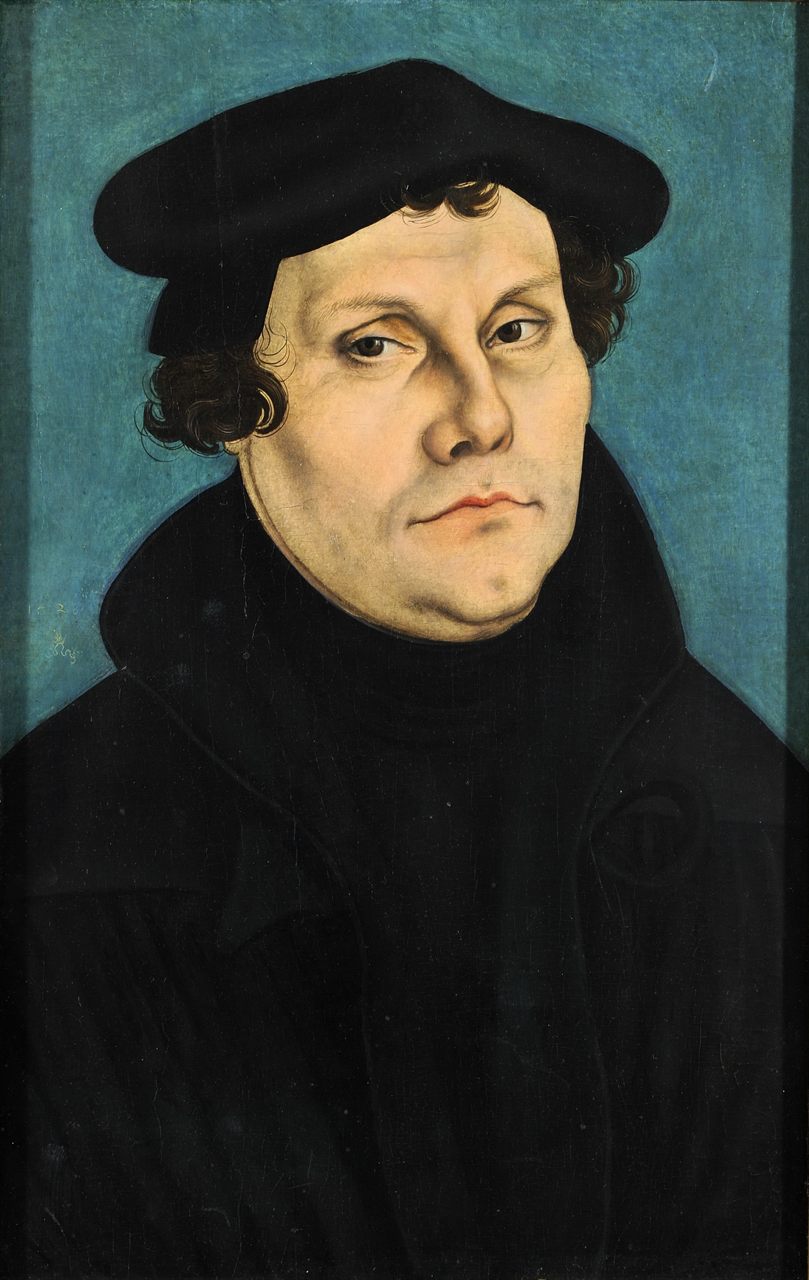
Martin Luther
Catalyst of the Reformation
Augustinian monk whose challenge to indulgences and authority split Western Christianity, elevated vernacular scripture, and reordered European politics and conscience.
Life at a glance
Key contributions
- Sparked the Protestant Reformation with the Ninety-Five Theses
- Translated the Bible into German, shaping language and lay literacy
- Articulated justification by faith as a reforming doctrine
- Defended conscience under political and religious threat at Worms
- Used the printing press to create a new mass religious public
Notable works, inventions and offices
German Bible translation & Protestant confessions
Still standsScripture and churches of the Reformation. Today: Global Protestantism; vernacular literacy drives.
Life and career
Martin Luther (1483–1546), Augustinian monk and theology professor at Wittenberg, protested indulgences and published the Ninety-Five Theses in 1517—an act that helped ignite the Protestant Reformation.
He translated the Bible into forceful German, taught justification by faith, and defied imperial and papal pressure at Worms: conscience bound by scripture. Print amplified his voice across Europe.
Luther’s reforms reshaped church, state, education, and language, while his later polemics—including harsh writings against peasants and Jews—leave a morally mixed legacy that must be taught honestly.
His core accomplishment remains the reopening of scripture and conscience as contested public goods, not only clerical property.
Legacy and impact
Religious authority decentralized; individual conscience politicized.
- Whistleblowing against institutions still channels Lutheran courage—and risk.
Principles and words
View of humanity
Every person stands before God without needing a market of mediation.
How we should operate
Put foundational texts in the people’s language. Allow conscience public voice—and accept the conflicts that follow.
- Conscience bound to scripture
- Faith over purchasable grace
- Vernacular access to sacred text
- Critique of corrupt religious power
“Here I stand. I can do no other.”
Sources
Every statement on this page traces to Wikipedia, Wikidata, Wikiquote, or the curated Humanity’s Atlas record. Nothing is invented. Same standard for everyone: contributions first, neutral language.