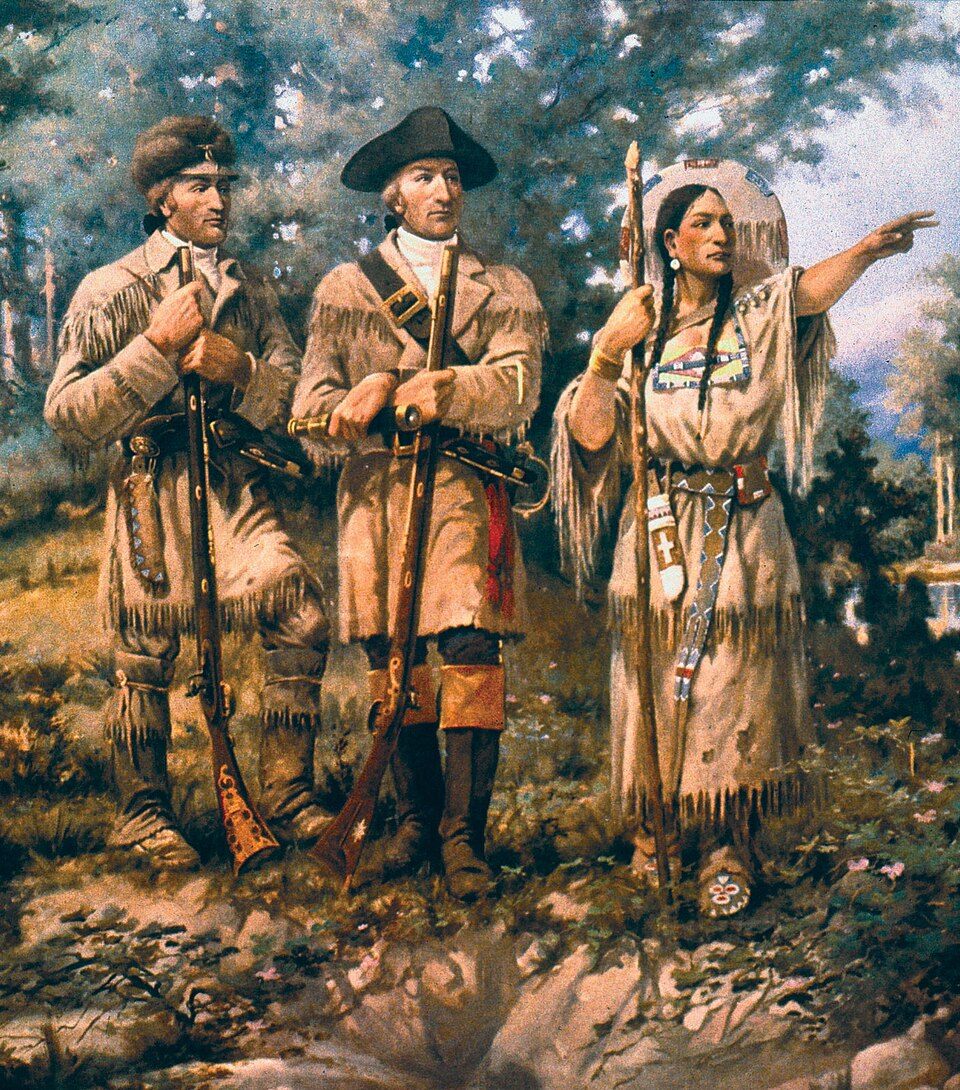
Sacagawea
Guide of the continent’s crossing
The young Shoshone woman who, with a child on her back, interpreted, foraged, and signaled peace so an American expedition could cross a continent it did not own.
Life at a glance
Key contributions
- Guided and interpreted for Lewis and Clark
- Secured Shoshone horses at a crisis of the journey
- Signaled peaceful intent by traveling with her child
- Contributed geographic and food knowledge across the Rockies
- Became the most recognized Native woman in American public memory
Notable works, inventions and offices
Guidance of the Corps of Discovery
TransformedInterpretation, diplomacy, and geographic knowledge. Today: U.S. map of the West; Native memory of a woman who still belonged to her people.
Life and career
Taken as a girl in a raid, Sacagawea was living among the Hidatsa when Lewis and Clark hired Toussaint Charbonneau. She translated, recognized landmarks, found food, and, at a desperate moment, met a Shoshone band led by her brother—horses followed.
Her presence with an infant told wary nations this was not a war party. She voted with the company on where to winter. Then history tried to make her only a helper in someone else’s myth.
She is the Indigenous mind without which the famous map does not close.
Legacy and impact
The guide who made the crossing possible.
- Projects still fail when they ignore the people who already know the river.
Principles and words
View of humanity
Exploration that erases the guide is a lie about how the continent was crossed.
How we should operate
Listen to the person who knows the pass.
- Knowledge of the land is power
- A child can be a flag of peace
- Translate both ways
- Remember who already lived on the route
“The presence of Sacagawea… reconciled all the Indians as to our friendly intentions.”
Sources
Every statement on this page traces to Wikipedia, Wikidata, Wikiquote, or the curated Humanity’s Atlas record. Nothing is invented. Same standard for everyone: contributions first, neutral language.