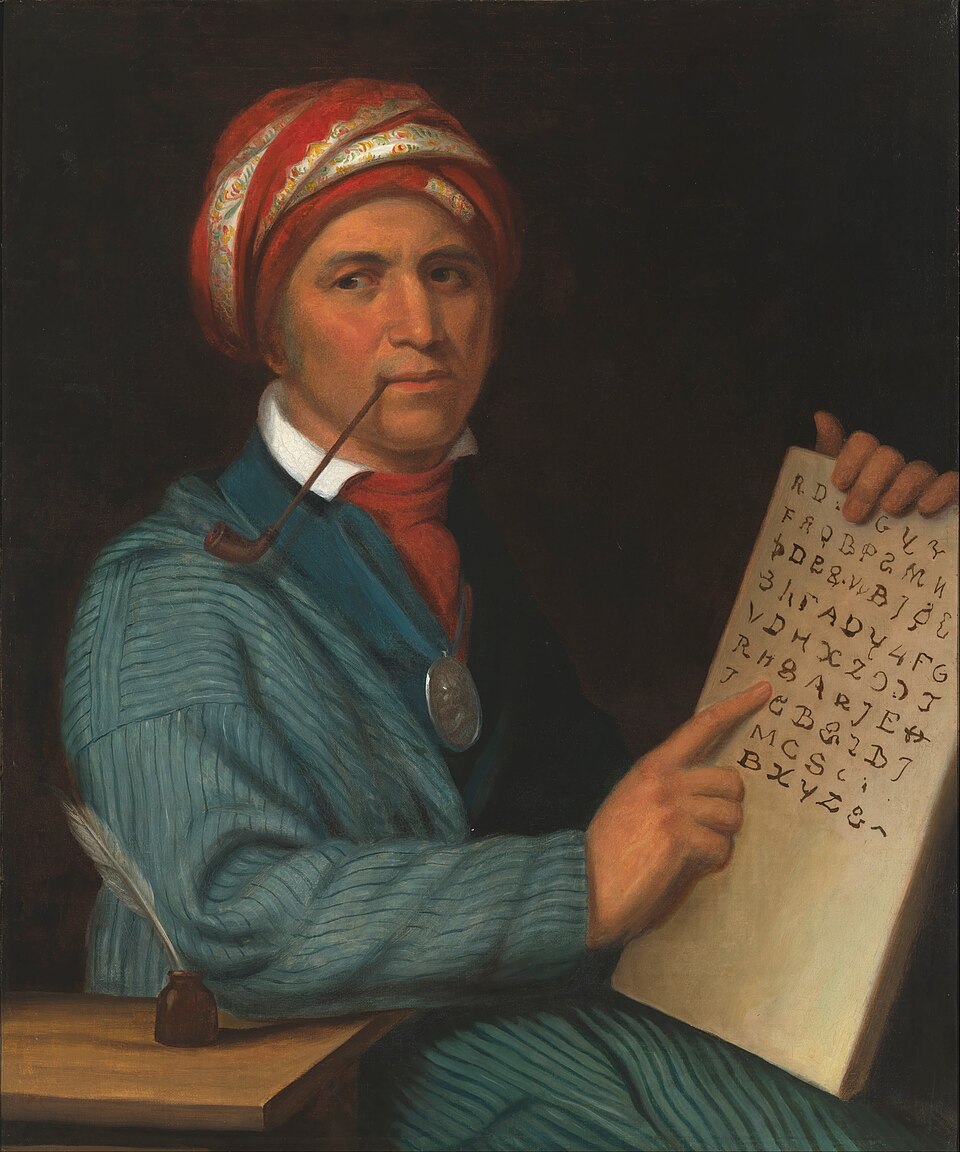
Sequoyah
Inventor of the Cherokee syllabary
The man who, without first being literate in English, created a writing system so his people could read, print, and govern in their own tongue.
Life at a glance
Key contributions
- Invented the Cherokee syllabary
- Enabled mass Cherokee literacy within a generation
- Made a Native press possible
- Preserved law and story through removal
- Became one of history’s few lone inventors of a full script
Notable works, inventions and offices
Cherokee syllabary
Still standsWorking writing system for Cherokee. Today: Still taught; newspapers and scripture followed within years.
Life and career
Sequoyah (George Gist) watched the power that ‘talking leaves’ gave settlers. He invented a syllabary of eighty-some signs. Within years the Cherokee Phoenix was in print and literacy rates soared.
The Trail of Tears still came. The syllabary did not prevent removal; it did keep a nation able to write its laws, hymns, and memory on the far side of the river.
Few individuals have given a whole people an alphabet of their own.
Legacy and impact
Indigenous literacy as an act of nationhood.
- Language revival movements still walk Sequoyah’s path.
Principles and words
View of humanity
A people without a script is forced to think in someone else’s house.
How we should operate
Build the tool. Teach it fast. Publish.
- A nation needs its own letters
- Invent what the empire will not give you
- Print the laws in the people’s speech
- Literacy is sovereignty
“The Cherokee people can now write.”
Sources
Every statement on this page traces to Wikipedia, Wikidata, Wikiquote, or the curated Humanity’s Atlas record. Nothing is invented. Same standard for everyone: contributions first, neutral language.