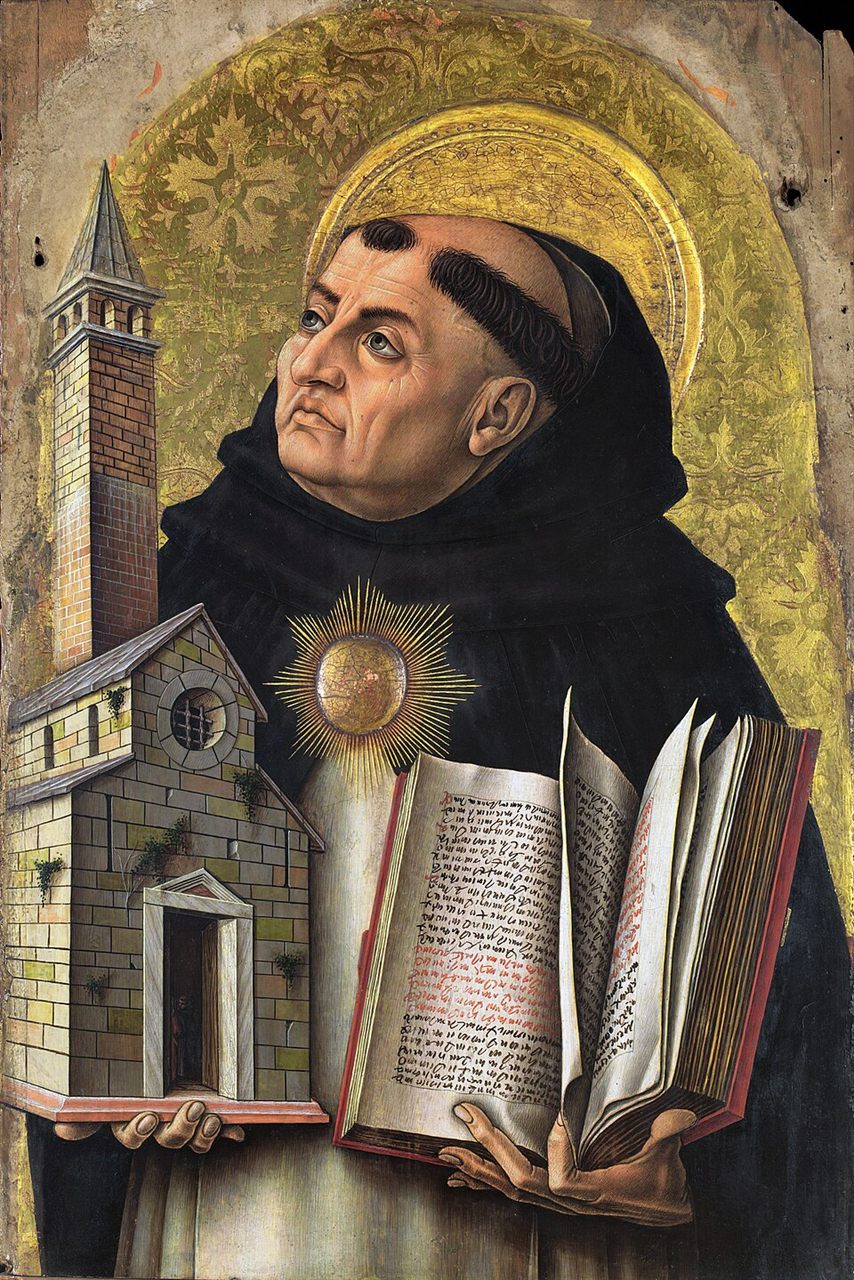
Thomas Aquinas
Architect of reasoned faith
Dominican whose Summa showed that Aristotle and the Gospel could be built into one cathedral of argument—reason as a friend of the highest good.
Life at a glance
Key contributions
- Wrote the Summa as a cathedral of questions
- Reconciled Aristotelian science with Christian doctrine
- Defined natural law for later rights talk
- Modeled charitable objection-and-reply
- Shaped universities as places of disputatio
Notable works, inventions and offices
Summa Theologiae
Still standsSystematic theology and philosophy. Today: Still the backbone of much Catholic intellectual life.
Life and career
Thomas studied under Albert the Great, taught in Paris, and wrote at a speed that still startles. The Summa Theologiae proceeds by question, objection, answer: a method of intellectual fairness.
He baptized Aristotle without swallowing him whole. Natural law, just war, the virtues, the dignity of created intellect—all become a system other people can inhabit and criticize.
He stopped writing after a late experience, calling his work straw. The straw still holds roofs.
Legacy and impact
Argument as hospitality.
- Polarized debate still fails Thomas’s first test: can you steel-man the other side?
Principles and words
View of humanity
Human reason is a created light; it is made to meet a greater light, not to sneer in the dark.
How we should operate
State the other side well. Then answer.
- Grace does not destroy nature; it perfects it
- Fairness to the objection
- Law is an ordinance of reason for the common good
- The highest study is still a craft
“Better to illuminate than merely to shine.”
Sources
Every statement on this page traces to Wikipedia, Wikidata, Wikiquote, or the curated Humanity’s Atlas record. Nothing is invented. Same standard for everyone: contributions first, neutral language.