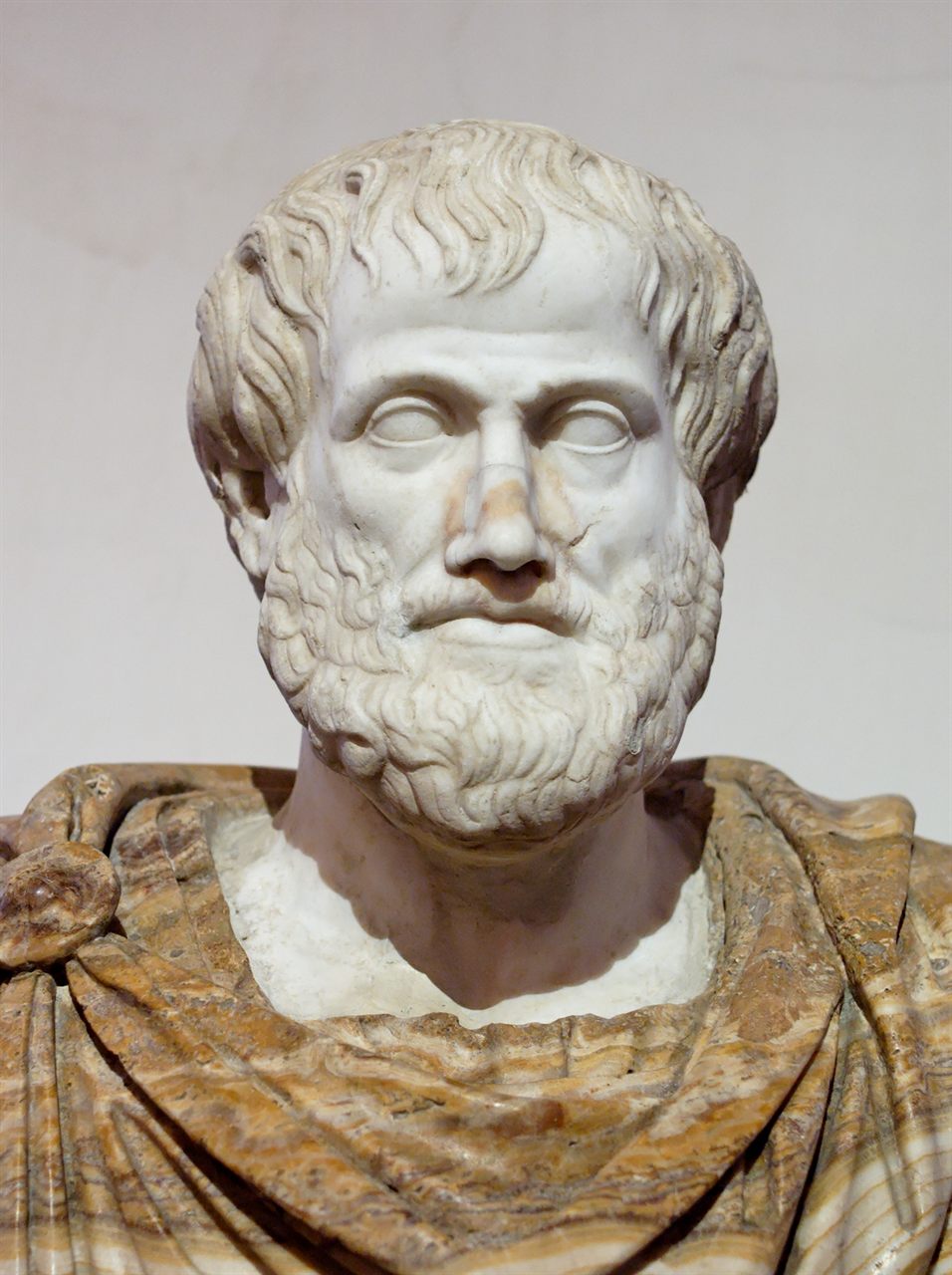
Aristotle
Master of Those Who Know
Philosopher-scientist who systematized logic, biology, ethics, and politics—teacher of Alexander and the intellectual backbone of later Islamic and European scholasticism.
Life at a glance
Key contributions
- Founded formal logic as a systematic discipline
- Built foundational works in ethics, politics, biology, and metaphysics
- Tutored Alexander and founded the Lyceum research community
- Established virtue ethics and the ideal of practical wisdom (phronesis)
- Set the template for encyclopedic scientific and philosophical inquiry
Notable works, inventions and offices
Organon, Ethics, Politics, biological works
Still standsCorpus that structured Western and Islamic curricula. Today: Logic, virtue ethics, and political science roots.
Life and career
Aristotle (384–322 BCE) studied under Plato, tutored Alexander the Great, and founded the Lyceum. He built encyclopedic systems of logic, biology, ethics, politics, rhetoric, and metaphysics grounded in observation and classification.
Where Plato emphasized transcendent Forms, Aristotle analyzed substances, causes, and the actualization of potentials in nature. His ethics centers the golden mean and eudaimonia—human flourishing through virtue and practical wisdom.
His logic (the Organon) trained minds for two millennia; his politics treated humans as political animals who need well-designed constitutions. Even when later science overturned specifics, his method of systematic inquiry endured.
Aristotle’s accomplishment is the toolkit: categories, arguments, and the confidence that the world can be known by patient attention.
Legacy and impact
The encyclopedia mind that refused to separate science from ethics.
- AI-era classification of knowledge still faces Aristotelian questions of purpose.
Principles and words
View of humanity
Humans fulfill their nature through reason, friendship, and life in a well-ordered polis.
How we should operate
Study what is. Train character. Design institutions that fit human nature rather than fantasies of it.
- Empirical observation joined to logic
- Virtue as cultivated habit (golden mean)
- Humans as political animals
- Knowledge classified for use
“Man is by nature a political animal.”
Sources
Every statement on this page traces to Wikipedia, Wikidata, Wikiquote, or the curated Humanity’s Atlas record. Nothing is invented. Same standard for everyone: contributions first, neutral language.