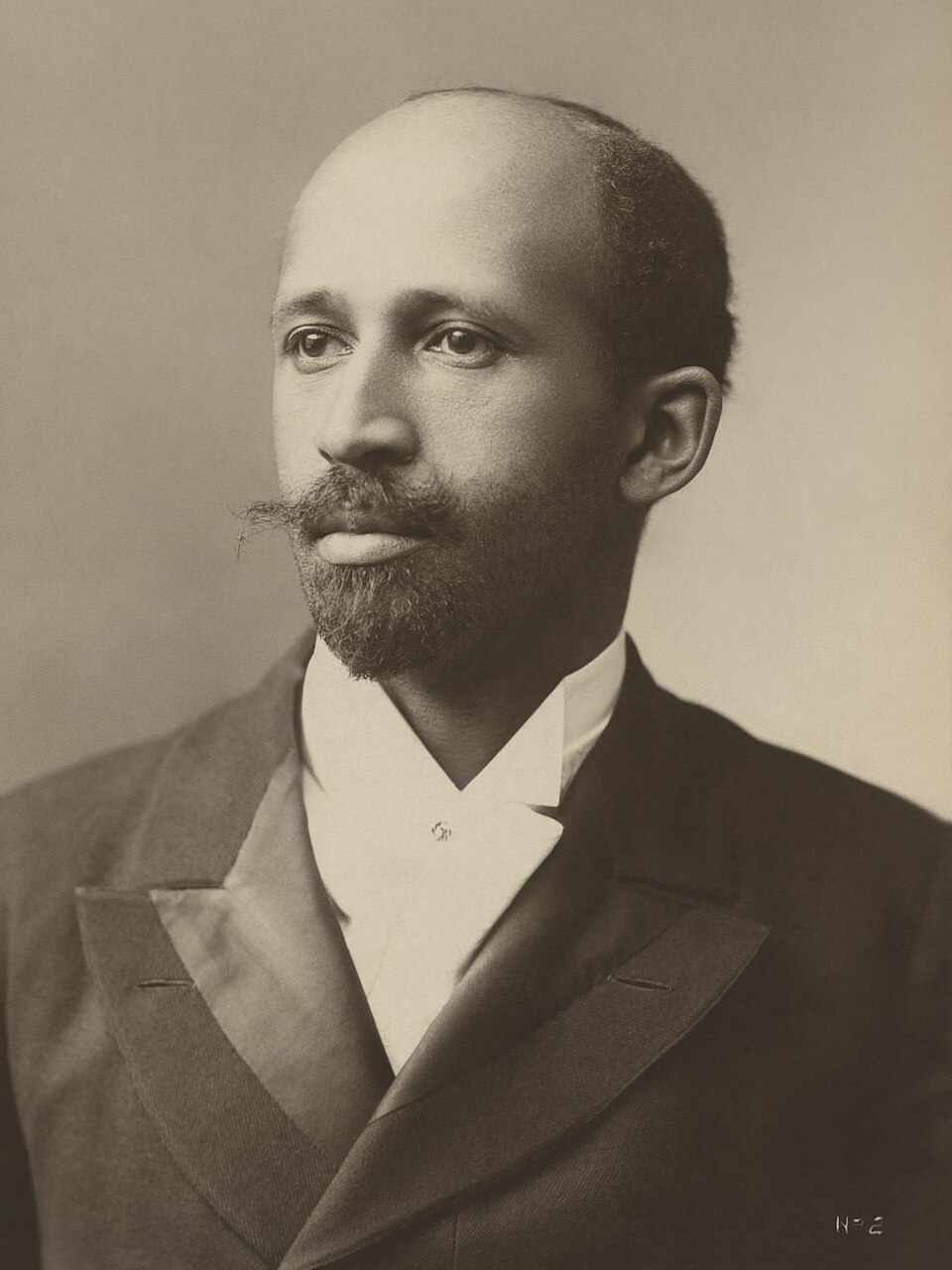
W. E. B. Du Bois
Scholar of the color line
First Black Harvard PhD who mapped the souls of Black folk and the color line as the problem of the twentieth century—and helped found the NAACP.
Life at a glance
Key contributions
- Wrote The Souls of Black Folk
- Co-founded the NAACP
- Reframed Reconstruction against the Lost Cause
- Organized Pan-African intellectual politics
- Set the scholarly standard for studying racial democracy
Notable works, inventions and offices
The Souls of Black Folk & NAACP
Still standsClassic of sociology and a civil-rights institution. Today: Still in every serious syllabus of American freedom.
Life and career
Du Bois wrote sociology as moral X-ray: The Philadelphia Negro, The Souls of Black Folk, Black Reconstruction. Double consciousness named a wound and a lens. He insisted on the vote, on education, on telling Reconstruction truly.
He co-founded the NAACP, edited The Crisis, organized Pan-African congresses, and died in Accra as African independence rose. The color line, he had warned, was global.
Few scholars so changed both a nation’s archive and its streets.
Legacy and impact
Scholarship as liberation infrastructure.
- The color line mutated; Du Bois’s method did not expire.
Principles and words
View of humanity
A people locked out of the true story cannot grow; neither can the nation that locked them.
How we should operate
Measure. Narrate. Organize. Cross oceans of solidarity.
- The problem of the twentieth century is the color line
- Truthful history is a civil right
- Education without the ballot is incomplete
- Think with the world, not only the parish
“The problem of the twentieth century is the problem of the color-line.”
Sources
Every statement on this page traces to Wikipedia, Wikidata, Wikiquote, or the curated Humanity’s Atlas record. Nothing is invented. Same standard for everyone: contributions first, neutral language.