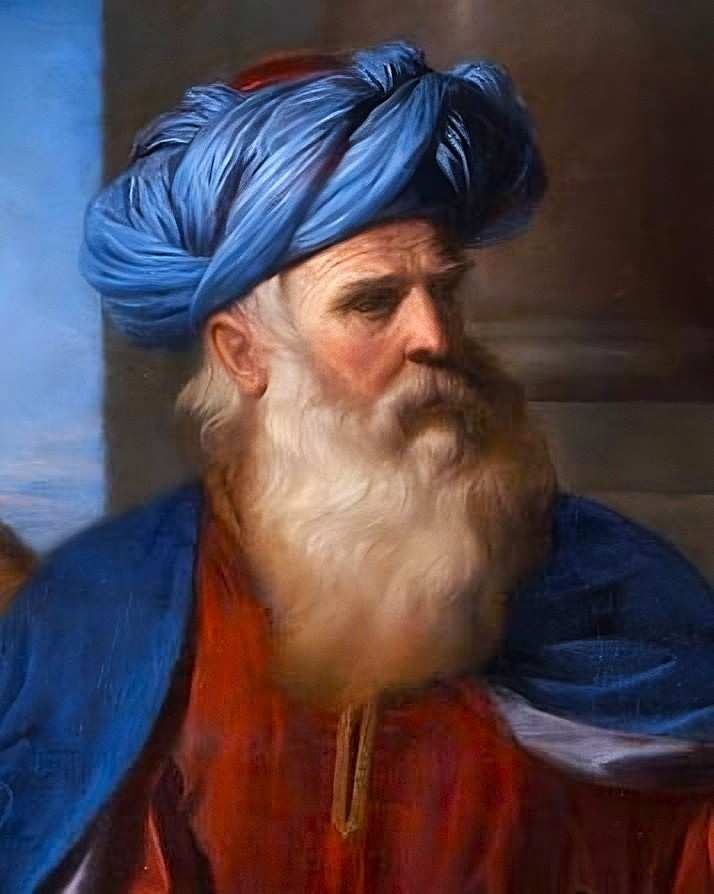
Abraham
Father of faith
Patriarch of Jews, Christians, and Muslims—the man who left home at a call, trusted a promise, and became the father of peoples and of faith itself.
Life at a glance
Key contributions
- Became the patriarchal root of three world faiths
- Modeled covenant trust and hospitality
- Interceded for a city slated for destruction
- Left a name that still binds and divides civilizations
- Defined faith as obedience joined to moral argument
Notable works, inventions and offices
Covenant of Abraham
Still standsPromise of people, land, and blessing to the nations. Today: Foundation of Judaism, Christianity, and Islam.
Life and career
Tradition places Abram leaving Ur for a land he did not own, renamed Abraham, ‘father of many.’ Covenant, hospitality to strangers, argument with God over Sodom, and the binding of Isaac (or Ishmael in Islamic telling) make him the pattern of trust under impossible command.
Judaism, Christianity, and Islam all claim him. That shared ancestry is one of humanity’s rare agreements: holiness began as a journey, not a palace.
He is less a biography than a root. Three civilizations grew from that root, for blessing and for quarrel.
Legacy and impact
Faith as a road, not a fortress.
- The children of Abraham still decide whether the blessing is for the nations or only for their own.
Principles and words
View of humanity
One life of trust can father nations.
How we should operate
Leave the familiar when the good requires it. Keep the tent open.
- Go when you are called
- Covenant over blood-magic
- Hospitality to the stranger
- Argue with heaven for the innocent
“Go from your country… to the land that I will show you.”
Sources
Every statement on this page traces to Wikipedia, Wikidata, Wikiquote, or the curated Humanity’s Atlas record. Nothing is invented. Same standard for everyone: contributions first, neutral language.