Muhammad ibn Abd Allah
Prophet of Islam
Founder of the Islamic community whose proclamation of radical monotheism, social ethics, and political leadership transformed Arabia and beyond.
Life at a glance
Key contributions
- Proclaimed monotheism and ethical reform that founded the Islamic faith
- Established the ummah through the Hijra and Medinan community-building
- Left the Qur’an as a scripture that shaped a world civilization
- Instituted practices of justice, zakāt, and care for the vulnerable
- United Arabia under a framework that outlasted tribal blood-feud politics
Notable works, inventions and offices
The Qur’an
Still standsLife and career
Muhammad ibn Abd Allah was born in Mecca around 570 CE into a trading society structured by tribe and polytheistic cult. Around 610 he began receiving revelations that proclaimed radical monotheism (tawḥīd), moral accountability, and care for the orphan and poor—challenging Meccan elites.
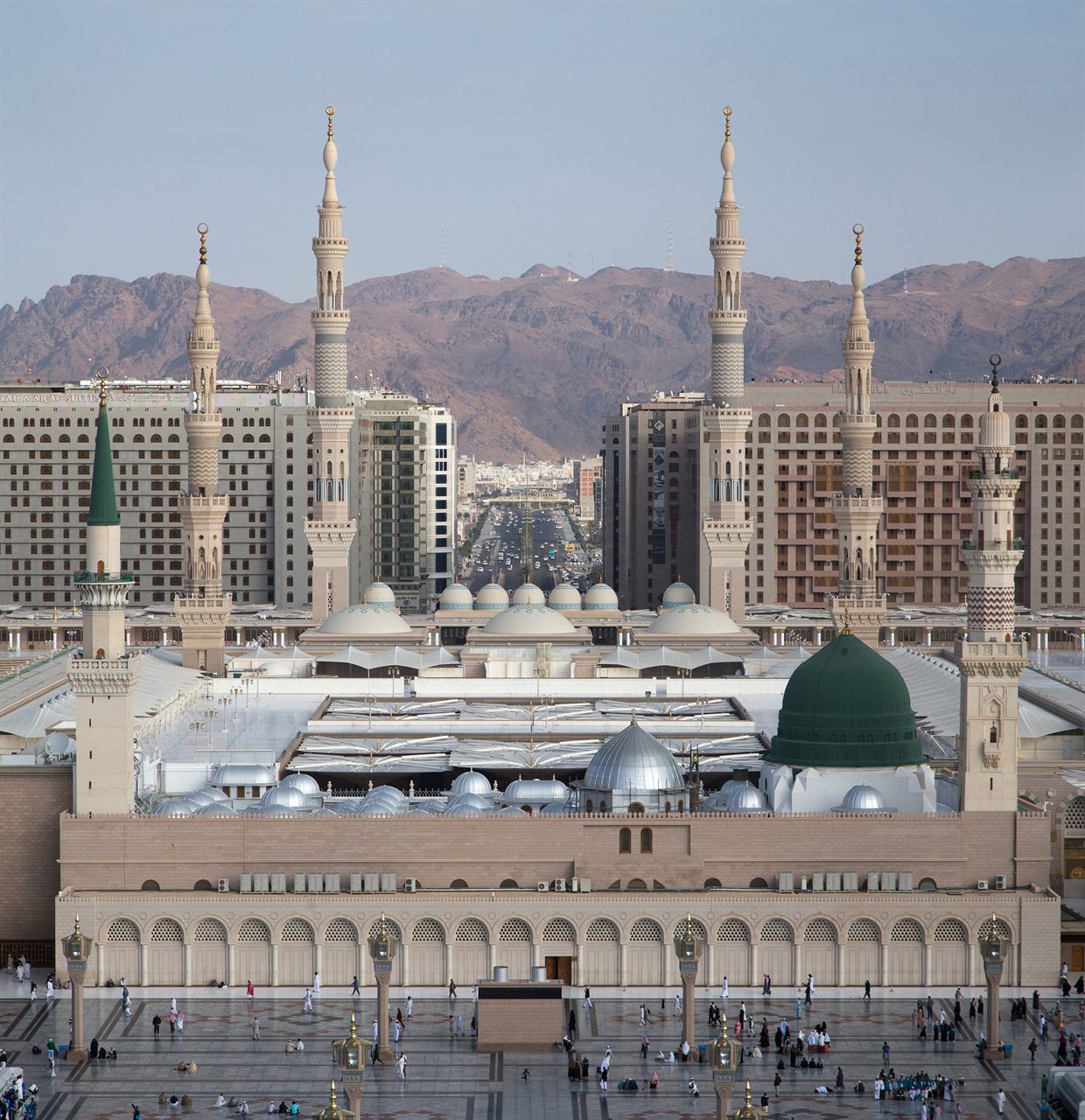
Persecution led to the Hijra to Medina in 622, which founded a new ummah (community) and became year one of the Islamic calendar. As prophet and statesman he mediated tribal conflict, fought defensive and consolidating wars, and established practices of prayer, almsgiving, and law.
The Qur’an, collected after his death, became Islam’s scripture; his example (sunnah) shaped law and ethics. Within a century, Islamic civilization spanned from Iberia to Central Asia—not only by conquest but by a portable package of faith, literacy, and communal institutions.
His insistence that nobility is measured by righteousness rather than lineage still challenges racism and class contempt. Brotherhood beyond tribe remains one of history’s most consequential social technologies.
Legacy and impact
Spiritual proclamation fused with community-building at civilizational scale.
- Anti-tribal equality before God challenges racism and class contempt.
Principles and words
View of humanity
Humans are equal in origin, distinguished by piety rather than lineage.
How we should operate
Anchor ethics higher than tribe or market. Build solidarity institutions.
- Tawḥīd — oneness of God
- Justice and prohibition of oppression
- Zakāt and care for the poor
- Brotherhood beyond tribe
“The most noble of you in the sight of God is the most righteous of you.”
Sources
Every statement on this page traces to Wikipedia, Wikidata, Wikiquote, or the curated Humanity’s Atlas record. Nothing is invented. Same standard for everyone: contributions first, neutral language.