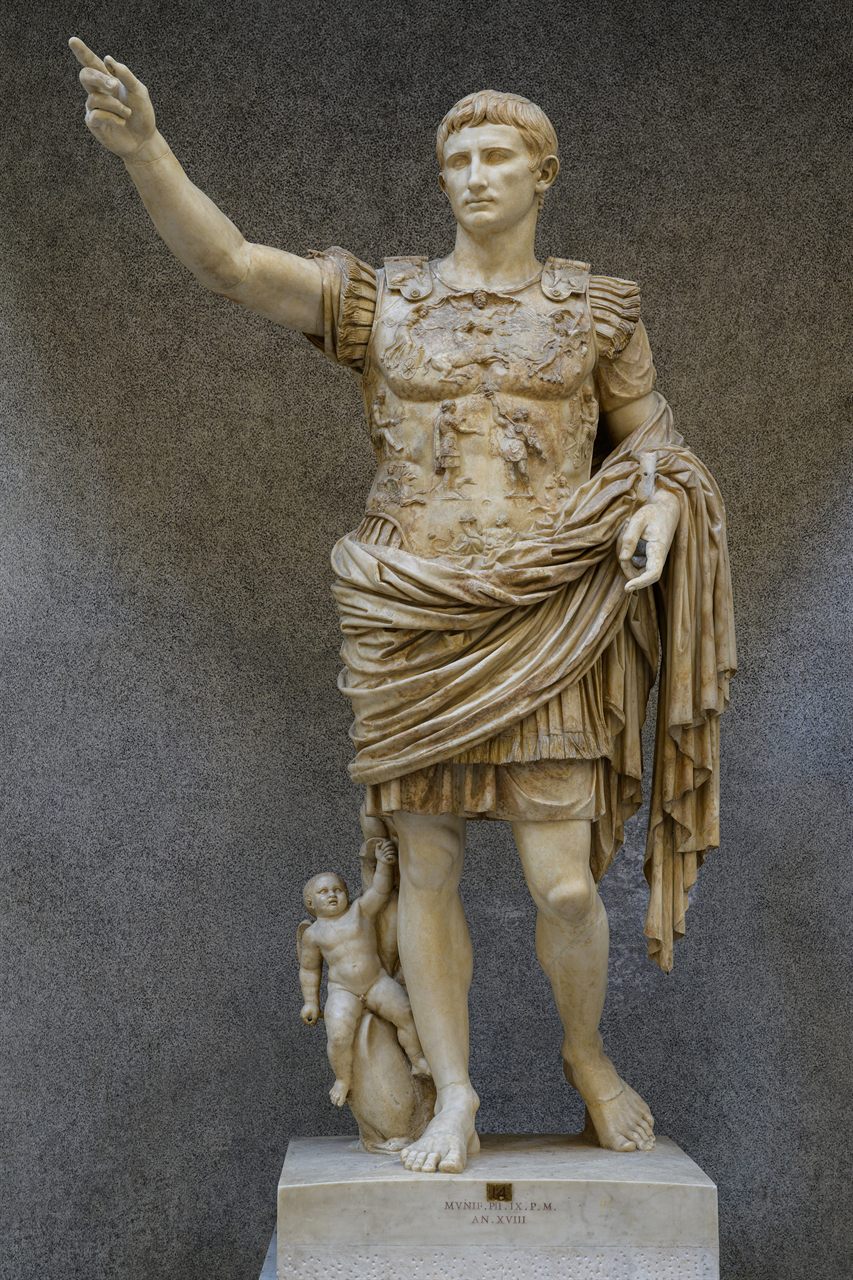
Augustus (Octavian)
First Roman Emperor
Heir of Caesar who ended the Roman Republic’s civil wars, founded the Principate, and established administrative peace (Pax Romana) that reorganized the Mediterranean world.
Life at a glance
Key contributions
- Ended Rome’s civil wars and founded the imperial Principate
- Created administrative systems that sustained the Roman Empire
- Inaugurated the Pax Romana era of relative Mediterranean stability
- Rebuilt Rome’s urban and religious infrastructure
- Patronized a cultural golden age that defined Latin literature
Notable works, inventions and offices
Roman Principate / imperial administration
TransformedTemplate of imperial governance. Today: Law, roads, urban planning inheritances.
Life and career
Born Octavian, Augustus (63 BCE–14 CE) emerged from Rome’s civil wars as sole master after defeating Antony and Cleopatra. He kept republican forms while building the Principate—the imperial system that stabilized Rome for centuries.
His reign reorganized the army, finances, provinces, and city of Rome; he claimed to restore the republic while monopolizing real power. The Pax Romana began under his careful propaganda and administrative genius.
Patron of arts (the age of Virgil and Horace), he linked cultural prestige to political order. Succession arrangements tried to make empire heritable without admitting monarchy by name.
Augustus’s accomplishment is institutional: turning chaos into a durable imperial peace, for better and for worse for subject peoples.
Legacy and impact
The architecture of long imperial peace—and of concentrated power.
- Democracies still debate emergency powers and the price of order.
Principles and words
View of humanity
Humans need stable order; republics can fail into war until a new form holds the center.
How we should operate
Build systems of succession, finance, and law—not only personal charisma.
- Order after chaos as public good
- Institutions that outlast strongmen
- Propaganda joined to administration
- Peace as infrastructure
“I found Rome a city of bricks and left it a city of marble.”
Sources
Every statement on this page traces to Wikipedia, Wikidata, Wikiquote, or the curated Humanity’s Atlas record. Nothing is invented. Same standard for everyone: contributions first, neutral language.