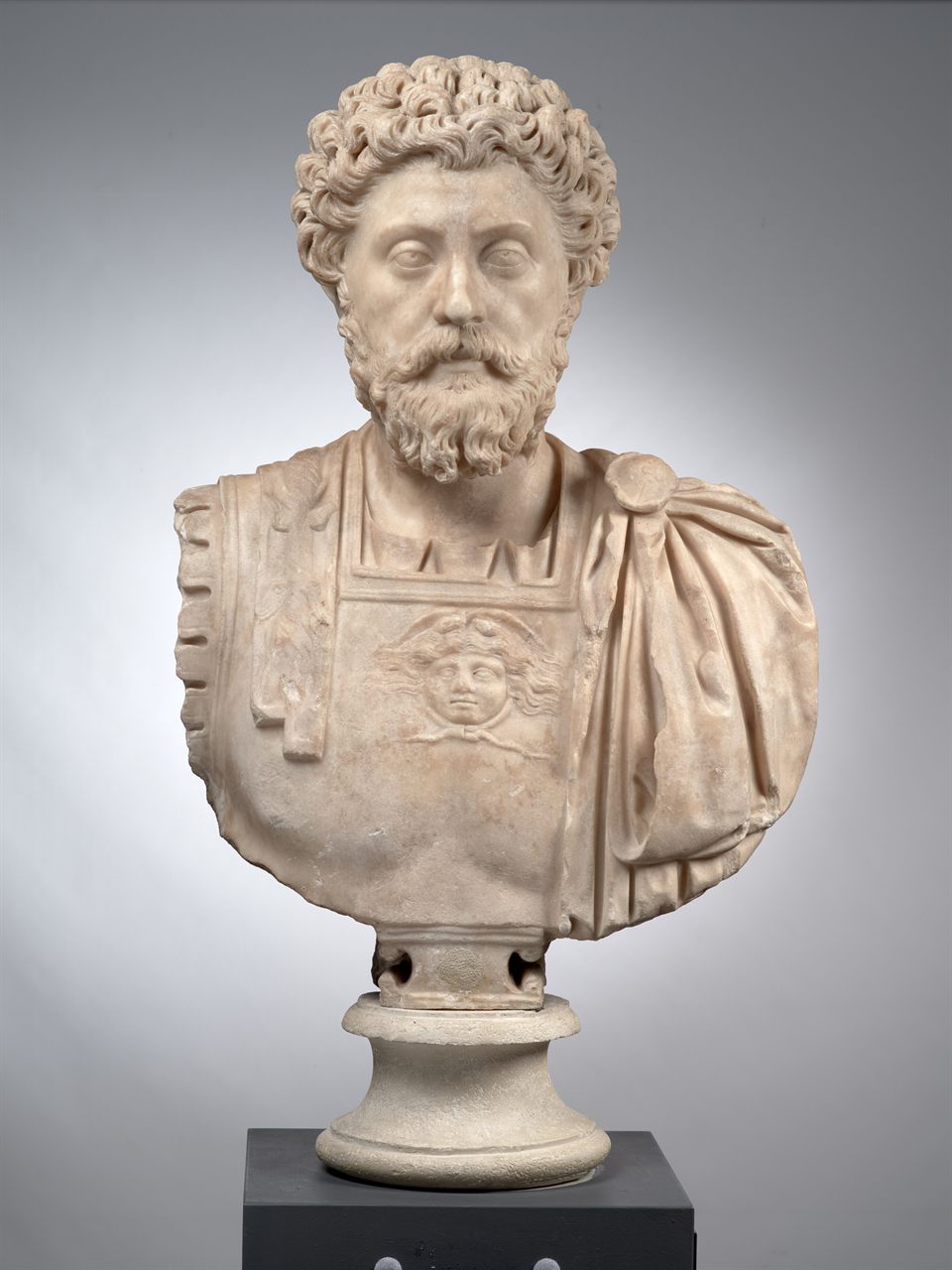
Marcus Aurelius
Philosopher-Emperor
Roman emperor and Stoic whose private notebooks—the Meditations—remain one of the most honest records of a powerful person trying to live justly under pressure.
Life at a glance
Key contributions
- Governed the Roman Empire through war and plague with rare self-scrutiny
- Wrote the Meditations, a classic of Stoic practical philosophy
- Modeled leadership as duty without craving applause
- Taught focus on what is controllable amid chaos
- Linked personal virtue to the health of the political community
Notable works, inventions and offices
Meditations
Still standsLife and career
Marcus Aurelius was Roman emperor from 161 to 180 CE and a practicing Stoic. Much of his reign was spent on the northern frontiers amid war and plague. He held ultimate power while writing private notes to himself on anger, mortality, duty, and justice.
Those notes—later called the Meditations—are not a polished treatise but a working journal of self-correction. He reminds himself to act for the common good, to distinguish impressions from judgments, and to treat status and fame as transient.
Stoicism in his hands is not cold detachment; it is social: what is not good for the hive is not good for the bee. Power and self-scrutiny can coexist, and must, if empire is not to become mere predation.
Modern readers still use the Meditations as a manual for cognitive hygiene under pressure—especially useful in outrage cycles that reward reactive power over examined duty.
Legacy and impact
Power and self-scrutiny can coexist.
- Outrage cycles make Stoic cognitive hygiene newly practical.
Principles and words
View of humanity
Humans are rational and social. Status and fame are transient; character is the lasting possession.
How we should operate
Do the next right duty without theatrics. Separate impressions from judgments.
- Live according to nature and reason
- Focus on what is in your control
- Justice as social virtue
- Duty without craving applause
“What is not good for the hive is not good for the bee.”
Sources
Every statement on this page traces to Wikipedia, Wikidata, Wikiquote, or the curated Humanity’s Atlas record. Nothing is invented. Same standard for everyone: contributions first, neutral language.