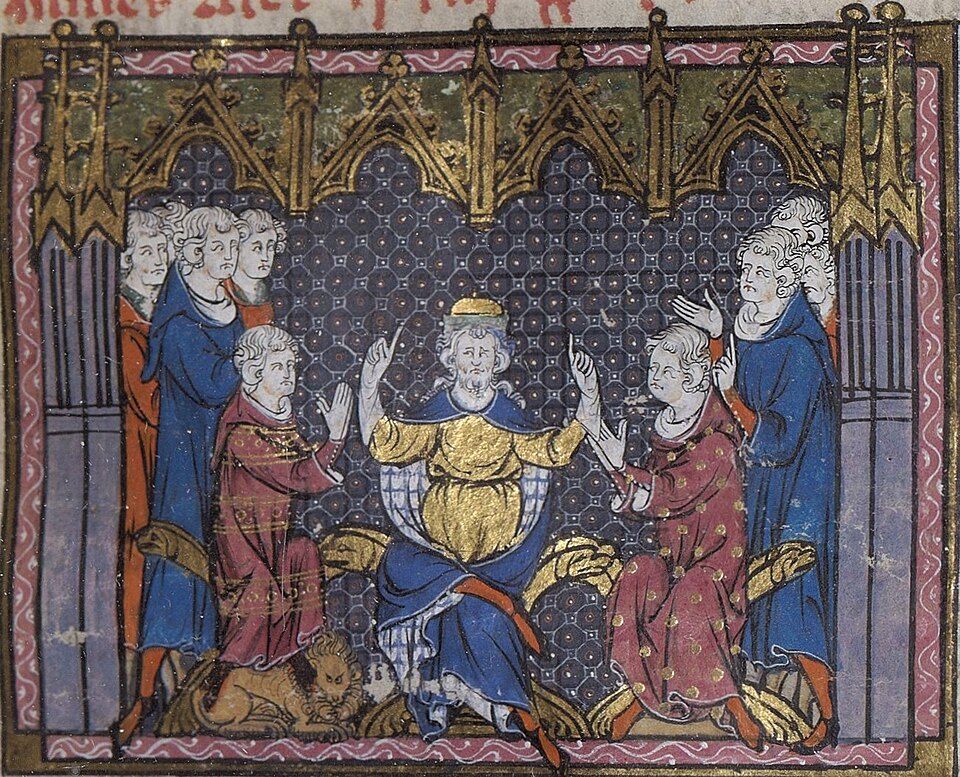
Charles Martel
The Hammer at Tours
Frankish mayor of the palace who stopped a major Umayyad raid at Tours and kept western Europe’s future open for the Carolingian world.
Life at a glance
Key contributions
- Defeated a major Umayyad army near Tours
- Unified Frankish power as mayor of the palace
- Opened the path to the Carolingian empire
- Became Europe’s type of the defending hammer
- Preserved a Christian-Frankish political future
Notable works, inventions and offices
Victory at Tours / Carolingian path
TransformedDefense that enabled later European order. Today: Remembered as a turning battle of the early Middle Ages.
Life and career
Charles, illegitimate son of Pepin, fought rivals and then met Abd al-Rahman’s forces near Tours in 732. The infantry stand became, in later memory, the shield of Christian Gaul.
Modern historians argue scale and myth. The core is still a captain who organized a defense when kingdoms were thin. His grandson was Charlemagne.
He is the hammer in Europe’s story of not being absorbed in that century.
Legacy and impact
The stand that let a later renaissance happen.
- Border panic still misquotes Tours; the real lesson is preparation, not myth.
Principles and words
View of humanity
A civilization can die in an afternoon if no one will stand.
How we should operate
Train the unfashionable troops. Meet the raid inland.
- Hold the line with infantry
- Unify before the next raid
- Defense of a people as vocation
- Build the house your grandson will need
“He was called Martel, the Hammer, because he crushed the invaders.”
Sources
Every statement on this page traces to Wikipedia, Wikidata, Wikiquote, or the curated Humanity’s Atlas record. Nothing is invented. Same standard for everyone: contributions first, neutral language.