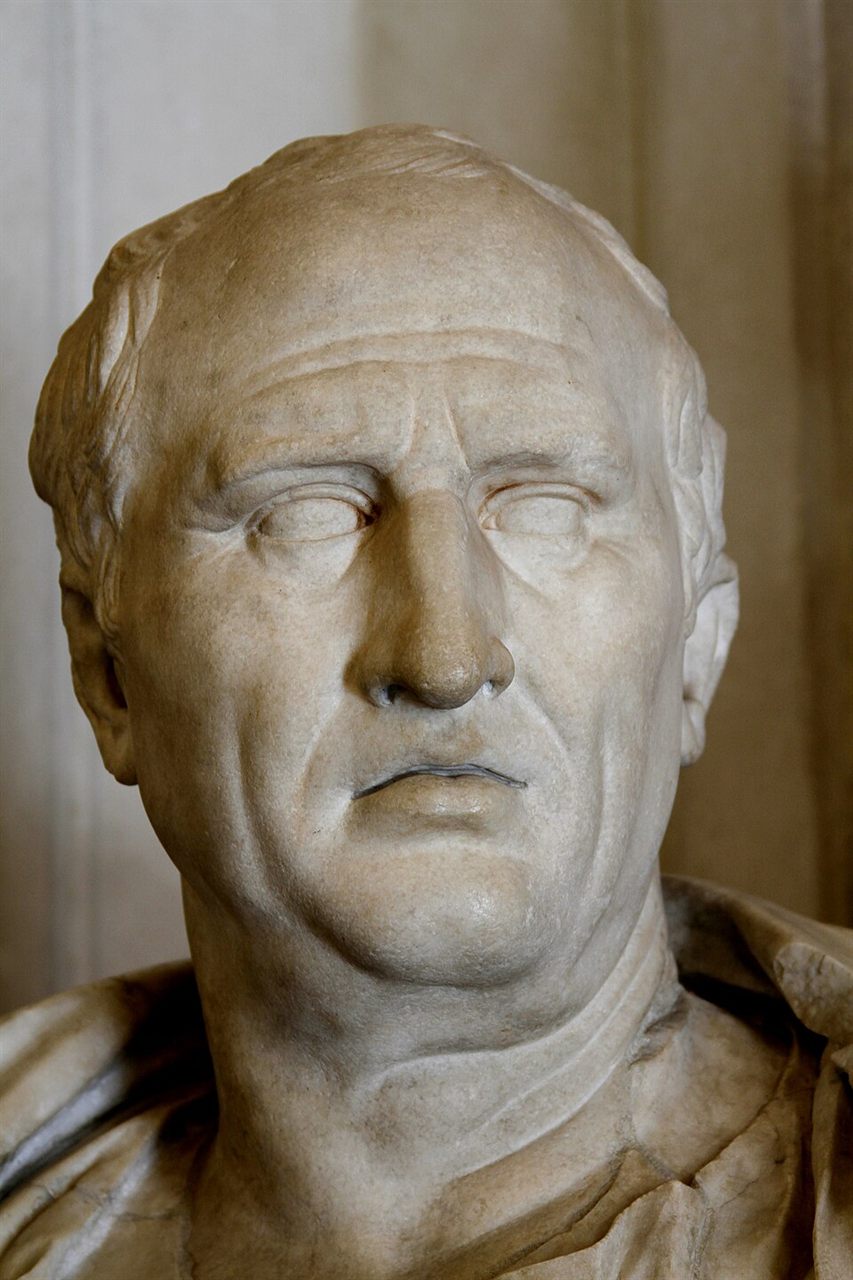
Marcus Tullius Cicero
Orator of the republic
Lawyer and consul who tried to save the Roman Republic with words—natural law, civic duty, and the belief that eloquence should serve liberty.
Life at a glance
Key contributions
- Defended republican legality against conspiracy and strongmen
- Translated Greek moral philosophy into Latin for Europe
- Articulated natural law as a check on statute
- Set the Western model of the citizen-orator
- Left a library that trained later republics
Notable works, inventions and offices
Orations & De Officiis
Still standsLatin rhetoric and moral philosophy. Today: Still in legal and humanist education.
Life and career
A ‘new man’ without noble ancestors, Cicero rose through the courts, crushed Catiline’s conspiracy as consul, and spent his last years warning that one-man rule was returning.
His speeches and philosophical dialogues transmitted Greek ethics into Latin: duty (De Officiis), the nature of the gods, friendship, old age. He argued there is a law above statutes, written in reason.
Mark Antony had him killed. His head and hands were displayed. The republic died; the sentences did not. They educated Europe’s lawyers, priests, and revolutionaries for two thousand years.
Legacy and impact
Republican conscience in a language that outlived the Forum.
- Demagogues still hate lawyers who talk too well for the public.
Principles and words
View of humanity
Humans are born for community and argument; tyranny is a failure of both.
How we should operate
Speak as if law were watching. Serve, then write.
- Natural law above raw decree
- Speech as a civic weapon for peace
- Otium with dignity after service
- The republic is a partnership in justice
“The welfare of the people is the highest law.”
Sources
Every statement on this page traces to Wikipedia, Wikidata, Wikiquote, or the curated Humanity’s Atlas record. Nothing is invented. Same standard for everyone: contributions first, neutral language.