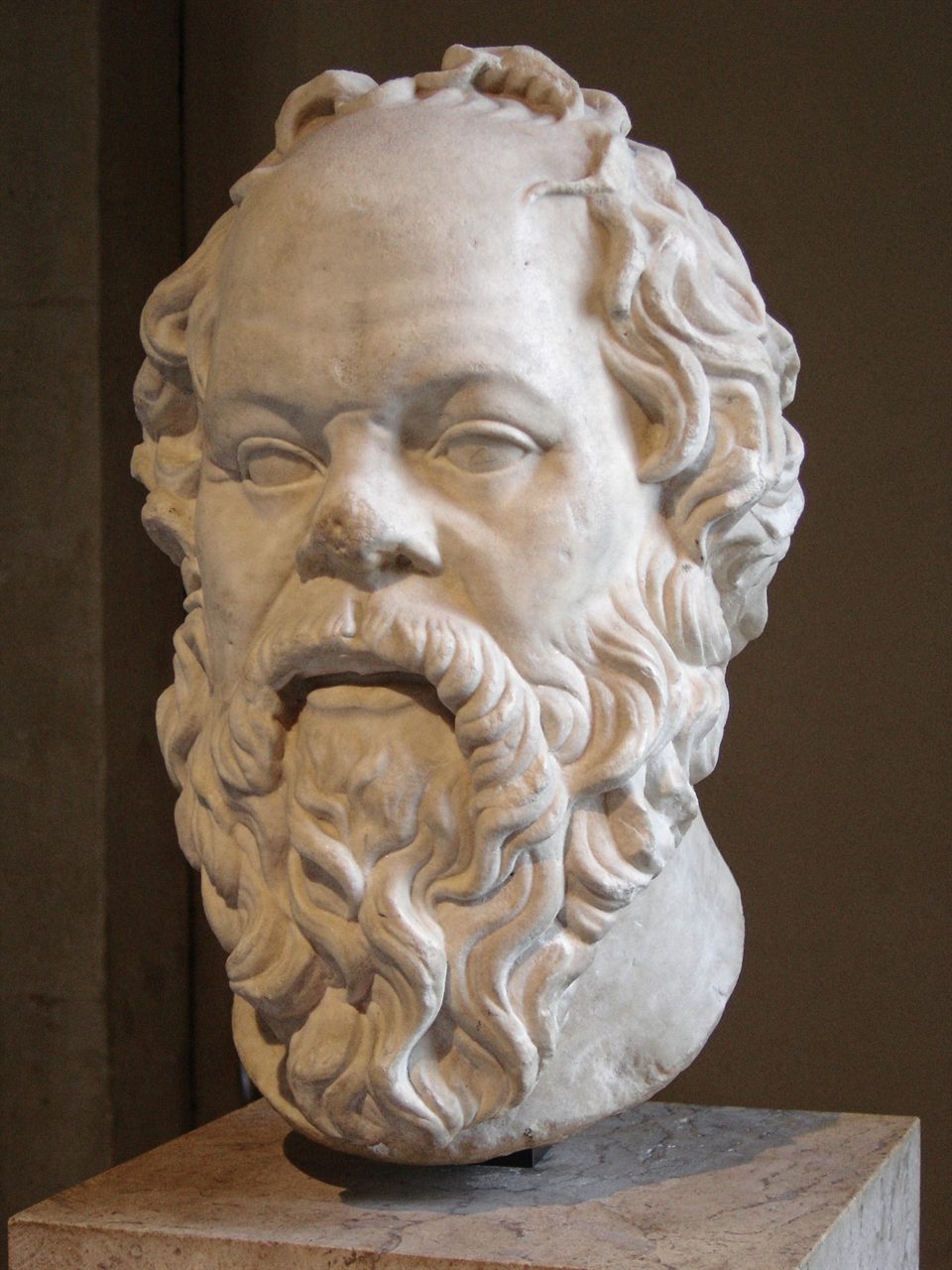
Socrates
Father of Western Inquiry
Athenian philosopher who made the examined life a moral duty—exposing pretensions of knowledge through dialogue and dying rather than abandon philosophy.
Life at a glance
Key contributions
- Invented the Socratic method of questioning as a path to truth
- Made the examined life a moral duty, not a private hobby
- Linked virtue with knowledge and care of the soul
- Modeled integrity by accepting death rather than abandoning philosophy
- Became the founding figure of Western philosophical self-scrutiny
Notable works, inventions and offices
Socratic method
Living ideaLife and career
Socrates of Athens left no writings; we know him through Plato, Xenophon, and later tradition. He wandered the agora questioning poets, politicians, and craftsmen, exposing confident ignorance and insisting that care of the soul mattered more than reputation or wealth.
His method—elenchus, or cross-examination—made dialogue a moral technology. He claimed a divine sign that checked him, and a mission from the Delphic oracle’s riddle: he was wisest only in knowing that he did not know.
In 399 BCE he was tried for impiety and corrupting the youth. Refusing exile or flattery, he accepted death by hemlock, turning philosophy into a way of life sealed by integrity under pressure.
Western inquiry still runs on Socratic fuel: question slogans, test definitions, prefer hard clarity to flattering lies. In an age of misinformation and performative certainty, his target has only grown larger.
Legacy and impact
Philosophy as a way of life.
- Misinformation and confident ignorance are Socratic targets in digital form.
Principles and words
View of humanity
Humans habitually mistake opinion for knowledge. The soul’s health matters more than comfort.
How we should operate
Question slogans—including your own. Prefer hard clarity to flattering lies.
- The unexamined life is not worth living
- Know that you do not know
- Virtue and knowledge intertwined
- Care of the soul over reputation
“The unexamined life is not worth living for a human being.”
Sources
Every statement on this page traces to Wikipedia, Wikidata, Wikiquote, or the curated Humanity’s Atlas record. Nothing is invented. Same standard for everyone: contributions first, neutral language.