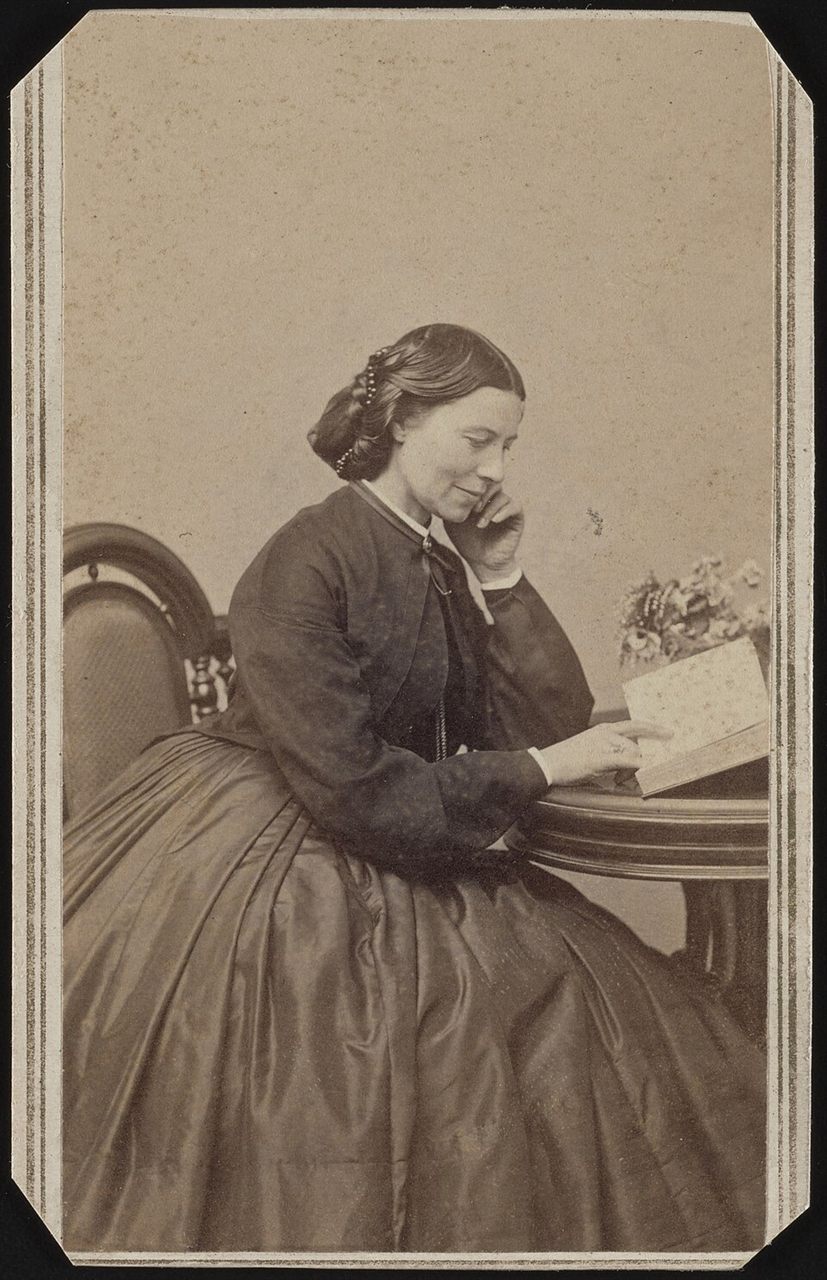
Clara Barton
Angel of the battlefield
The nurse who showed up where the armies were actually dying, then brought the Red Cross to America and a profession of organized mercy.
Life at a glance
Key contributions
- Brought organized nursing to Civil War battlefields
- Founded the American Red Cross
- Championed U.S. adherence to the Geneva Convention
- Worked to identify missing prisoners of war
- Made large-scale mercy a lasting American office
Notable works, inventions and offices
American Red Cross
Still standsU.S. disaster and battlefield relief society. Today: Still the country’s primary voluntary emergency network.
Life and career
Barton left a patent-office desk to haul supplies to Civil War fields, work the lines, and later identify the missing at Andersonville. She founded the American Red Cross and pushed the U.S. toward the Geneva Convention.
She was stubborn, unofficial, and present. That combination built an institution.
American disaster response still walks in her wagon tracks.
Legacy and impact
Battlefield nursing as an American institution.
- Every disaster still needs Bartons who start before the org chart.
Principles and words
View of humanity
A nation that can raise armies can also raise ambulances.
How we should operate
Pack the wagon. Ignore the permission slip. Then incorporate so it outlives you.
- Go to the wound, not the parlor
- Mercy needs a system
- Name the missing
- Women may command logistics of care
“I may be compelled to face danger, but never fear it, and while our soldiers can stand and fight, I can stand and feed and nurse them.”
Sources
Every statement on this page traces to Wikipedia, Wikidata, Wikiquote, or the curated Humanity’s Atlas record. Nothing is invented. Same standard for everyone: contributions first, neutral language.