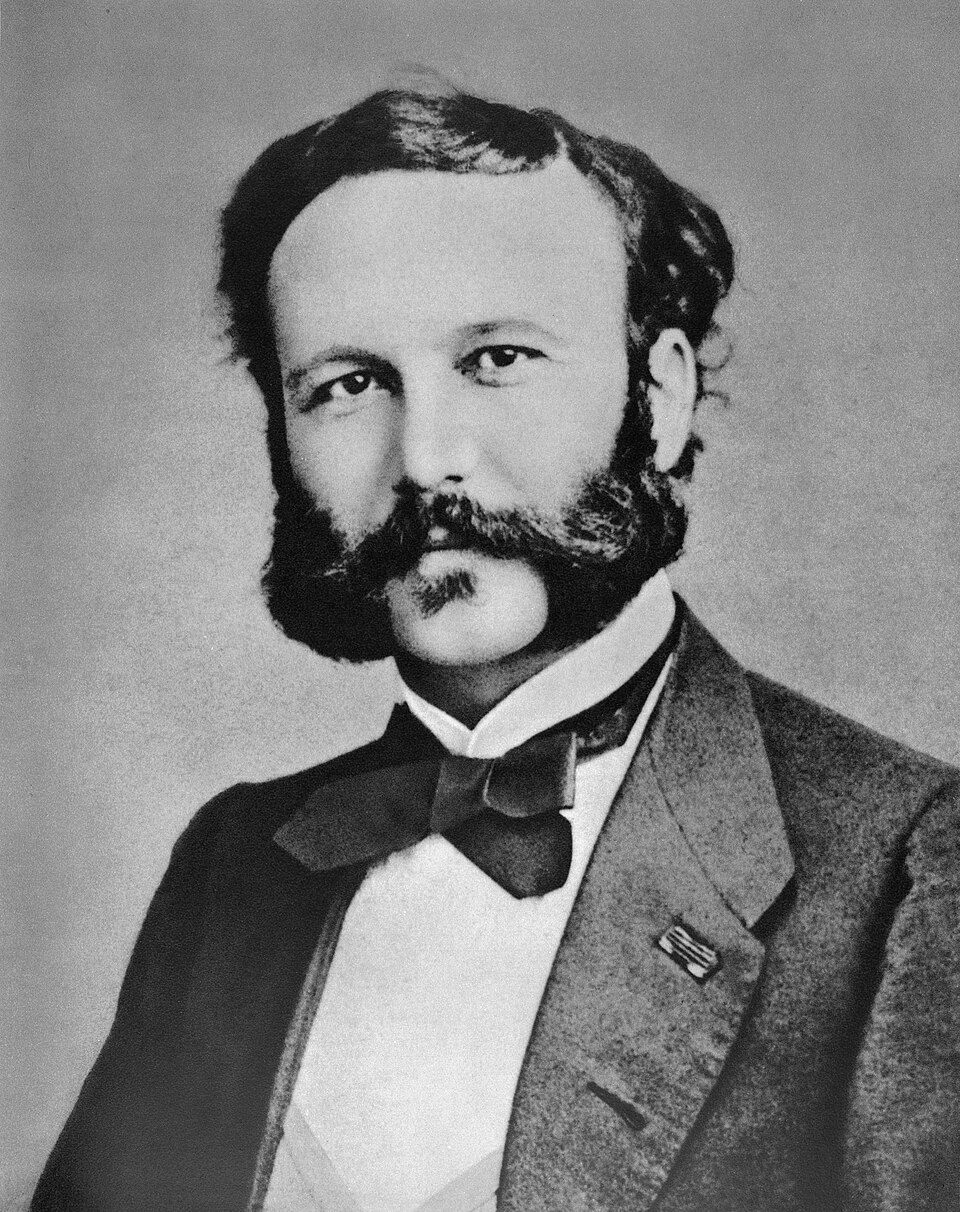
Henry Dunant
Founder of the Red Cross
Businessman who, seeing Solferino’s wounded, organized strangers into a neutrality of care—and helped birth the Geneva Conventions.
Life at a glance
Key contributions
- Inspired the International Red Cross
- Catalyzed the Geneva Conventions
- Wrote A Memory of Solferino as a policy pamphlet of mercy
- Established neutrality of medical care in war
- Shared the first Nobel Peace Prize
Notable works, inventions and offices
Red Cross idea & Geneva Convention path
Still standsNeutral humanitarian societies and laws of war. Today: ICRC and conventions still structure conflict care.
Life and career
In 1859 Dunant arrived at Solferino after a battle and found thousands dying unattended. He organized local women and captured soldiers into an improvised ambulance corps: tutti fratelli—all brothers.
A Memory of Solferino (1862) proposed standing volunteer societies and a treaty to protect the wounded. The Red Cross and the first Geneva Convention followed. He died poor, then shared the first Nobel Peace Prize.
The red cross on white is a global sentence: even enemies have a body.
Legacy and impact
Neutral mercy as an institution.
- Every field hospital under fire is Dunant’s wager.
Principles and words
View of humanity
Humanity remains inside the uniform.
How we should operate
Write the memory. Found the society. Get states to sign.
- The wounded are not a side
- Volunteer care should pre-exist the next war
- Law can fence the battlefield
- Tutti fratelli
“Would it not be possible to form relief societies…?”
Sources
Every statement on this page traces to Wikipedia, Wikidata, Wikiquote, or the curated Humanity’s Atlas record. Nothing is invented. Same standard for everyone: contributions first, neutral language.