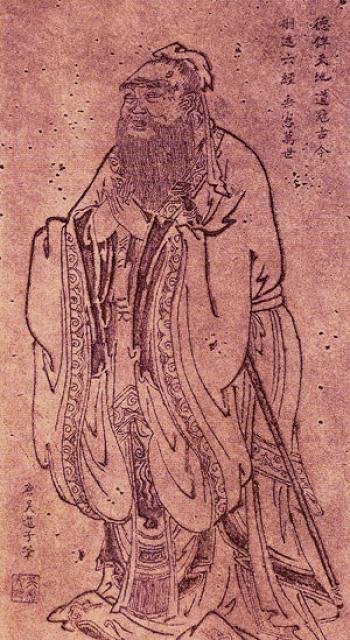
Confucius (Kong Qiu)
Teacher of Ethical Governance
Chinese philosopher whose ethics of humaneness, ritual propriety, and self-cultivation became the moral spine of East Asian civilization.
Life at a glance
Key contributions
- Founded a school of ethics that became East Asia’s moral and political spine
- Taught ren (humaneness) and li (ritual propriety) as civilizational grammar
- Elevated education and self-cultivation as prerequisites for public power
- Inspired the Analects and later Confucian classics that shaped imperial exams
- Made moral example—not mere force—the measure of legitimate rule
Notable works, inventions and offices
The Analects (Lunyu)
Still standsLife and career
Kong Qiu, known in the West as Confucius, lived in the Spring and Autumn period of a fragmented China. He served in minor offices, taught disciples, and sought a ruler willing to implement moral governance. Political success eluded him; educational success remade a civilization.
His teaching centers on ren (humaneness), li (ritual propriety as social grammar), and the rectification of names—calling things and roles truthfully so that relationships can hold. Self-cultivation is prior to ruling others: character is infrastructure.
After his death, disciples preserved sayings that became the Analects. Later dynasties made Confucian learning the path to office through examinations. Family ethics, merit, and moral example became the official language of East Asian statecraft for centuries.
Modern debates about technocracy versus leadership character still reenact Confucian questions: What is a good person? How does education form citizens? Can power be trusted without ritual and shame? His influence is not a museum piece; it is still an operating system.
Legacy and impact
Ethics at the center of politics.
- Leadership character vs. pure technocracy is a live debate.
Principles and words
View of humanity
Humans become fully human through education, ritual, and care for others.
How we should operate
Lead from character. Treat language as moral infrastructure.
- Ren — humaneness
- Li — ritual propriety as social grammar
- Self-cultivation before ruling others
- Merit and moral example over raw force
“Do not impose on others what you yourself do not desire.”
Sources
Every statement on this page traces to Wikipedia, Wikidata, Wikiquote, or the curated Humanity’s Atlas record. Nothing is invented. Same standard for everyone: contributions first, neutral language.