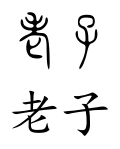
Laozi (Lao Tzu)
Old Master of the Way
Semi-sage associated with the Daodejing—teaching soft power, non-forcing action (wu wei), and harmony with the natural order.
Life at a glance
Key contributions
- Authored (or crystallized) the Daodejing, a foundational world classic
- Articulated wu wei as a philosophy of non-forcing action
- Offered a model of governance by restraint rather than coercion
- Elevated softness, emptiness, and simplicity as strategic virtues
- Created a lasting counter-tradition to compulsive control and over-naming
Notable works, inventions and offices
Daodejing (Tao Te Ching)
Still standsLife and career
Laozi—‘Old Master’—is the semi-legendary figure linked to the Daodejing, a short, dense classic of Chinese thought. Tradition places him as an older contemporary of Confucius who, disillusioned with court life, left for the west and was persuaded at the pass to write down his teaching.
Whether one historical author or a school’s collective voice, the text teaches that the Dao (Way) precedes naming and forcing. Softness overcomes hardness; emptiness is useful; the sage leads by not over-governing. Wu wei is not laziness but non-forcing action aligned with how things actually unfold.
In a world of competing states and ritualized ambition, Laozi’s counsel was radical: reduce desire, distrust clever manipulation, prefer the low ground. Political chapters sketch a ruler who is barely noticed because life under him is simple and free of panic.
Across two millennia the Daodejing has been read as mysticism, statecraft, ecology, and psychology. It remains a permanent counterweight to cultures of compulsive control—useful wherever burnout and over-management pretend to be strength.
Legacy and impact
A permanent counterweight to compulsive control.
- Burnout cultures need wu wei as operational wisdom.
Principles and words
View of humanity
Humans suffer when they force, name, and grasp excessively.
How we should operate
Lead by example and restraint rather than coercion.
- Wu wei — non-forcing, effortless action
- Softness overcomes hardness
- Return to simplicity
- Govern by not over-governing
“The softest thing in the world overcomes the hardest thing in the world.”
Sources
Every statement on this page traces to Wikipedia, Wikidata, Wikiquote, or the curated Humanity’s Atlas record. Nothing is invented. Same standard for everyone: contributions first, neutral language.