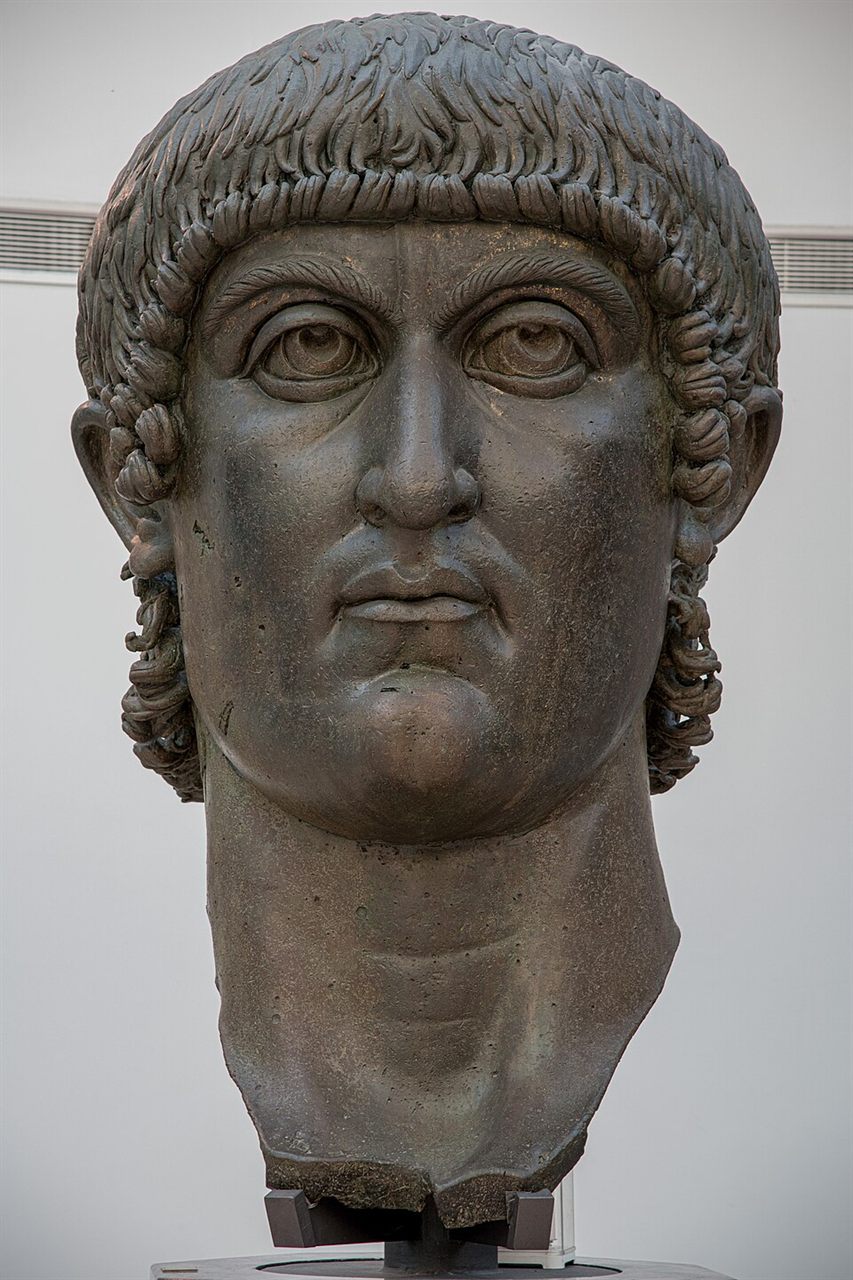
Constantine the Great
Emperor under the cross
The emperor who won at the Milvian Bridge under the sign of the cross, legalized Christianity, and moved the center of the world to Constantinople.
Life at a glance
Key contributions
- Won the empire under the Christian sign
- Legalized Christianity after centuries of persecution
- Founded Constantinople
- Convened the Council of Nicaea
- Shifted Roman history onto a Christian axis
Notable works, inventions and offices
Edict of Milan & Constantinople
Still standsToleration of Christianity and a new capital. Today: The Christian empire’s birth certificate.
Life and career
Constantine rose through civil war. Tradition says he saw a cross and the words ‘in this sign, conquer.’ After the Milvian Bridge he issued the Edict of Milan: Christianity legal, confiscated churches restored.
He chaired Nicaea’s peace of doctrine, built the new Rome on the Bosporus, and was baptized at the end. The fusion of empire and church is debated as blessing and burden to this day.
For better and worse, he is the general who made the faith of the martyrs a public architecture.
Legacy and impact
The cross on the labarum—church and state in one story.
- Every debate on established religion still starts after Milan.
Principles and words
View of humanity
The God of the oppressed can also be invoked by the man who holds the eagles.
How we should operate
Protect worship. Found the city. Know the alliance will tempt both sides.
- In this sign, conquer
- Legalize the persecuted
- Build a city for a new age
- Unity of faith as imperial peace
“In this sign you shall conquer.”
Sources
Every statement on this page traces to Wikipedia, Wikidata, Wikiquote, or the curated Humanity’s Atlas record. Nothing is invented. Same standard for everyone: contributions first, neutral language.