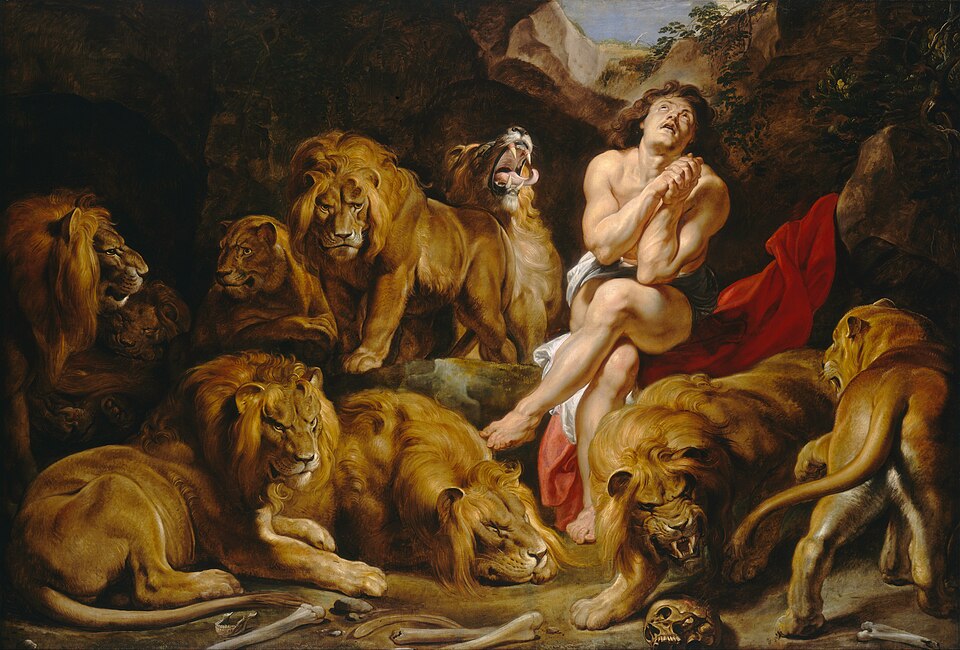
Daniel
Prophet in the empire’s court
Exile who served empires without swallowing their gods—lions’ den, writing on the wall, and visions of kingdoms that fall.
Life at a glance
Key contributions
- Modeled faithful service in pagan courts
- Interpreted imperial dreams as moral verdicts
- Gave apocalyptic hope under occupation
- Survived the lions’ den narrative as a type of trust
- Taught that kingdoms are weighed and found wanting
Notable works, inventions and offices
Book of Daniel
Still standsCourt tales and apocalyptic visions. Today: Shaped Jewish and Christian views of history and empire.
Life and career
Taken to Babylon as a youth, Daniel refuses the king’s defiling table, interprets dreams, and survives the lions. He reads the writing that ends Belshazzar. Under Darius he prays toward Jerusalem with the window open.
The visions of beasts and a son of man gave later Judaism and Christianity a language for history under monsters: kingdoms rise, they are judged, the holy ones receive the kingdom.
He is the patron of believers who must work in palaces without kneeling to them.
Legacy and impact
Integrity inside the superpower.
- Every professional in a compromised system still sits in Daniel’s office.
Principles and words
View of humanity
You can keep faith in a foreign civil service.
How we should operate
Excel at the work. Do not eat the idolatry. Tell the king the bad dream.
- Serve the city of exile, refuse its idols
- Pray with the window open
- Numbered, numbered, weighed, divided
- Empires are mortal
“My God sent his angel and shut the lions’ mouths.”
Sources
Every statement on this page traces to Wikipedia, Wikidata, Wikiquote, or the curated Humanity’s Atlas record. Nothing is invented. Same standard for everyone: contributions first, neutral language.