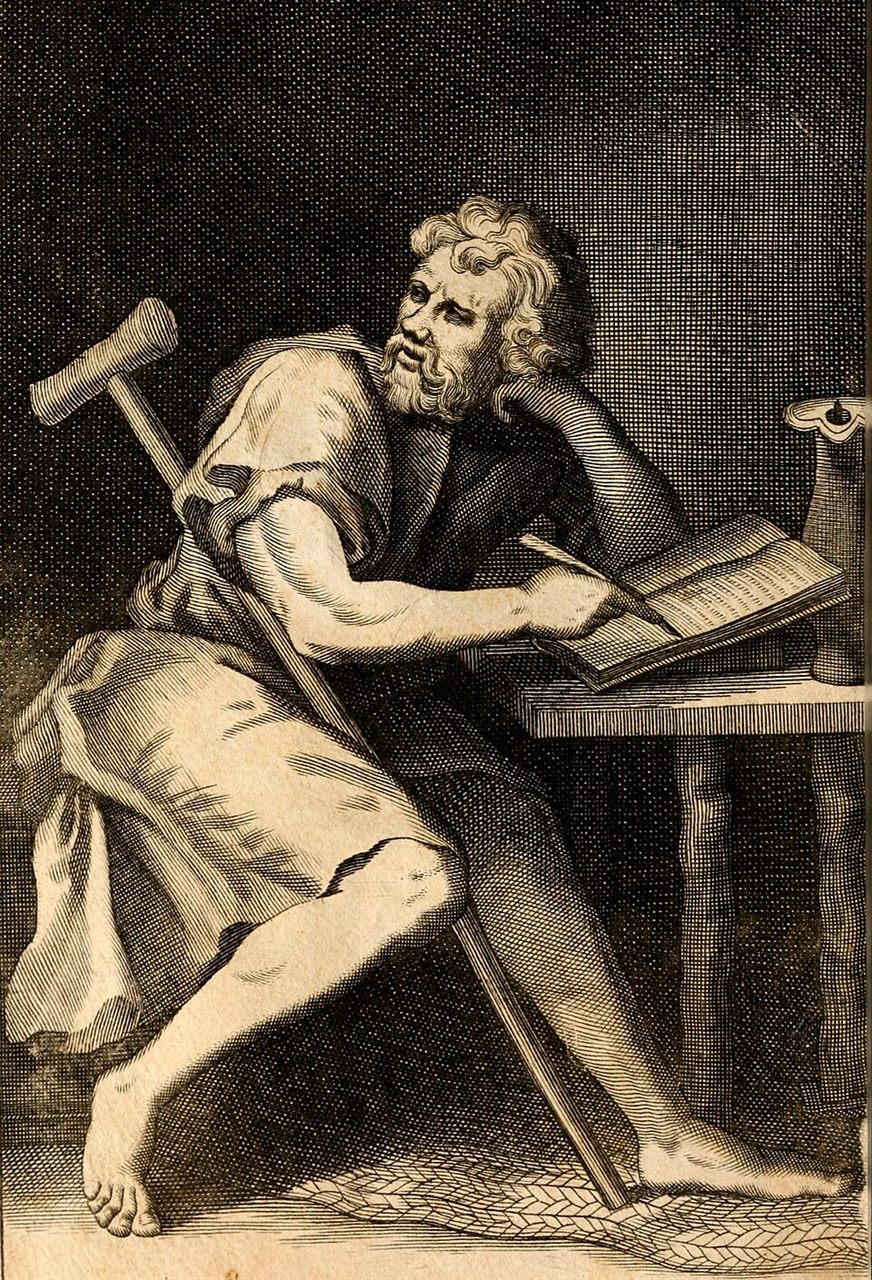
Epictetus
Slave who taught inner freedom
The enslaved Stoic who taught that some things are up to us and some are not—and that freedom begins in that distinction.
Life at a glance
Key contributions
- Taught Stoicism as a former slave
- Left the most practical handbook of inner freedom
- Influenced Marcus Aurelius and later Christian ascetics
- Defined what is and is not in our power
- Proved philosophy is not a rich man’s toy
Notable works, inventions and offices
Discourses & Enchiridion
Still standsPractical Stoic teaching from a formerly enslaved man. Today: Handbook of resilience across centuries.
Life and career
Born enslaved, crippled, Epictetus was freed and taught in Nicopolis. He wrote nothing; a student, Arrian, kept the Discourses and the Enchiridion—a handbook of the soul under tyranny, illness, and insult.
Marcus Aurelius read this tradition. Prisoners, soldiers, and addicts still do. The doctrine is severe and humane: your will is your only unconfiscatable property.
He is the philosopher as proof that a cage does not have to own the mind.
Legacy and impact
Philosophy from below.
- Anxiety cultures still need his split between control and weather.
Principles and words
View of humanity
A human can be unfree in law and free in will—or the reverse.
How we should operate
Divide every event: mine to choose, not mine to command.
- Know what is up to you
- You are not your possessions or your pain
- Insults are opinions
- Freedom is an interior art
“It’s not what happens to you, but how you react to it that matters.”
Sources
Every statement on this page traces to Wikipedia, Wikidata, Wikiquote, or the curated Humanity’s Atlas record. Nothing is invented. Same standard for everyone: contributions first, neutral language.