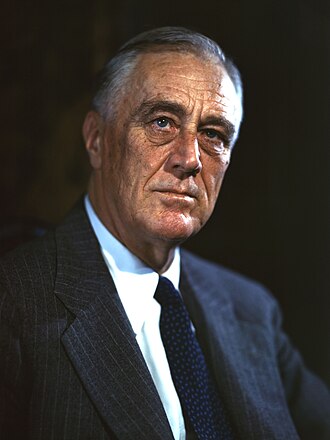
Franklin D. Roosevelt
Architect of the New Deal & Wartime Alliance
Four-term U.S. president who redefined the federal role in economic security during the Depression and led the American arsenal and alliance that defeated the Axis.
Life at a glance
Key contributions
- Created the New Deal framework of modern American social and economic policy
- Led the United States through the Great Depression’s worst years
- Commanded the U.S. role in World War II as Allied leader
- Established Social Security and financial regulatory institutions
- Redefined the presidency as active guardian of economic security
Notable works, inventions and offices
New Deal institutions & wartime alliance strategy
TransformedSocial Security lineage and Allied victory framework. Today: Modern welfare-state debates; UN path via Eleanor and postwar order.
Life and career
Franklin D. Roosevelt (1882–1945) was elected U.S. president four times, guiding the nation through the Great Depression and most of World War II. The New Deal built social security, financial regulation, public works, and a new expectation of government responsibility in economic crisis.
Polio left him paralyzed in the legs; he led from a wheelchair in an age that hid disability, modeling resilience. In war he became arsenal and strategist of democracy, dying on the eve of victory in 1945.
Critics contest the New Deal’s economics and the internment of Japanese Americans as a grave injustice under his watch. His coalition transformed American politics for generations.
His accomplishment is dual: domestic reinvention under collapse and global leadership in the fight against fascism.
Legacy and impact
Crisis liberalism that saved capitalism from collapse and democracy from fascism.
- Economic shocks still test FDR’s bargain between markets and security.
Principles and words
View of humanity
Ordinary citizens deserve security of work, speech, worship, and freedom from fear and want.
How we should operate
In catastrophe, innovate institutions fast—and keep elections.
- Government as insurer against destitution
- Pragmatic experiment in crisis
- Democracy’s arsenal against fascism
- Four Freedoms as global aims
“The only thing we have to fear is fear itself.”
Sources
Every statement on this page traces to Wikipedia, Wikidata, Wikiquote, or the curated Humanity’s Atlas record. Nothing is invented. Same standard for everyone: contributions first, neutral language.