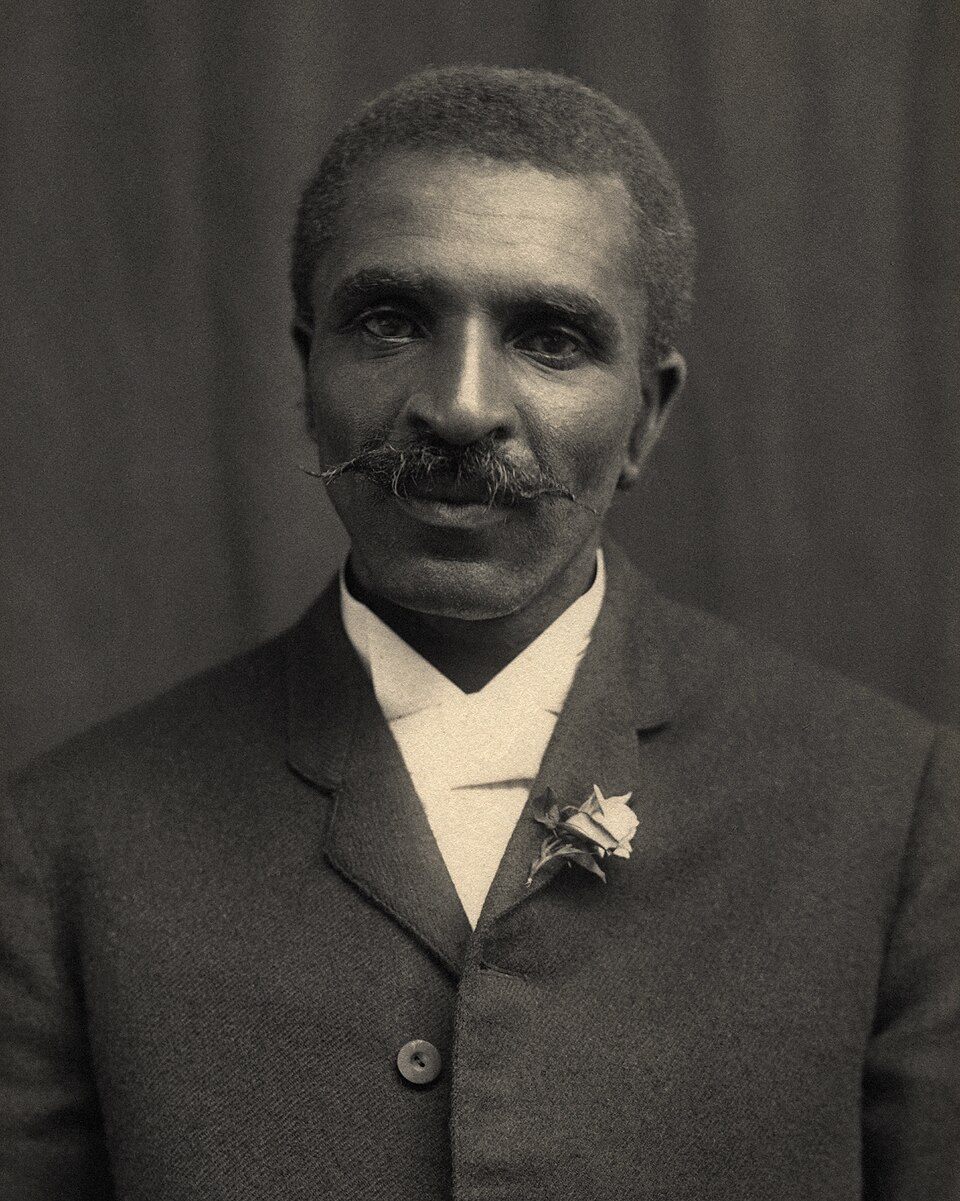
George Washington Carver
Scientist of the soil
Born enslaved, he became the botanist who taught the South to rotate, restore, and invent from peanuts and sweet potatoes—growth as soil justice.
Life at a glance
Key contributions
- Built a practical science of soil restoration
- Taught crop rotation to impoverished farmers
- Created hundreds of uses for peanut and sweet potato
- Made Tuskegee a mobile university of the field
- Modeled research as service to the least capitalized
Notable works, inventions and offices
Tuskegee agricultural extension & crop research
Still standsPractical chemistry for Southern farmers. Today: Model of applied, mobile agricultural science.
Life and career
Carver sought education against every closed door, then taught at Tuskegee. He refused to treat poor farmers as an afterthought. Crop rotation, soil restoration, and hundreds of uses for overlooked plants were his industrial-and-moral program.
He could have patented more; he preferred Jesup wagons of demonstration. Science, for him, was a movable school.
The land and the people who work it were one patient.
Legacy and impact
Agronomy as liberation technique.
- Regenerative agriculture is Carver without the Jim Crow obstacles.
Principles and words
View of humanity
A nation’s growth is only as honest as its dirt and its poorest fields.
How we should operate
Take the lab to the wagon. Teach rotation. Open the recipe.
- Heal the soil, heal the farmer
- Demonstration over lecture
- Abundance from the humble crop
- Knowledge should ride to the field
“Where there is no vision, there is no hope.”
Sources
Every statement on this page traces to Wikipedia, Wikidata, Wikiquote, or the curated Humanity’s Atlas record. Nothing is invented. Same standard for everyone: contributions first, neutral language.