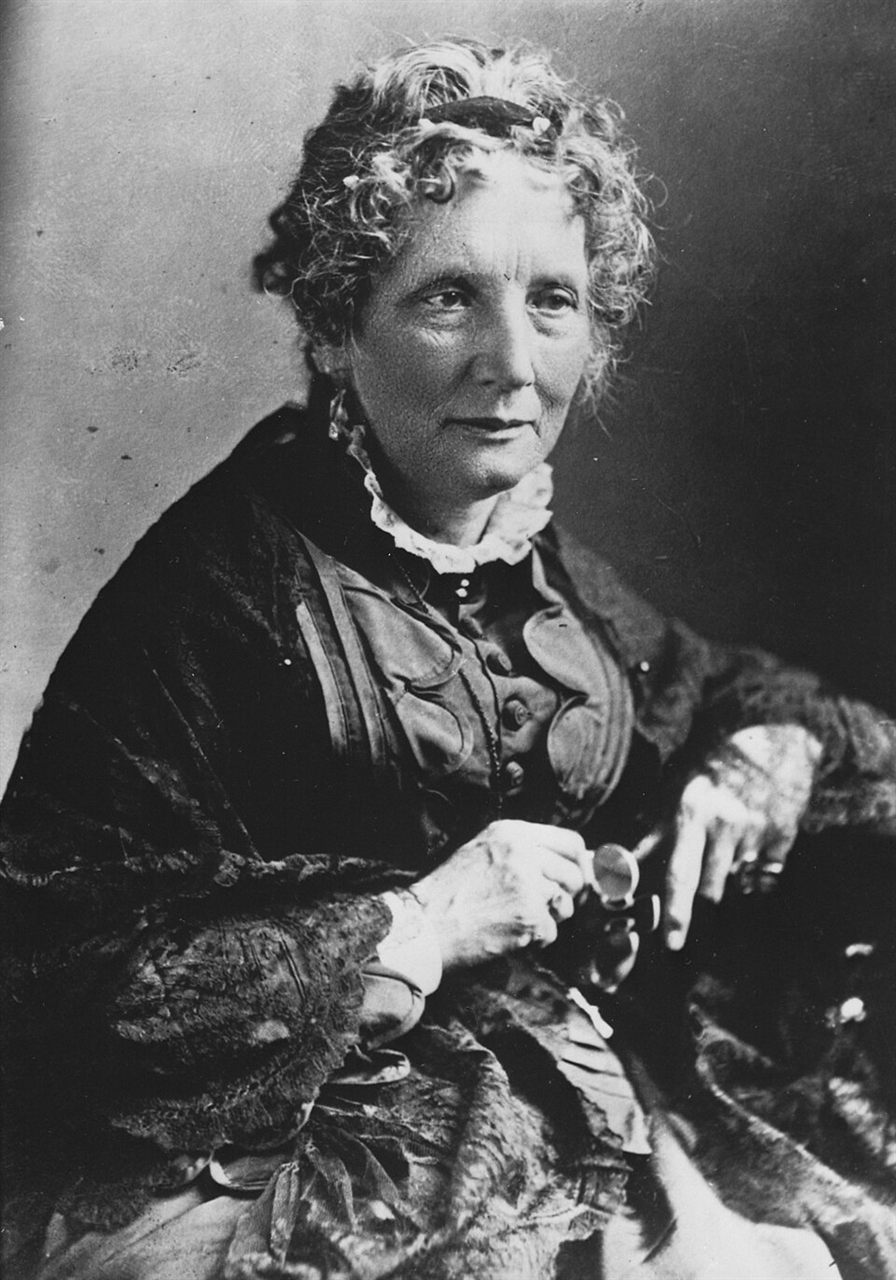
Harriet Beecher Stowe
Author who made slavery visible
The novelist whose Uncle Tom’s Cabin put the cruelty of slavery into millions of parlors
Life at a glance
Key contributions
- Wrote Uncle Tom’s Cabin, a catalyst of Northern conscience
- Globalized the moral case against American slavery
- Showed the novel as a civic instrument
- Stood in a family tradition of public Christianity against bondage
- Helped make abolition unshelvable in ordinary homes
Notable works, inventions and offices
Uncle Tom’s Cabin
Still standsAbolitionist novel of global reach. Today: Among the most consequential political novels ever written.
Life and career
Stowe, from a family of preachers, wrote after the Fugitive Slave Act made the North complicit. The novel was melodramatic, hugely read, and attacked as exaggeration by those who lived off the system it described.
Lincoln is said to have called her the little woman who wrote the book that made this great war. Whether he said it, the effect was real: narrative as abolition.
She showed that a republic can be argued with in stories as well as in briefs.
Legacy and impact
Fiction as a weapon against legal cruelty.
- Human-rights campaigns still need the book that makes a statistic into a face.
Principles and words
View of humanity
People change laws after they have first changed what they cannot bear to imagine.
How we should operate
Write the scene they will not visit. Then let the law catch up.
- Make the distant suffering near
- A Christian nation cannot own people
- Print is a battlefield
- Sentiment can be a form of truth-telling
“The bitterest tears shed over graves are for words left unsaid and deeds left undone.”
Sources
Every statement on this page traces to Wikipedia, Wikidata, Wikiquote, or the curated Humanity’s Atlas record. Nothing is invented. Same standard for everyone: contributions first, neutral language.