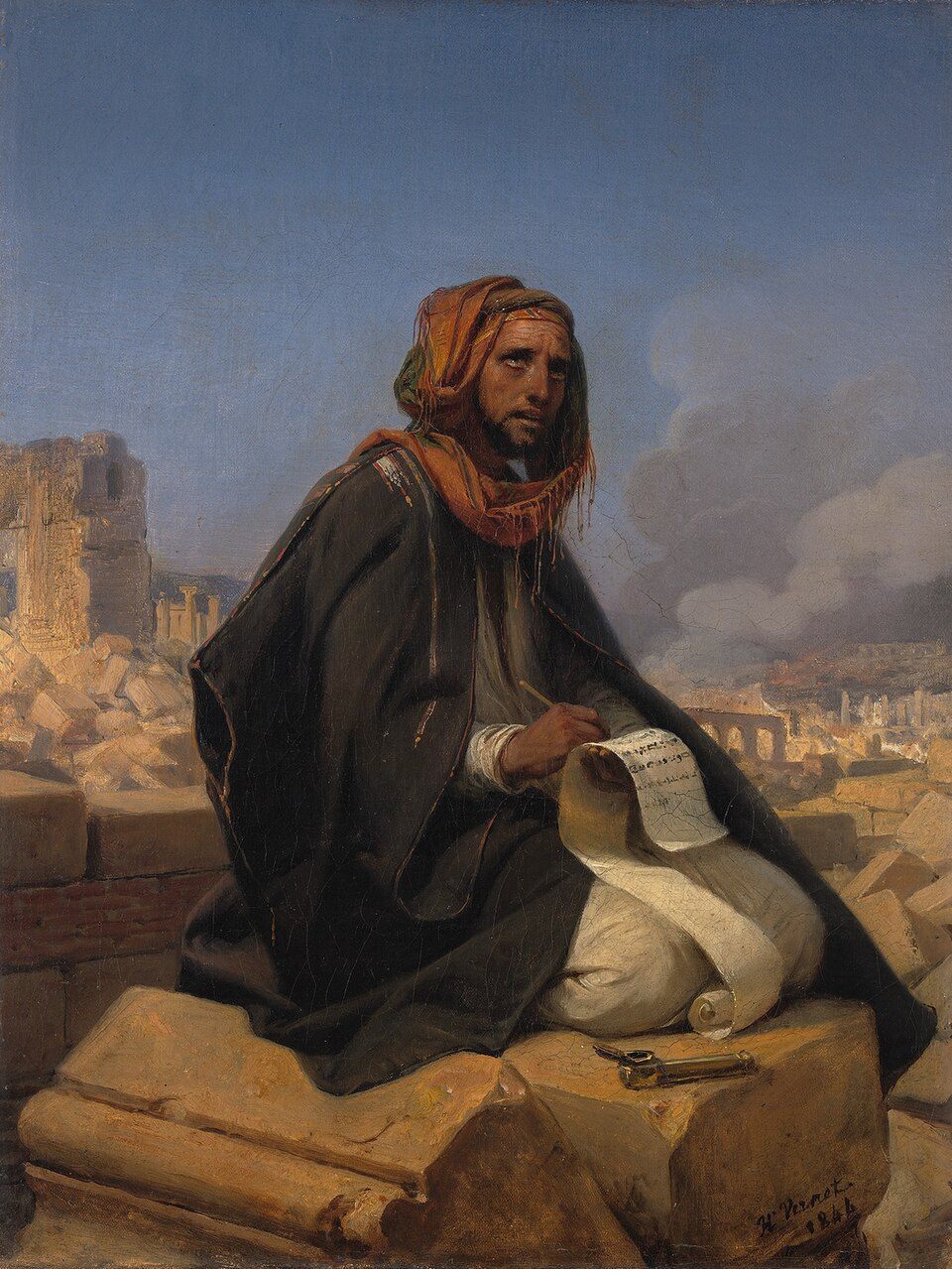
Jeremiah
Prophet of the new covenant
The weeping prophet who told Jerusalem the truth before it burned—and promised a law written on the heart after the city fell.
Life at a glance
Key contributions
- Prophesied through Judah’s last generation
- Articulated a new covenant written on the heart
- Modeled love of country as warning, not flattery
- Left Lamentations’ neighborhood of grief
- Taught exile as a place to build, not only to despair
Notable works, inventions and offices
Book of Jeremiah / New covenant promise
Still standsProphecy of judgment and interior law. Today: Central to Jewish exile theology and Christian covenant talk.
Life and career
Called young, Jeremiah spent decades warning Judah not to trust the Temple as a lucky charm while injustice ran the streets. He was beaten, caged, and called a traitor for saying Babylon would win.
When the city fell, he did not gloat. He lamented, then spoke of a new covenant: not only stone tablets, but law in inward parts. Exile became a classroom instead of only a grave.
Truth-tellers who love their people enough to be hated by them still walk in his coat.
Legacy and impact
Patriotism as painful truth.
- States still punish the messenger who says the walls will not hold.
Principles and words
View of humanity
A nation can lose buildings and still keep a covenant if it turns.
How we should operate
Warn early. Weep when you were right. Plant in exile.
- Do not cry ‘peace’ when there is no peace
- The heart can hold the law
- Love the city enough to warn it
- After ruin, plant gardens
“I will put my law within them, and I will write it on their hearts.”
Sources
Every statement on this page traces to Wikipedia, Wikidata, Wikiquote, or the curated Humanity’s Atlas record. Nothing is invented. Same standard for everyone: contributions first, neutral language.