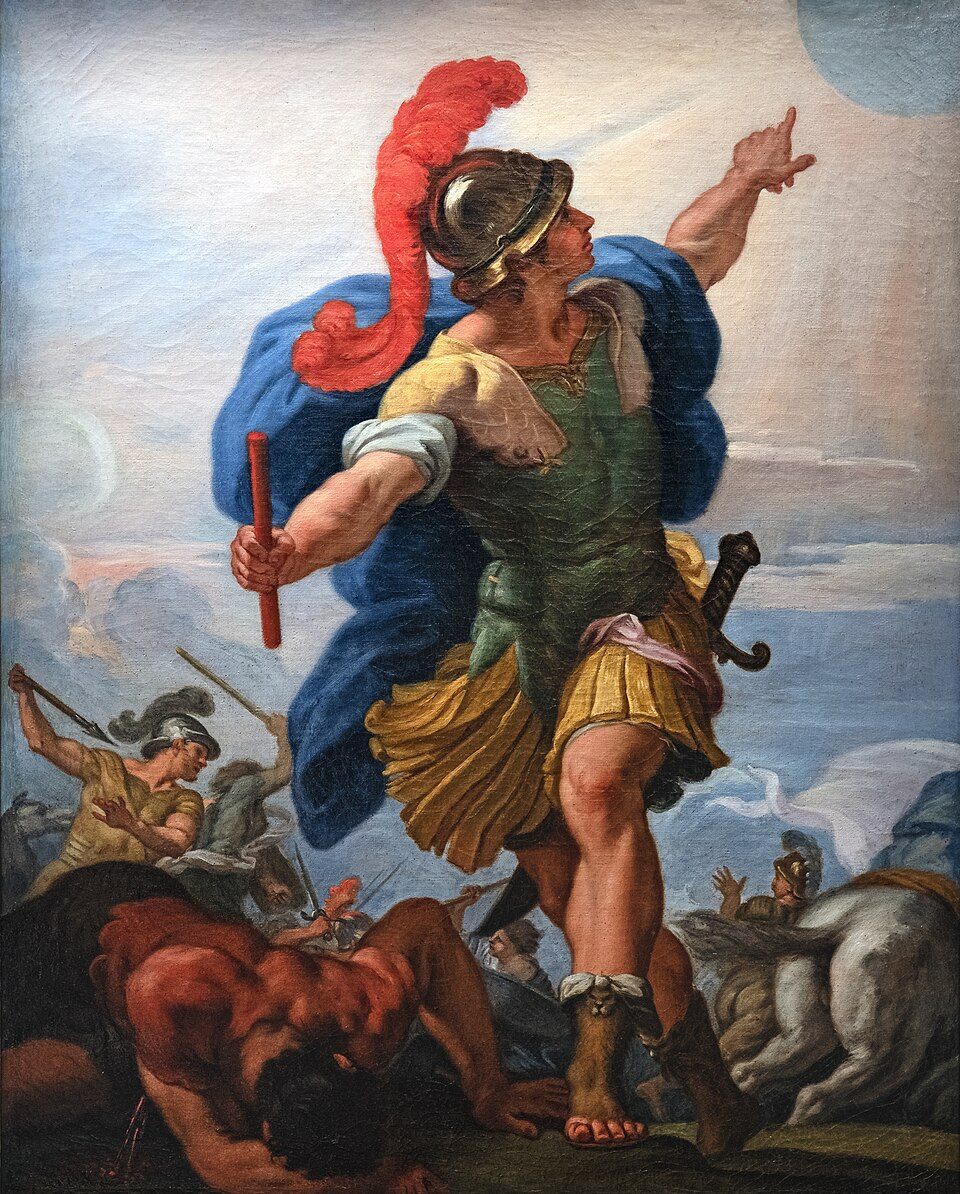
Joshua
Successor of Moses, captain of the land
Moses’ general who led Israel across the Jordan, took Jericho, and charged a people to choose whom they would serve.
Life at a glance
Key contributions
- Succeeded Moses as national leader
- Led the Jordan crossing and Jericho tradition
- Bound the tribes to a public choice of God
- Modeled courage as obedience, not swagger
- Left the type of the faithful lieutenant who can command
Notable works, inventions and offices
Book of Joshua / Shechem covenant
Still standsConquest narrative and tribal allegiance. Today: Foundational to Israel’s land-memory and Christian typology.
Life and career
Joshua son of Nun was Moses’ aide, one of the two spies who trusted the promise, and then the commander of the entry into the land. The book that bears his name is conquest literature—hard, debated, and central to Israel’s memory of becoming a people in place.
He sets stones in the river, circles Jericho, and at Shechem binds the tribes: choose this day. Leadership after the giant is his problem; he does not try to be Moses.
For Jews and Christians he is the type of faithful succession. The wars are read as holy, as history, and as warning—depending on the century.
Legacy and impact
The general as covenant enforcer, not merely a raider.
- Succession after founders still fails Joshua’s humility test.
Principles and words
View of humanity
A people must decide their allegiance in the open, then live with the cost.
How we should operate
Carry the charge you were given, not the one you envied.
- Be strong and courageous
- Choose whom you will serve
- Remember with stones
- Succeed without impersonating the dead
“Choose this day whom you will serve… but as for me and my house, we will serve the Lord.”
Sources
Every statement on this page traces to Wikipedia, Wikidata, Wikiquote, or the curated Humanity’s Atlas record. Nothing is invented. Same standard for everyone: contributions first, neutral language.