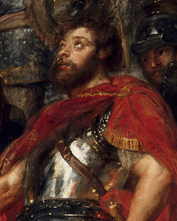
Judah Maccabee
Hammer of religious freedom
Guerrilla captain who recaptured the Temple, lit the story of Hanukkah, and fought so a people could keep faith under an empire.
Life at a glance
Key contributions
- Led the Maccabean revolt against Seleucid persecution
- Recaptured and rededicated the Temple
- Gave Hanukkah its military-theological core
- Showed a small nation could defeat an empire for its faith
- Entered world memory as a captain of religious freedom
Notable works, inventions and offices
Rededication of the Temple / Hanukkah
Still standsFestival of lights and liberty. Today: Jewish calendar; Western image of faith against empire.
Life and career
When Antiochus IV outlawed Jewish practice and desecrated the Temple, Mattathias’s son Judah took the field. Outnumbered, he won in the hills, entered Jerusalem, and rededicated the sanctuary—the memory kept as Hanukkah.
He died in battle. The Hasmonean state that followed was imperfect. The core deed remains: a small people refused to let an empire dictate their altar.
Religious liberty as armed resistance enters the record here.
Legacy and impact
The hammer that kept a people from vanishing into a Greek mold.
- Minorities still light Hanukkah against erasure.
Principles and words
View of humanity
A people may be small and still not be available for spiritual erasure.
How we should operate
When the law forbids your prayers, decide what you will risk.
- The altar is not the emperor’s
- Train the few in the hills
- Rededicate what was defiled
- Freedom of worship is worth a war
“It is not on the size of the army that victory in battle depends, but strength comes from Heaven.”
Sources
Every statement on this page traces to Wikipedia, Wikidata, Wikiquote, or the curated Humanity’s Atlas record. Nothing is invented. Same standard for everyone: contributions first, neutral language.