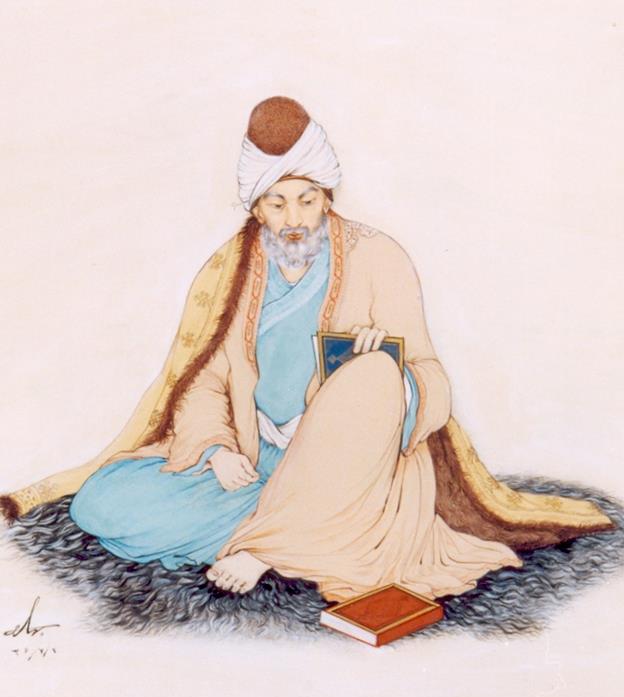
Jalal al-Din Rumi
Poet of the Path of Love
Sufi mystic and poet whose Masnavi and lyrics turned divine love, loss, and transformation into one of the world’s most spiritual literatures.
Life at a glance
Key contributions
- Composed the Masnavi, a monumental work of spiritual teaching in verse
- Created a lyrical corpus on divine love that remains globally beloved
- Transformed personal grief into a pedagogy of awakening
- Inspired the Mevlevi tradition of music and embodied remembrance
- Gave ordinary readers a vocabulary for longing, union, and ego-softening
Notable works, inventions and offices
Masnavi & Divan poetry
Still standsLife and career
Jalal al-Din Rumi (1207–1273) was born in the Persianate world, likely near Balkh, and settled in Konya in Anatolia amid Mongol upheavals. Trained as a religious scholar, his life transformed through friendship with the wandering mystic Shams of Tabriz.
After Shams’s disappearance, Rumi poured longing, grief, and divine love into poetry: the Masnavi, a vast spiritual teaching poem, and the Divan lyrics. He taught that the wound is where the light enters, and that ego-death opens onto the real.
The Mevlevi order associated with his legacy practiced music and whirling as embodied remembrance. His verse traveled far beyond Sufi circles to become some of the world’s most read spiritual poetry.
In polarized ages Rumi’s language dissolves us/them without erasing the demand for transformation—art as a technology of soft power over hardened hearts.
Legacy and impact
Mystical love in images ordinary people could feel.
- Polarized ages need language that dissolves us/them without erasing truth.
Principles and words
View of humanity
Humans are reed flutes separated from the reed bed—our lament is the music of return.
How we should operate
Let art and practice soften hardened hearts. Meet religious difference at shared longing.
- Love as the transformative force
- Ego-death as opening to the real
- Beyond form to the living spirit
- Grief as a door, not only a wound
“The wound is the place where the Light enters you.”
Sources
Every statement on this page traces to Wikipedia, Wikidata, Wikiquote, or the curated Humanity’s Atlas record. Nothing is invented. Same standard for everyone: contributions first, neutral language.