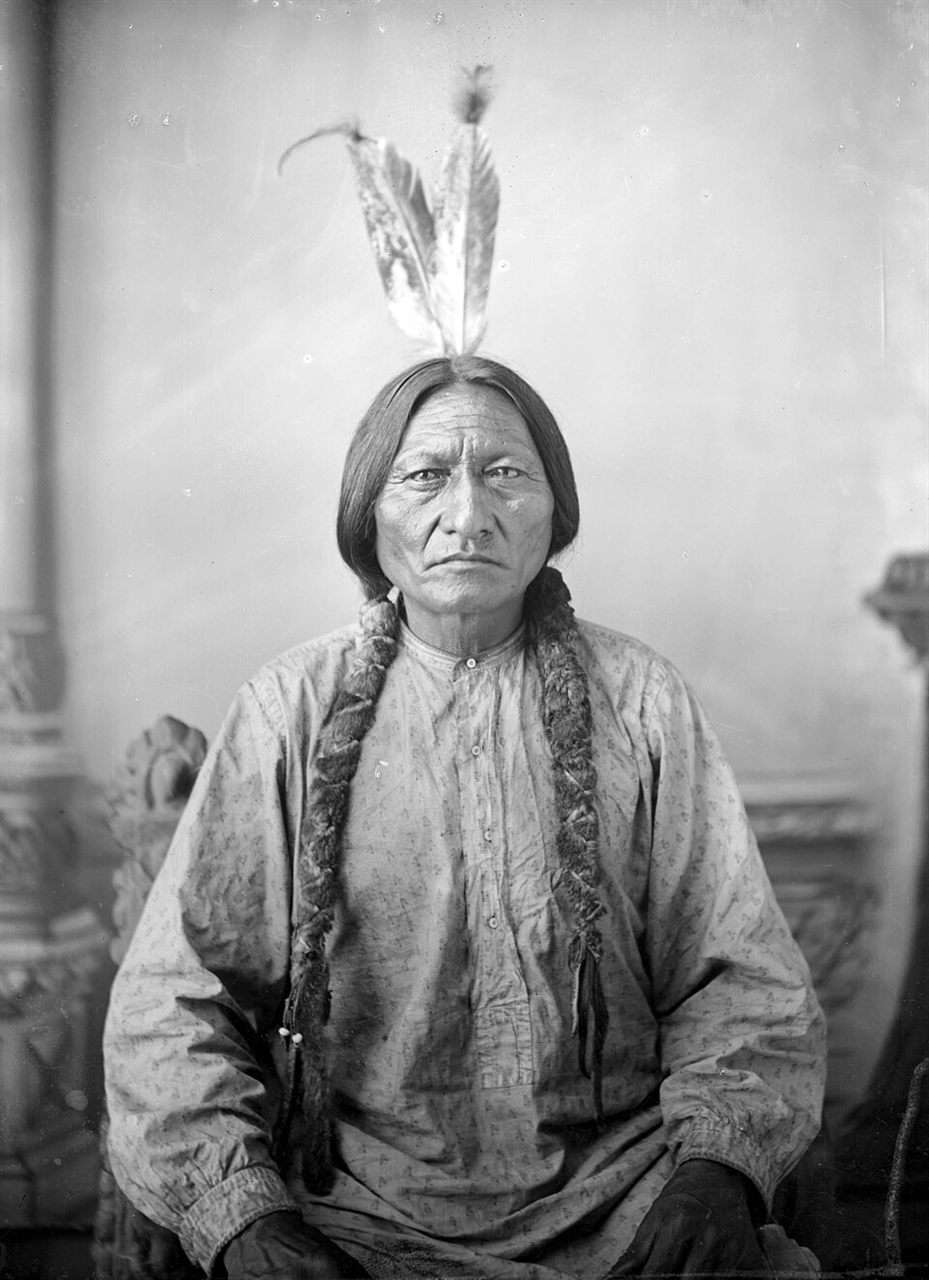
Sitting Bull (Tȟatȟáŋka Íyotake)
Hunkpapa leader of the last great stand
Holy man and chief who refused to sell the Black Hills, gathered the camps before Little Bighorn, and died as the Ghost Dance was crushed—a life of sacred resistance.
Life at a glance
Key contributions
- Led Hunkpapa resistance to illegal seizure of the Black Hills
- Helped gather the camps of 1876
- Kept a spiritual center for his people in defeat
- Spoke for children’s future as the measure of policy
- Became a global symbol of Indigenous defiance
Notable works, inventions and offices
Leadership of Lakota resistance
TransformedSpiritual and military defense of the northern plains. Today: Central figure of Native American historical memory.
Life and career
Sitting Bull earned leadership in war and in vision. He opposed treaties that carved the Paha Sapa. In 1876 the gathered nations destroyed Custer’s battalion. He later went to Canada, then reservation life, then Buffalo Bill’s show—a humiliating circuit he used as he could.
He was killed in 1890 as police tried to arrest him amid Ghost Dance fear. Wounded Knee followed days later.
He remains the face of a people who would not call theft a purchase.
Legacy and impact
The stand that still names the Hills.
- Land-back and pipeline fights still sit in his camp.
Principles and words
View of humanity
A nation is still a nation when the map says otherwise.
How we should operate
Hold the sacred land in speech and in camp.
- The Black Hills are not for sale
- Vision before the campaign
- Do not sign what you cannot live
- A chief is a shield
“Let us put our minds together and see what life we can make for our children.”
Sources
Every statement on this page traces to Wikipedia, Wikidata, Wikiquote, or the curated Humanity’s Atlas record. Nothing is invented. Same standard for everyone: contributions first, neutral language.