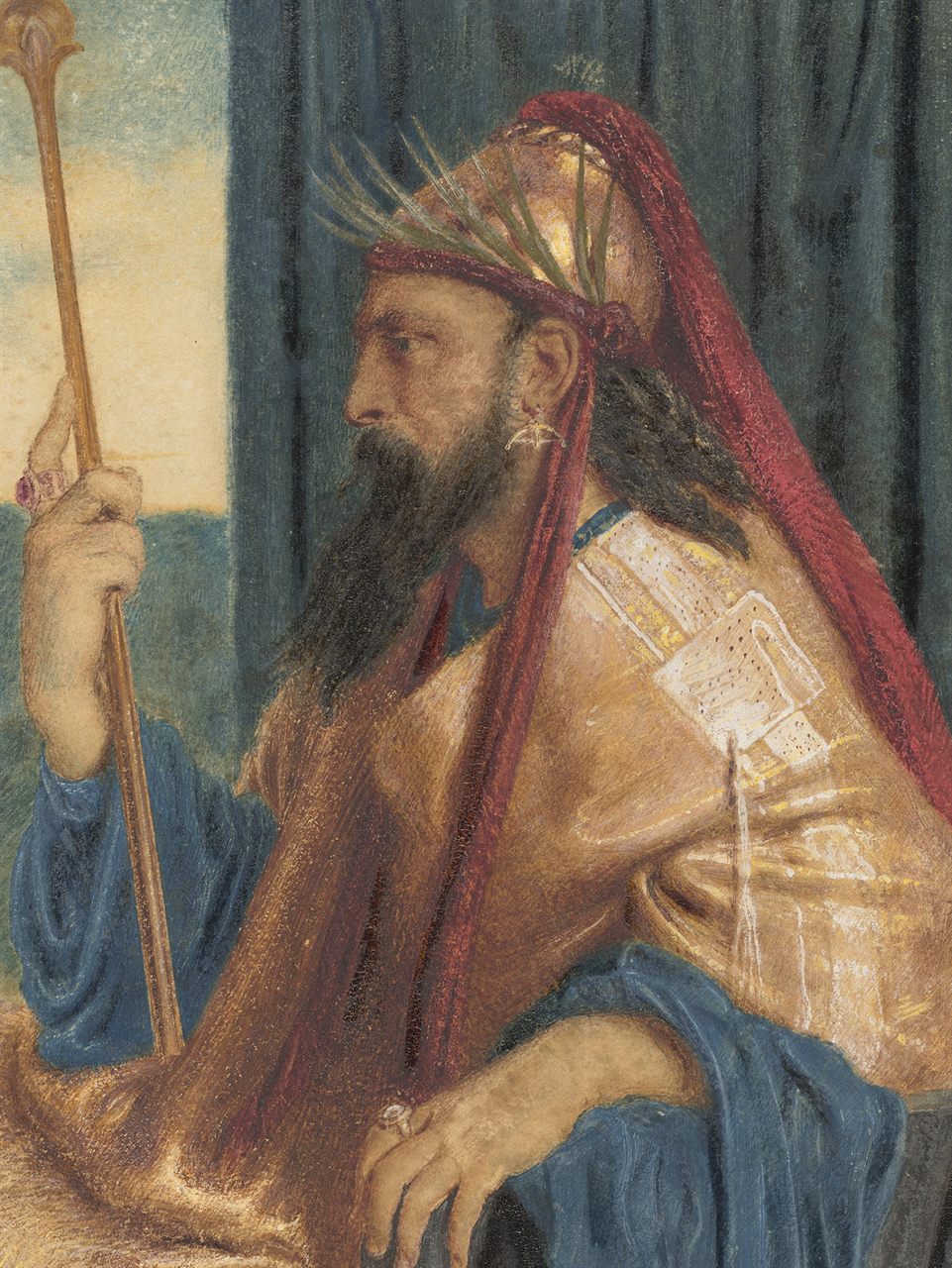
King Solomon
Builder of the Temple
Son of David who consolidated the kingdom, built the First Temple in Jerusalem, and became the biblical archetype of wisdom and the dangers of prosperity without restraint.
Life at a glance
Key contributions
- Built the First Temple in Jerusalem as a national sacred center
- Consolidated the united monarchy through administration and diplomacy
- Became the biblical archetype of practical and judicial wisdom
- Expanded trade and cultural exchange across the Near East
- Left a cautionary model of how unrestrained prosperity can fracture a kingdom
Notable works, inventions and offices
First Temple (Jerusalem)
Destroyed / lostLife and career
Solomon inherits a relatively secure kingdom from David and consolidates it through administration, diplomacy, and monumental building. Biblical narrative presents him as a king who asks for wisdom rather than long life or riches, then becomes famous for judgment, international trade, and the construction of the First Temple in Jerusalem.
The Temple made Israel’s worship architectural as well as covenantal: a fixed house for the divine name, a priesthood, and a pilgrimage center. Parallel traditions of proverb literature associate his court with practical wisdom—how to govern speech, wealth, desire, and justice in a complex society.
His reign also dramatizes the danger of prosperity without restraint: forced labor, foreign entanglements, and religious compromise. After his death the united monarchy fractures. The lesson is structural, not merely personal: institutions and appetite can undo each other in a generation.
Solomon remains the civilizational symbol of wise building and of the need for moral vigilance when power finally has the resources to do anything it wants.
Legacy and impact
Institutions and discernment can elevate a people—and unchecked appetite can undo them in a generation.
- Nation-building still requires wisdom more than mere growth metrics.
Principles and words
View of humanity
Humans need ordered wisdom to govern complexity. Knowledge without reverence becomes clever oppression.
How we should operate
Seek counsel before spectacle. Build public goods that serve more than the ruler’s vanity.
- Wisdom as practical discernment
- Justice that sees the hidden claim
- Building institutions that outlast the builder
- Prosperity requires moral vigilance
“The fear of the Lord is the beginning of knowledge.”
Sources
Every statement on this page traces to Wikipedia, Wikidata, Wikiquote, or the curated Humanity’s Atlas record. Nothing is invented. Same standard for everyone: contributions first, neutral language.