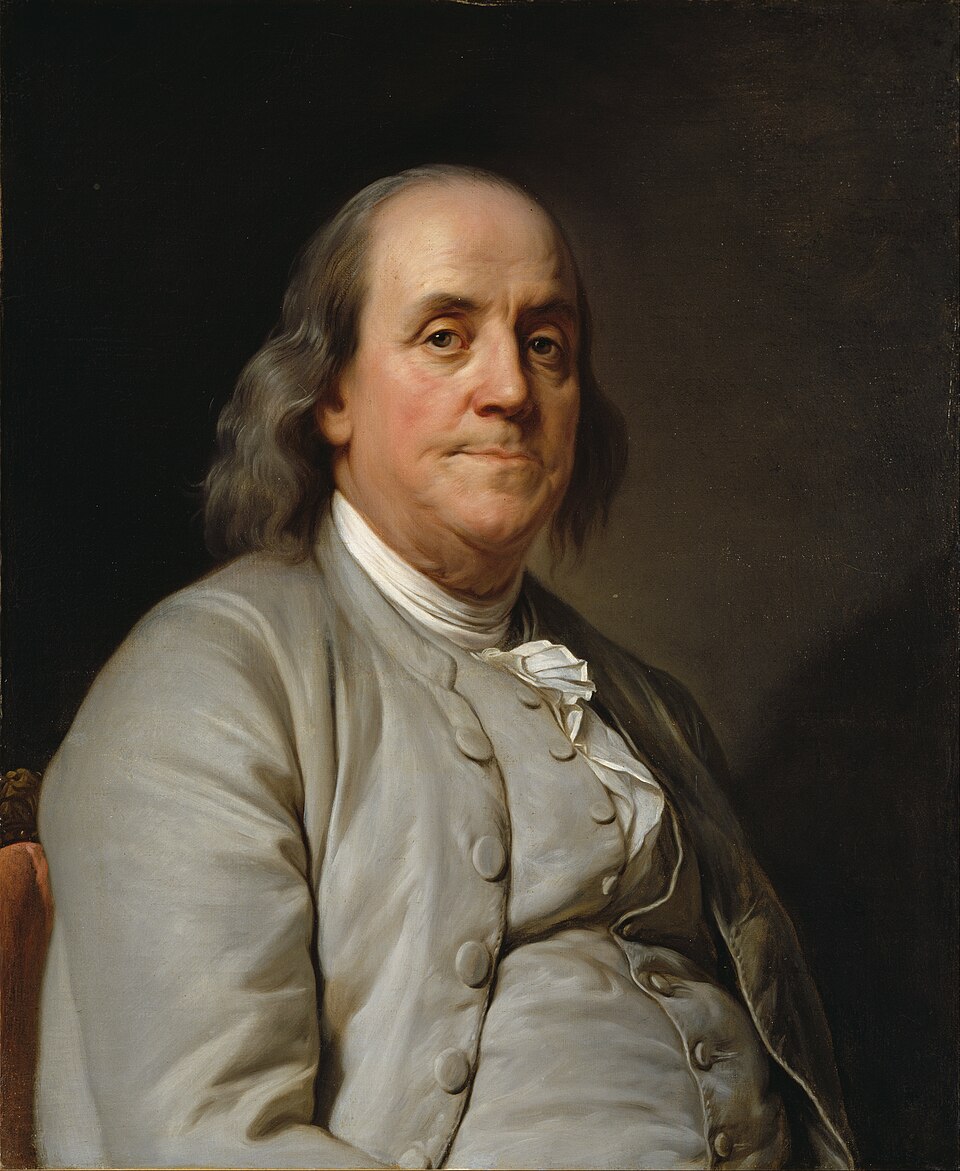
Benjamin Franklin
Citizen of improvement
Printer, scientist, and diplomat who treated the common good as a set of inventions: library, fire company, lightning rod, a republic’s useful genius.
Life at a glance
Key contributions
- Invented the lightning rod as public safety
- Founded library, fire, and hospital institutions
- Mapped the Gulf Stream
- Secured French alliance for independence
- Modeled the scientist-citizen of a republic
Notable works, inventions and offices
Lightning rod, library, American diplomatic success
Still standsCivic inventions and alliance diplomacy. Today: Philadelphia institutions and a republic still using his habits.
Life and career
Franklin ran away to print, formed a junto of mutual improvement, founded a lending library and a hospital, mapped the Gulf Stream, and tamed lightning into a public-safety device.
As diplomat in France he secured the alliance that made American independence viable. As a framer he preferred compromise to brilliant deadlock. Late in life he petitioned against slavery—late, but on the record.
He is the patron of applied Enlightenment: wit in the service of drains, stoves, and treaties.
Legacy and impact
Improvement as a civic hobby that scaled to a country.
- Cities still need Franklins: clubs that invent public goods.
Principles and words
View of humanity
Ordinary people, organized, can electrify a city’s safety and a nation’s chance.
How we should operate
Start the club. Found the library. Ground the kite.
- Improve the commons
- Useful knowledge is a virtue
- Compromise can be patriotism
- A penny of prevention
“Well done is better than well said.”
Sources
Every statement on this page traces to Wikipedia, Wikidata, Wikiquote, or the curated Humanity’s Atlas record. Nothing is invented. Same standard for everyone: contributions first, neutral language.