Cyrus the Great
Founder of the Achaemenid Empire
Founder of the first Persian Empire, remembered for imperial scale and for policies of religious and cultural restoration—including the return of exiled peoples—that shaped later ideals of plural rule.
Life at a glance
Key contributions
- Founded the Achaemenid Persian Empire, antiquity’s first true superstate
- Conquered Babylon and reorganized the Near East under Persian rule
- Practiced a policy of relative religious and cultural tolerance
- Enabled the return of exiled communities, including Judeans to Jerusalem
- Created administrative models (satrapies, roads) copied by later empires
Notable works, inventions and offices
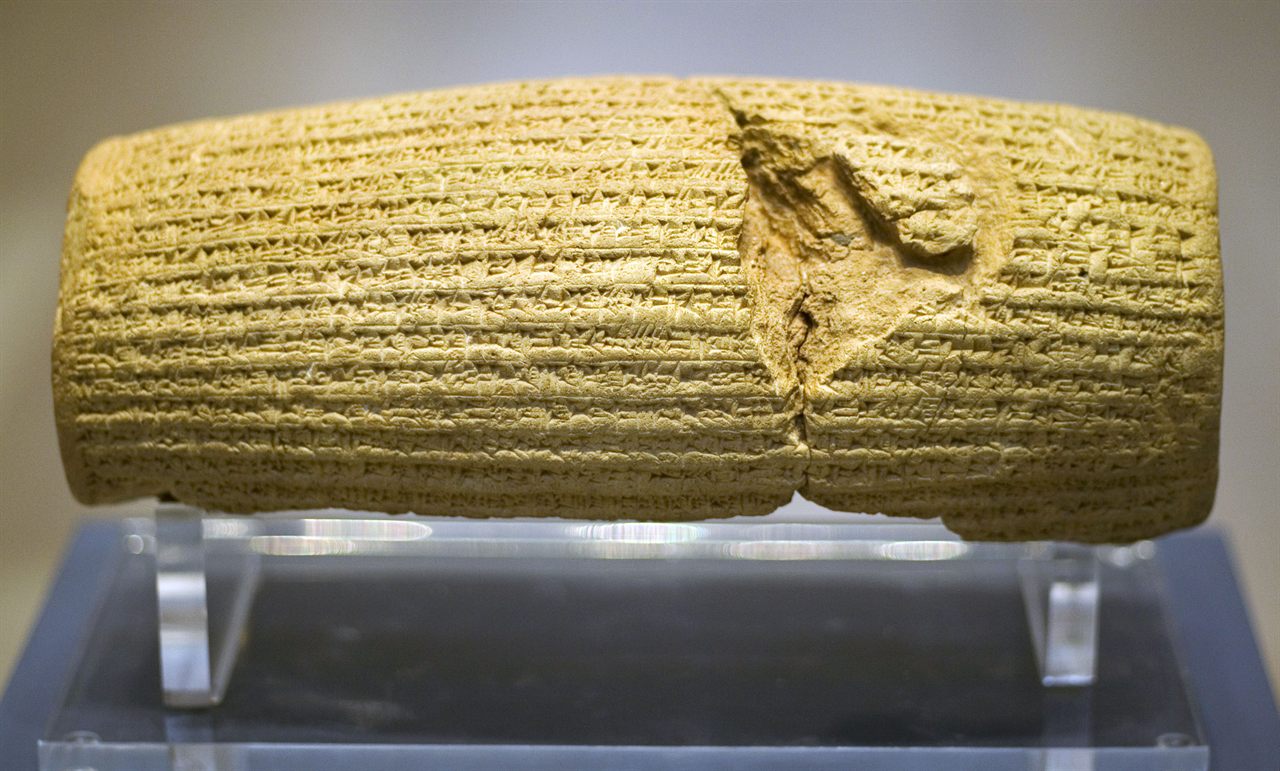
Cyrus Cylinder
Still standsBabylonian clay cylinder recording Cyrus’s conquest and restorative policies. Today: British Museum; often invoked in human-rights discourse (with historical caution).
Life and career
Cyrus II of Persia (d. 530 BCE) founded the Achaemenid Empire, uniting Medes and Persians and conquering Lydia and Babylon. His realm became a multi-ethnic superstate stitched by roads, satraps, and a pragmatic policy of local customs under imperial oversight.
The Cyrus Cylinder and biblical tradition portray him as a liberator who allowed exiled peoples—including Judeans—to return and rebuild temples. Whether read as propaganda or policy, the model of imperial tolerance was real enough to matter.
He died on campaign, but the structure he built outlasted him and shaped Near Eastern statecraft for centuries. Respect for plural cults became a tool of stability.
Cyrus remains a symbol of power that expands by inclusion rather than cultural annihilation.
Legacy and impact
The template of a multi-ethnic empire that claims moral legitimacy through restoration.
- Post-conflict reconstruction still chooses between erasure and plural reconstitution.
Principles and words
View of humanity
Peoples can remain distinct under a shared political frame if conquest is followed by reconstitution rather than humiliation alone.
How we should operate
After victory, rebuild the sacred and civic life of the defeated when possible. Rule diversity with laws that do not demand total sameness.
- Plural subjects under one imperial peace
- Restoration over cultural erasure
- Legitimacy through order and return
- Power that permits local custom
“I am Cyrus, king of the world…”
Sources
Every statement on this page traces to Wikipedia, Wikidata, Wikiquote, or the curated Humanity’s Atlas record. Nothing is invented. Same standard for everyone: contributions first, neutral language.