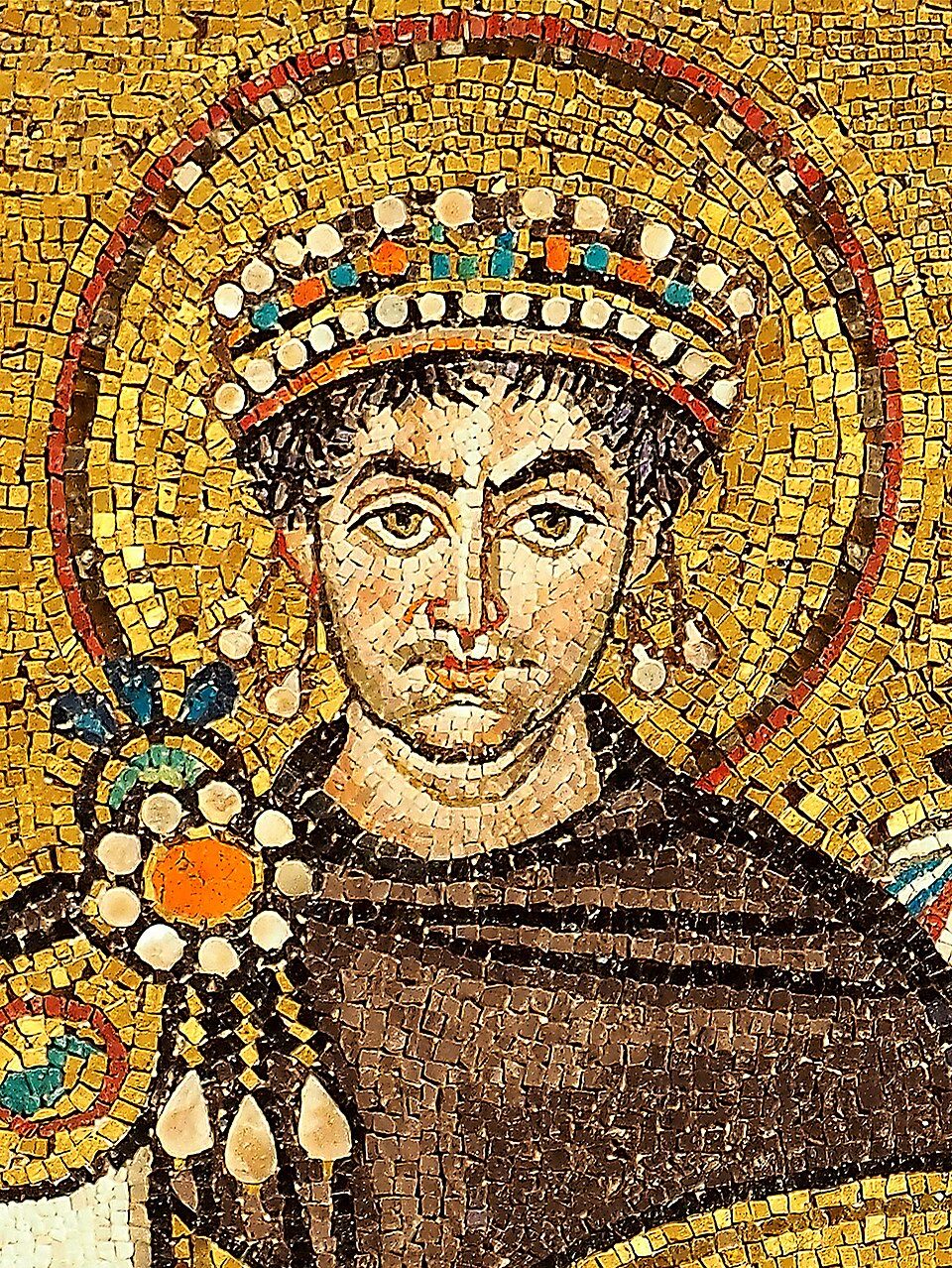
Justinian I
Codifier of Roman law
Emperor who ordered the Corpus Juris Civilis—the great digest of Roman law that became the legal DNA of much of Europe and, through it, the modern world.
Life at a glance
Key contributions
- Commissioned the Corpus Juris Civilis
- Standardized Roman law for later Europe
- Rebuilt Hagia Sophia as a civic-sacred monument
- Created the Institutes as a teaching gateway to law
- Transmitted equity and contract concepts across centuries
Notable works, inventions and offices
Corpus Juris Civilis
Still standsCodification of Roman law. Today: Ancestor of civil-law systems worldwide.
Life and career
Justinian ruled from Constantinople with Theodora at his side, rebuilt Hagia Sophia after riot and fire, and tried to reconquer the western Mediterranean. The military story is mixed; the legal story is civilizational.
He charged Tribonian to gather centuries of jurists into the Digest, Institutes, and Code. Chaos of edicts became a system: persons, property, contracts, equity. Students still meet Roman law in that shape.
Hagia Sophia showed the same instinct in stone: gather, order, lift. Law and dome are both shelters for a crowd.
Legacy and impact
The legal operating system of half the planet.
- When regulations sprawl, Justinian’s instinct—compile and clarify—returns.
Principles and words
View of humanity
Peoples cannot share a future if they cannot find the rule.
How we should operate
Codify. Index. Teach the next clerk.
- Law must be collectable
- Justice needs a library
- Building and codifying are twin crafts
- Empire serves posterity when it writes clearly
“Justice is the constant and perpetual wish to render every one his due.”
Sources
Every statement on this page traces to Wikipedia, Wikidata, Wikiquote, or the curated Humanity’s Atlas record. Nothing is invented. Same standard for everyone: contributions first, neutral language.