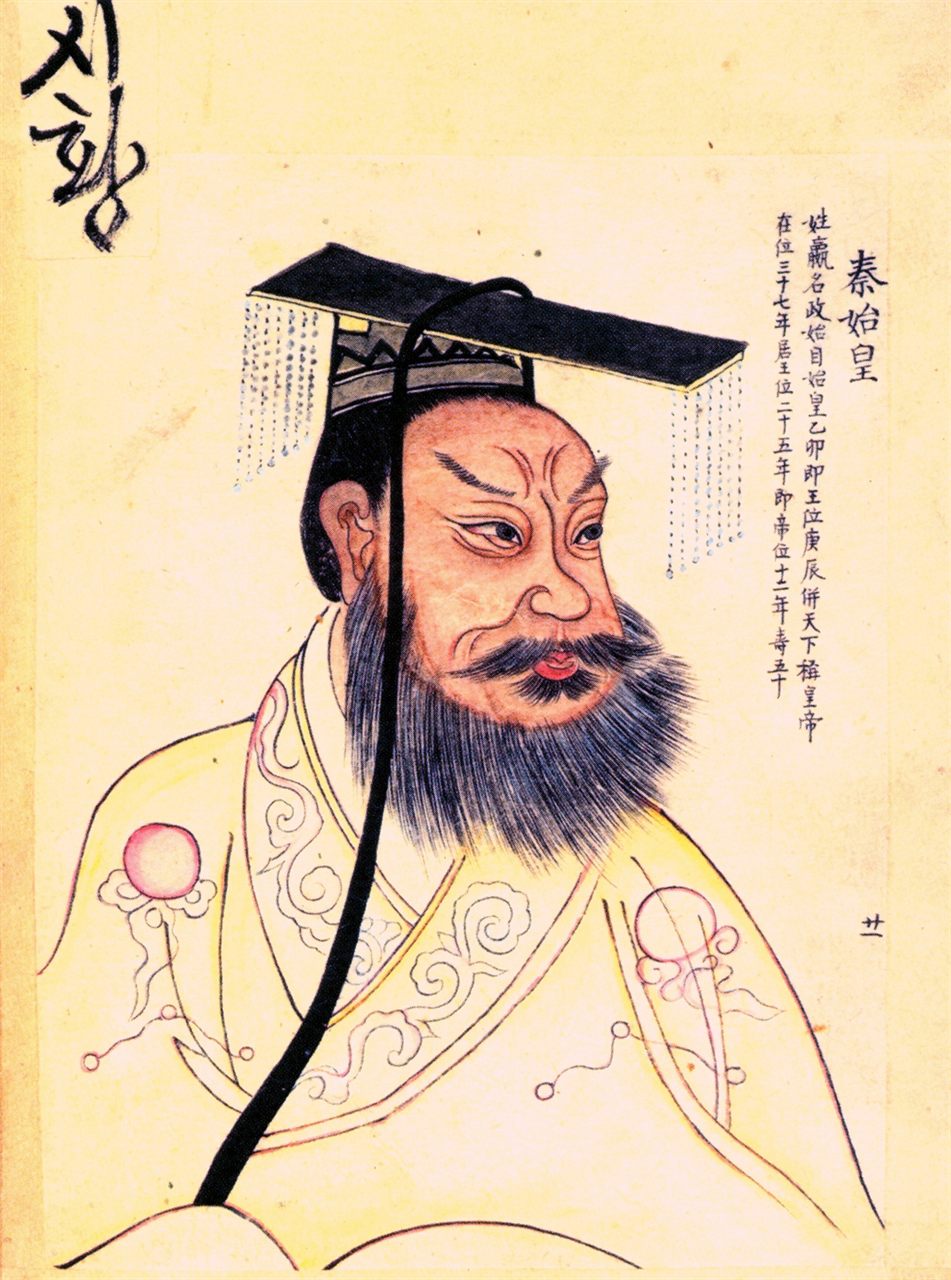
Qin Shi Huang
First Emperor of China
King of Qin who conquered rival Warring States, proclaimed the first Chinese empire, standardized script, weights, and roads—and ruled with severity.
Life at a glance
Key contributions
- Unified China after the Warring States period
- Standardized script, measures, and infrastructure across the empire
- Built roads and early Great Wall fortification systems
- Created the imperial bureaucratic template for later dynasties
- Left the Terracotta Army and mausoleum complex as world heritage
Notable works, inventions and offices
Imperial unification & Terracotta Army
Partially remainsAdministrative unity and funerary complex. Today: Chinese state unity narrative; major archaeological site.
Life and career
Ying Zheng, Qin Shi Huang (259–210 BCE), conquered rival Warring States and proclaimed himself First Emperor of a unified China. Standardization of script, weights, measures, and axle widths made a single economic-administrative space possible.
He expanded roads and defensive walls (ancestors of the Great Wall tradition), suppressed dissent harshly, and built the monumental mausoleum guarded by the Terracotta Army. Legalist rigor and absolute sovereignty were the tools of unity.
The Qin dynasty fell soon after his death, but the imperial template—unified China under a centralized bureaucracy—outlasted the house of Qin for two millennia.
His greatness is structural: forcing plurality into a state form that later dynasties inherited, reformed, and humanized.
Legacy and impact
The template of Chinese imperial unity—and a warning about total standardization.
- Digital standardization and central control echo Qin tools at new scale.
Principles and words
View of humanity
Order is imposed from the center when competing lords will not yield.
How we should operate
When unifying systems (currency, language, infrastructure), weigh efficiency against freedom.
- Unity over fragmentation
- Standardization as state power
- Central law above local custom
- Monumental state projects
“I have collected all the writings… and burned those not useful.”
Sources
Every statement on this page traces to Wikipedia, Wikidata, Wikiquote, or the curated Humanity’s Atlas record. Nothing is invented. Same standard for everyone: contributions first, neutral language.