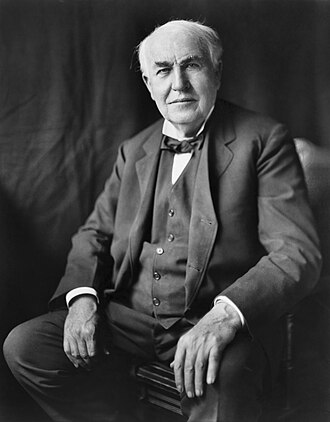
Thomas Edison
Industrial Wizard of Invention
Inventor-entrepreneur who systematized R&D at Menlo Park and commercialized electric light, sound recording, and motion pictures—electrifying modern life.
Life at a glance
Key contributions
- Developed practical electric lighting and power distribution systems
- Invented the phonograph and advanced motion-picture technology
- Founded the industrial research laboratory model
- Held over a thousand patents spanning communications and power
- Helped create the infrastructure of the electrified modern city
Notable works, inventions and offices
Practical electric lighting systems
TransformedCommercial electric light and power. Today: The electrified world.
Life and career
Thomas Edison (1847–1931) was an American inventor-entrepreneur who built industrial research at Menlo Park and West Orange. The phonograph, practical incandescent lighting systems, and motion-picture technology were among hundreds of patents.
More than gadgets, he invented the invention lab: teams, iterative testing, and commercialization. Electric power systems remade cities, nights, and factories.
His reputation includes hard business tactics and disputes (notably with Tesla/Westinghouse over current systems). The lightbulb myth simplifies a networked achievement of materials, vacuum, dynamos, and distribution.
His accomplishment is the electrified modern environment and the R&D laboratory as an institution.
Legacy and impact
The industrial research lab as civilization’s engine.
- Tech campuses still imitate Menlo Park’s myth—for better and worse.
Principles and words
View of humanity
Night can be conquered; human life expands when energy is cheap and controlled.
How we should operate
Fund labs that ship. Measure success by adoption, not only theory.
- Invention as organized labor
- Iterate until it works in the market
- Systems, not only gadgets
- Persistence as method
“Genius is one percent inspiration and ninety-nine percent perspiration.”
Sources
Every statement on this page traces to Wikipedia, Wikidata, Wikiquote, or the curated Humanity’s Atlas record. Nothing is invented. Same standard for everyone: contributions first, neutral language.